



D.C. Democrats Select New Congressional Delegate After Decades

Robert White Jr. Wins Democratic Primary for D.C. Delegate Seat
Washington, D.C. – The Democratic primary election held Tuesday has determined a new contender for the District of Columbia’s non-voting seat in Congress, marking a significant shift after a decades-long incumbency. Robert White Jr., a current at-large member of the D.C. Council, secured the party’s nomination, positioning him to potentially become the district’s first new representative in Washington since 1991.
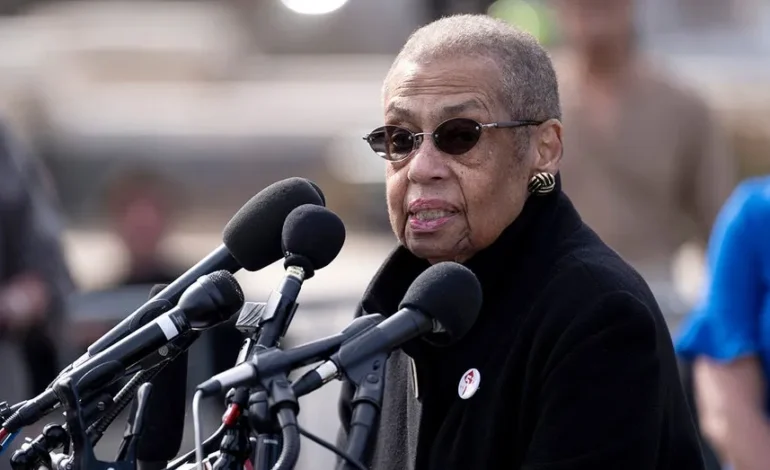
This pivotal election follows the announcement by Delegate Eleanor Holmes Norton, 88, that she would not seek re-election after serving 18 terms. Norton, a prominent figure in D.C. politics for over three decades, has been the sole representative for the district in Congress during her tenure, which began in 1991. Her decision to retire has opened the door for a new era of representation on Capitol Hill.
A New Face After a Long Tenure
White’s victory in the primary signifies the end of an era for many D.C. voters who have only known Eleanor Holmes Norton as their congressional delegate. Her extensive service, spanning approximately 35 years, was characterized by persistent advocacy for D.C. statehood, home rule, and full voting representation in the House of Representatives.
The race for the delegate position, which allows for introducing legislation, serving on committees, and advocating for the district on Capitol Hill, but notably excludes a voting power on the House floor, has been a focal point of local political discourse. White, who has served on the D.C. Council since 2016 and previously worked in Norton’s congressional office as legislative counsel, emerged as the leading candidate.
The Path to the General Election
The Democratic nominee is widely expected to win the November general election, given the heavily Democratic composition of Washington, D.C. White’s campaign centered on the need for a more assertive advocate in Congress, particularly as federal scrutiny of the district’s governance has intensified. He had previously considered a mayoral bid before shifting his focus to the delegate race.
The primary utilized D.C.’s new ranked-choice voting system. On the Republican side, Denise Rosado is running unopposed for the GOP nomination. At least one third-party candidate, Kymone Freeman, is also vying for the non-voting delegate seat. The outcome of the general election will determine who steps into this symbolic yet influential role, continuing the ongoing dialogue surrounding D.C.’s quest for statehood and full autonomy.