

Trump’s Endorsement Power Tested in GOP Runoffs

GOP Primaries Spotlight Trump’s Influence Amid Mixed Results
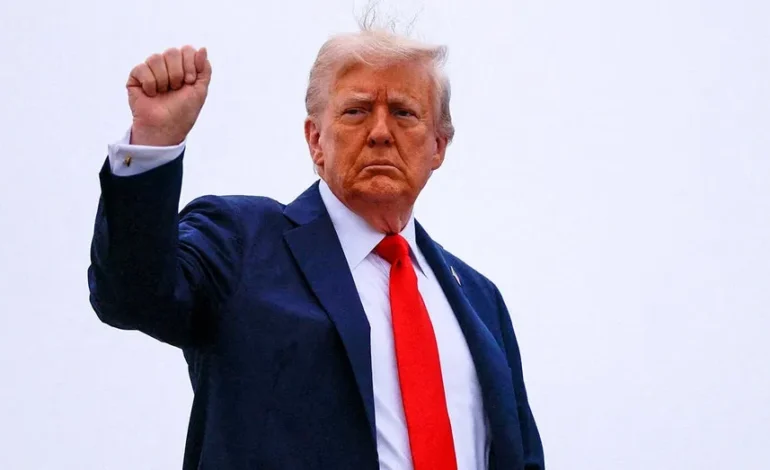
Republican primary contests in Georgia and Alabama on Tuesday presented a significant proving ground for former President Donald Trump’s sway within the GOP. While Trump-backed candidates secured victories in two of the three prominent races, a notable defeat against a self-funded billionaire businessman highlighted the evolving dynamics of political endorsements.
Alabama Senate Race: Trump Endorsement Secures Victory
In Alabama’s solidly Republican Senate runoff, Representative Barry Moore, a member of the House Freedom Caucus and a vocal Trump supporter, comfortably defeated challenger Jared Hudson. Hudson, a former Navy SEAL sniper, had garnered backing from prominent conservative figures. Moore’s win was bolstered by an endorsement from the former president.
Georgia Senate Race: Collins Triumphs with Late-Stage Support
Georgia’s Republican Senate runoff saw Representative Mike Collins, a staunch MAGA advocate, emerge victorious over former college football coach Derek Dooley. Collins’ win was aided by an eleventh-hour endorsement from Trump, delivered just days before the vote. Collins is now set to face Democratic Senator Jon Ossoff in the general election, a race anticipated to be a critical factor in determining the GOP’s narrow majority in the Senate.
Georgia Gubernatorial Race: Outsider Defeats Trump-Backed Incumbent
The gubernatorial runoff in Georgia presented a different outcome, where the candidate endorsed by Trump, Lieutenant Governor Burt Jones, was defeated by Rick Jackson. Jones, who also received a recent endorsement from Governor Brian Kemp, had consistently highlighted Trump’s backing. Jackson, however, positioned himself as an outsider and businessman, launching his campaign after Trump had already endorsed Jones. Jackson stated that he was inspired by Trump’s business solutions for the nation and felt he could make a similar impact in Georgia.
Jackson frequently emphasized his similarities to Trump, calling himself “Trump’s favorite governor” and expressing a desire to replicate Trump’s approach to business and problem-solving at the state level. He described himself as an outsider, much like Trump, and believed their shared approach to handling business and challenges would resonate with voters.
Endorsement Strengths and Limitations Examined
The former president’s endorsement power has been a significant force in GOP primaries across several states in recent weeks. However, a prior instance saw Trump’s late endorsement fail to propel Representative Randy Feenstra to victory in Iowa’s gubernatorial primary. Feenstra was narrowly defeated by Zach Lahn, who was supported by groups aligned with conservative movements.
In contrast, Trump’s endorsed candidate in South Carolina’s gubernatorial primary, Lieutenant Governor Pamela Evette, secured a spot in the nomination race. Additionally, Senator Lindsey Graham, a longtime Trump ally, won his primary outright with Trump’s backing, fending off challenges from several candidates, including conservative businessman Mark Lynch, who had received support from some MAGA figures critical of Trump.
Regarding the Georgia gubernatorial runoff, one political operative noted the significant spending by Rick Jackson, describing it as “Tom Steyer level money” in a smaller state, which likely influenced the outcome. This operative also suggested that Jackson’s campaign was not a referendum on Trump, but rather a focus on Jackson’s alignment with the former president.
Veteran Republican strategist Matt Gorman commented that while Trump’s endorsement provides substantial value, it is not a guaranteed path to victory. He added that Jackson was a strong candidate and that the focus would now shift to party unity for the general election.
Cruz’s Support for Jackson
Senator Ted Cruz also endorsed Jackson shortly before the runoff, campaigning alongside him at a rally. Cruz praised Jackson’s record and life story, expressing confidence in his ability to win the general election, emphasizing the high stakes of the upcoming contests.
When asked about potentially creating distance from the former president, Cruz stated that he agrees with Trump on the vast majority of races and aims to endorse the strongest conservative candidate who can win in each contest, often intervening late in races where his support could be most impactful.