

Trump Claims Iran Deal ‘Unconditional Surrender,’ Details Covert Naval Operations
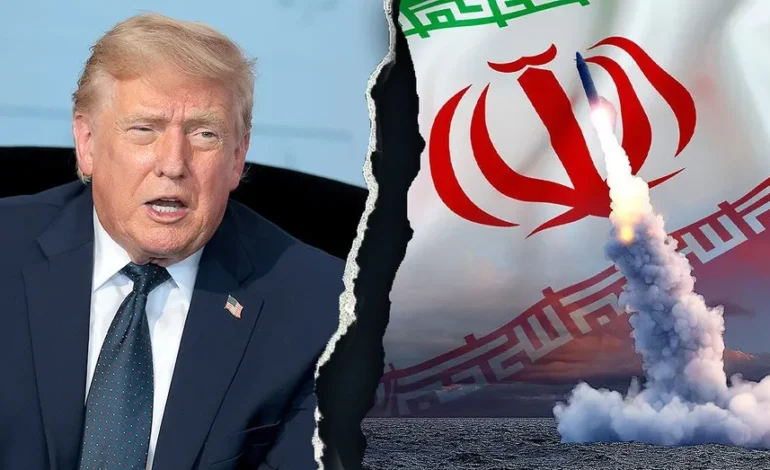

President Trump asserts that a recent agreement with Iran effectively constitutes an ‘unconditional surrender’ and has disclosed previously unknown details about a clandestine maritime operation targeting Iranian naval assets.
In a recent interview, President Donald Trump characterized the memorandum of understanding (MOU) signed between the United States and Iran, which aims to end a period of conflict, as a significant victory for the U.S., suggesting it amounts to Iran’s capitulation. The 14-point MOU, intended to de-escalate tensions, has been met with differing interpretations.
When questioned about the nature of the agreement, Trump stated, “Well, it really probably is unconditional surrender.” He elaborated on this assertion by highlighting the perceived degradation of Iran’s military capabilities. “Look, they have no military. They’re all at the bottom of the sea. 159 ships. That’s what they had,” Trump remarked, referencing a substantial number of vessels reportedly destroyed.
Decimation of Iranian Military Assets
The President further detailed the U.S. efforts to dismantle Iran’s military infrastructure, including the successful elimination of key leadership figures. “There’s no airplanes,” Trump noted, claiming that Iran’s approximately 200 aircraft are now non-operational. He also reiterated the loss of naval assets, stating, “Navy. 159 ships, right? All at the bottom of the sea. Leadership, their first stringers all gone, including Khomeini, the first one. They then put a new group in there. Very good, but very nasty. I dealt with ’em. They’re gone. They’re all gone.”
Covert Maritime Operation Revealed
Trump disclosed that for nearly two months prior to the public announcement, the U.S. conducted a covert operation to systematically eliminate Iranian ships. “Do you know that for the last two months, I’ve been taking many ships out there and nobody knew it,” he explained. The success of this operation, he indicated, was due to the disabling of Iran’s radar and defensive systems, preventing detection.
Illustrating the scale of the operation, Trump recounted specific nights: “Last week we had one night, 25 ships. One night, 22. One night, 19. One night, 21. So every night all these ships out.” He described the clandestine nature of these missions, which often began around 1:00 AM. “We’d leave at one o’clock in the morning, all lights off, and we’d have our Navy destroyers going alongside and they had no equipment because we destroyed all of the equipment that would normally be used to detect this,” Trump said. The operation remained undetected until approximately a week before its public acknowledgment.
Economic and Geopolitical Implications
President Trump also linked the agreement to positive economic outcomes, particularly in oil prices and the stock market. “So right now, our stock market is through the roof,” he stated. “The oil prices are tumbling. The oil prices are practically the same as they were before it started.” He emphasized the prevention of Iran acquiring nuclear weapons as a primary achievement. “The big difference is that Iran will never have a nuclear weapon.”
Regarding maritime traffic, Trump noted, “We have 700 or 800 ships leaving, but if I attack them, none of those ships are leaving.” He also observed a significant uptick in the stock market in the days leading up to the potential deal, attributing it to market optimism.
MOU Details and Domestic Achievements
Under the terms of the MOU, both Trump and Iranian President Masoud Pezeshkian have committed to ending the conflict. The agreement also calls for the reopening of the Strait of Hormuz and the initiation of 60 days of nuclear negotiations.
Concluding the interview, Trump highlighted his administration’s success in improving public safety and aesthetics in Washington, D.C., in anticipation of the nation’s 250th anniversary. “We’ve taken Washington, D.C., from a death trap to one of the safest cities in America,” he asserted, claiming a 94% reduction in crime within a year. He also mentioned undertaking beautification projects, including restoring fountains and monuments and removing graffiti that had accumulated over decades.