


Novice Climber Survives 1,500-Foot Fall on Mount Shasta

A 31-year-old novice climber experienced a harrowing ordeal on California’s Mount Shasta, surviving a slide of approximately 1,500 vertical feet after a slip near the summit. The incident, which occurred Sunday on the popular Avalanche Gulch route, necessitated a complex, multi-stage rescue effort complicated by deteriorating weather conditions.
Climber’s Descent and Initial Rescue Challenges
The woman was ascending the Left of Heart variation of Avalanche Gulch with two companions, also new to climbing, when she lost her footing around the 13,000-foot mark. Her descent, described by the U.S. Forest Service not as a free fall but as a prolonged slide down a steep snow slope, eventually halted about 1,500 feet lower. The terrain, initially very steep, gradually became less severe, allowing her to stop.
Immediate rescue efforts were hampered by thick cloud cover, which prevented a California Highway Patrol (CHP) helicopter from reaching the injured climber directly. This weather impediment forced a tactical shift: the helicopter dropped U.S. Forest Service climbing rangers at a lower elevation. These rangers then embarked on a hike to reach the stranded climber while the air support waited for an opportunity to assist.
A Difficult Operation Unfolds
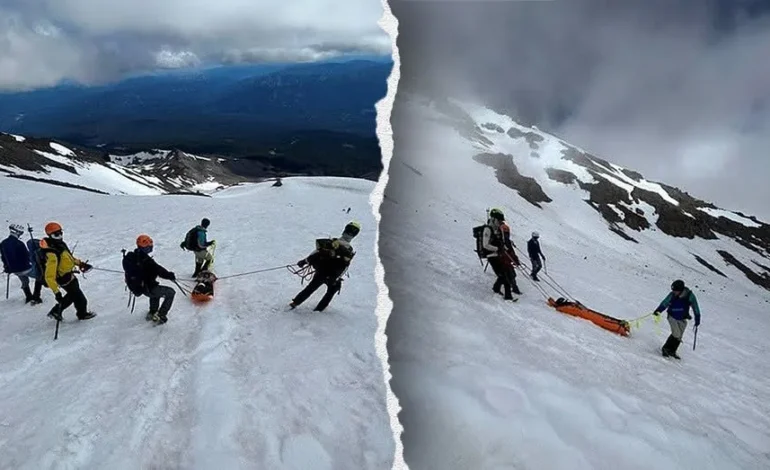
Once the climbing rangers reached the woman, they stabilized her condition. She was then carefully placed into a rescue litter. The rangers meticulously lowered her down the mountain to Lake Helen. From this point, a CHP helicopter was finally able to land, pick her up, and transport her to Mercy Medical Center Mount Shasta. The entire operation, from the initial emergency call to the final evacuation by air, spanned approximately five and a half hours.
A CHP official involved in the air operations noted the challenging nature of the terrain. “That particular portion of the mountain is extremely steep and it kind of funnels into a little bit of a chute,” the official explained. “People take a smaller slide on the upper end, there’s nothing to really arrest that descent for quite a while.”
Understanding the Risks on Mount Shasta
Mount Shasta, a prominent 14,179-foot volcano, presents significant challenges, particularly for inexperienced climbers. Officials highlighted that while climbers are trained in self-arrest techniques using an ice axe to stop a slide, novice climbers often find it difficult to execute this maneuver effectively before gaining too much speed.
Despite the serious nature of her fall, the woman, who sustained a suspected fractured ankle and other injuries, remained conscious and in good spirits when rescuers made contact. This resilience undoubtedly played a role in her survival.
Seasonal Dangers and Essential Preparations
The incident serves as a stark reminder of the dangers inherent in climbing Mount Shasta, especially as the season progresses. According to Shasta-Trinity National Forest officials, slips and falls are common occurrences at higher elevations during the latter part of the climbing season. While April, May, and early June typically offer the most favorable conditions due to more stable snowpack, the arrival of summer brings melting snow, hardening ice, and loosened rocks, all of which increase the risk of accidents.
“This is not a normal hiking trail,” emphasized a Forest Service representative. “You need to make sure you’re in shape, you have your proper gear.”
The U.S. Forest Service strongly advises anyone planning to climb Mount Shasta to take thorough precautions:
- Carry essential mountaineering equipment, including an ice axe and crampons, as conditions dictate.
- Closely monitor weather forecasts and changing route conditions.
- Climb with experienced partners who can provide guidance and support.
- Develop a comprehensive emergency plan before embarking on the climb.
A statement from the U.S. Forest Service underscored the importance of self-assessment: “Before attempting a summit, be honest about your experience and physical conditioning.”
Mount Shasta’s Specialized Ranger Program
The successful rescue was a testament to the capabilities of Mount Shasta’s specialized climbing ranger program. These dedicated professionals spend their season educating visitors about mountain safety, monitoring environmental conditions, and responding to emergencies on one of the country’s most frequently climbed high-altitude routes. Their expertise and swift action were critical in managing the complexities of this challenging rescue operation.