



El-Sayed Faces Scrutiny on Israel’s Right to Exist, Defund the Police
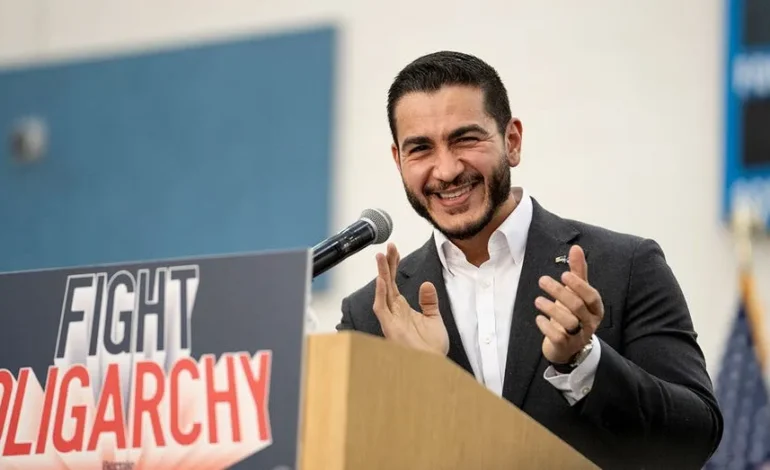

Michigan Senate candidate Abdul El-Sayed found himself in a heated exchange with CNN host Kasie Hunt on Thursday, facing repeated questions about Israel’s right to exist and scrutiny over past social media posts advocating for defunding the police. The interview highlighted key points of contention as El-Sayed navigates his campaign, touching on complex foreign policy issues and domestic debates.
Israel’s Right to Exist Dominates Interview
The conversation quickly turned to the Israeli-Palestinian conflict when Hunt posed a direct question: “Do you believe Israel has a right to exist?” El-Sayed, however, pivoted, framing the discussion around the significant financial influence of the American Israel Public Affairs Committee (AIPAC) in the election. He noted that AIPAC had already invested $30 million, making it the largest spender in the race.
“Now, the question about a right to exist is interesting, because nobody’s ever asked me whether I believe Palestine has a right to exist,” El-Sayed stated. He then elaborated on his perspective, suggesting that while every president has supported a two-state solution, the core issue lies in the allocation of U.S. tax dollars. “Israel exists. The question is whether we want a politics where our money is sent over to Israel to fund genocide and apartheid instead of investing in our own kids.”
Hunt pressed for a clearer answer, asking a second time if he believed Israel had a right to exist. El-Sayed reiterated his reluctance to engage in what he termed a “gotcha game.” “I didn’t say that. I just said the question of Israel’s existence is not a question. I‘m not going to play this gotcha game about whether or not it has a right to exist,” he responded. He emphasized his focus on equal rights, asking, “The question, ultimately, is about whether or not we want a politics that dignifies equal rights.”
When pressed a third time, El-Sayed deflected again, posing a counter-question: “Does everybody have equal rights to peace, dignity, and self-determination? That includes Jews, Israelis, and Palestinians?” He argued that the ultimate determination of peace should come from Israelis and Palestinians themselves. His primary concern, he stated, was the redirection of U.S. tax dollars.
“I want my tax dollars spent here in Michigan — to provide schools in Michigan, to build health care in Michigan, to invest in Michigan — rather than sent abroad to kill Palestinian people through genocide and apartheid,” El-Sayed declared. He concluded this line of questioning by asserting, “The question of whether Israel has a right to exist is actually quite secondary to whether it has a right to our tax dollars.” He expressed willingness to discuss issues like housing, healthcare, and corporate influence in politics, which he believes are more pertinent to voters in Michigan.
Past ‘Defund the Police’ Posts Surface
The interview also delved into El-Sayed’s past social media activity, specifically posts from 2020 that supported the “defund the police” movement. One deleted post from June 2020 stated, “Most major US cities spend WAY TOO MUCH on police departments to police poverty & WAY TOO LITTLE on public schools, health departments, recreation departments, & housing to eliminate poverty. Fixing that is what the #Defund movement is about.”
Hunt questioned whether El-Sayed still stood by these statements and asked if he believed police departments should be funded. El-Sayed responded by referencing his experience as the director of the Department of Health, Human, and Veterans Services in Wayne County, Michigan. He explained that his work involved funding systems that required support.
“Judge me by my work, I funded the system because it needed to be funded,” he said. “Too often the conversation we have is fund or defund. The question that we don’t ask is, what kind of system do we really want? I want us to be investing in the kinds of interventions that actually protect people.” He highlighted areas such as law enforcement recruitment and retirement, community violence intervention, and behavioral health response as crucial investments.
El-Sayed concluded by criticizing the focus on past tweets, suggesting it served CNN’s interests for generating clicks rather than reflecting genuine concerns of Michigan voters. “And I think this debate about 2020 and the ways that tweets are going to play are really nice on CNN. If you want to get clicks, they’re not that effective, and nobody really asks me about them on the streets or in communities in Michigan,” he remarked. He reiterated his preference for discussing substantive issues like housing, healthcare, and political reform, which he feels are the real priorities for the people he aims to represent.
Campaign Context
The interview comes at a critical juncture for El-Sayed’s Senate campaign. The scrutiny over his stance on Israel and the resurfacing of his “defund the police” comments represent significant challenges. These issues tap into deeply polarized debates within the Democratic Party and the broader electorate. El-Sayed’s approach of reframing questions and emphasizing domestic investment over foreign aid, coupled with his defense of his past statements on policing, offers a glimpse into his campaign strategy as he seeks to connect with voters on issues he deems more relevant to their daily lives.
His campaign’s decision to delete past social media posts, particularly those related to sensitive topics like police funding, also drew attention. While El-Sayed defended his current positions by pointing to his work and a desire for systemic investment, the act of removal itself can be interpreted in various ways by different segments of the electorate. The interview underscores the delicate balance candidates must strike when addressing complex global affairs and domestic policy debates, especially when confronted with past statements that may be perceived as controversial.