


America’s 250th Time Capsule: A Glimpse into the Future, Buried in Philadelphia
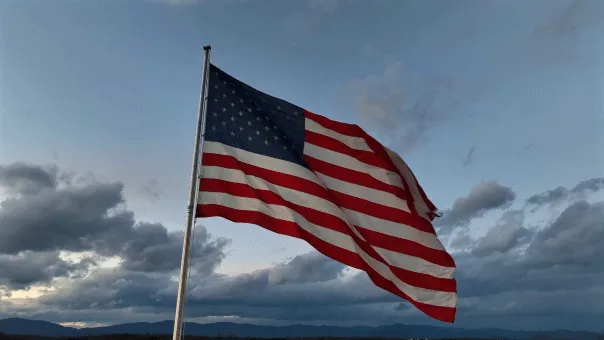

Philadelphia, a city steeped in American history, recently became the site for a forward-looking endeavor: the burial of a time capsule destined to remain sealed until the nation’s 500th anniversary in 2276. The stainless steel container, interred near the hallowed grounds of Independence Hall, holds a curated collection of artifacts meant to offer a snapshot of America in its 250th year to future generations.
A Symbol of Faith in the Future
The initiative, mandated by Congress, saw a bipartisan group of lawmakers gather in Philadelphia for the solemn occasion. Representative Robert Aderholt of Alabama emphasized the capsule’s purpose beyond mere remembrance. “Our responsibility is not simply to remember what happened here on these grounds,” he stated, “But to preserve those same ideals of whose generation came before and that will come after us.”
House Speaker Mike Johnson echoed this sentiment, describing the time capsule as a “reflection of our faith in the future of this grand experiment in self-governance.” He drew a parallel between the present and the past, noting that “When this capsule is finally opened, those Americans will be as distant from us as we are today from the men who signed their names on our declaration.”
Echoes of History and Resilience
The capsule’s contents are as diverse as the nation itself, with each U.S. state and territory contributing items. Among the significant artifacts is a piece of metal from the Freedom Tower, a poignant reminder of the September 11th attacks. House Minority Leader Hakeem Jeffries highlighted its symbolic weight: “We have a piece of metal from the Freedom Tower that obviously represents both the struggle initially and what happened on September 11th. But then ultimately, the resilience of rising from the ashes, as America has always done.”
The inclusion of 9/11-related items underscores a national narrative of overcoming adversity. Lawmakers also expressed a desire to include more personal or even whimsical items, though practicality often prevailed. Representative Brendan Boyle of Pennsylvania, whose district includes Independence Hall, humorously noted that while a Philly cheesesteak would be a tempting inclusion, its 250-year shelf life might be questionable. He also expressed a wish for a piece of Independence Hall itself to be included.
A Tapestry of American Life
The collection offers a multifaceted view of contemporary American culture, interests, and challenges:
- Sports and Culture: Georgia contributed a medallion from the Masters Golf Tournament and a vintage Coca-Cola bottle, reflecting its cultural and economic significance. Letters from sports commissioners, including NBA Commissioner Adam Silver, NHL Commissioner Gary Bettman, and MLB Commissioner Rob Manfred, were also included, though the specific contents of Manfred’s letter remain a mystery for future discoverers.
- Environmental Concerns: A notable inclusion is a piece of bone from a North Atlantic Right Whale, an endangered species, serving as a testament to conservation efforts and a hope for the species’ survival.
- Technological Advancements: California submitted an AI prompt given to the chatbot Claude, asking about the country’s future in 250 years. The response, like Manfred’s letter, is sealed for posterity. An Apple iPhone was also placed inside, prompting reflection on how future generations might view current technology.
- Regional Identity: New Mexico’s contribution of bolo ties speaks to the enduring cultural apparel of the American Southwest.
- Modern Achievements: An Olympic Gold medal from the recent Winter Games in Milan and Cortina represents contemporary athletic excellence.
The Challenge of Time
The very act of preserving items for centuries presents significant challenges. Michael Berilla of the National Institute of Standards and Technology pointed out the historical difficulties faced by time capsules. “Our main takeaway here is that of the longer generation time capsules, water has destroyed most of them. Time has destroyed many others and things get lost or the items inside react,” Berilla explained. “I made time capsules back in high school – maybe you have too – where they just failed miserably.” This understanding likely influenced the decision to exclude items like a traditional leather football, which would degrade over time.
A Bridge Between Eras
The burial ceremony was more than just an event; it was a deliberate intersection of past, present, and future. It invited contemplation of historical figures like Thomas Jefferson walking the same grounds centuries ago, contrasted with modern visitors exploring Independence Hall and the Liberty Bell. The hope is that in 2276, Americans will unearth these artifacts and gain a tangible connection to their 250th year, much as we today connect with the Founding Fathers.
The lawmakers who participated in the burial acknowledged the courage of the nation’s founders. Representative Boyle noted that the 56 signers of the Declaration of Independence were, in essence, signing their own potential death warrants, fully aware of the risks involved. The artifacts within the time capsule, therefore, not only represent the present but also embody the spirit of boldness and foresight that has characterized America’s journey.
As the stainless steel capsule rests beneath the earth, it carries the hopes and reflections of a nation at a significant milestone, awaiting its unveiling by a future America.