
Trump Reveals Post-Presidency Orders to Bomb Iran if Assassinated
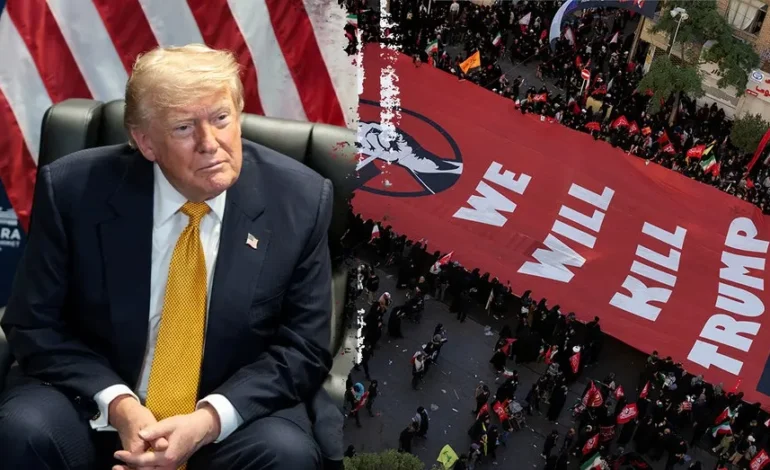

Former President Donald Trump has revealed that he left behind specific instructions to retaliate against Iran with unprecedented force should the country attempt to assassinate him. In an interview, Trump stated that he has been a long-standing target for Iran, a situation he described as simply “the way life is.” He elaborated on his directives, saying, “The only thing is, I’ve left instructions — if anything happens, to just literally bomb them at levels that they’ve never seen before.”
Long-Standing Tensions with Iran
Trump indicated that Iran’s desire to see him dead is not a new development. He downplayed recent reports suggesting Israel had flagged a specific Iranian plot to assassinate him, asserting that such intelligence was not new. “No, no, Israel came up with nothing,” Trump told The New York Post. “I’ve been No. 1 [on Iran’s kill list] for a long time, and it’s the way life is, you know.”
The animosity between Trump and Iran intensified significantly after his administration ordered the 2020 drone strike that killed Iranian General Qasem Soleimani. Soleimani was a key figure in Iran’s military and foreign policy, and his death was a major blow to the regime. Following his death, widespread mourning and calls for retribution against the United States, and specifically Trump, were evident within Iran.
More recently, during funeral proceedings for Iran’s former Supreme Leader Ayatollah Ali Khamenei, mourners were heard chanting slogans demanding Trump’s death. Reports and images from the event showed individuals holding placards with messages such as “Kill Trump,” underscoring the persistent animosity directed towards the former president.
Domestic Threats and Escalating International Tensions
The threats from Iran are not the only assassination plots Trump has faced. Domestically, he has also been the target of such attempts. In July 2024, a shooter opened fire on Trump during a campaign rally in Butler, Pennsylvania, with a bullet grazing his ear. This incident highlighted the security risks he has encountered both internationally and within the United States.
Simultaneously, tensions between Washington and Tehran have been on an upward trajectory. This escalation follows Trump’s decision to call off a ceasefire agreement after Iran launched attacks on three ships in the Strait of Hormuz. The Strait of Hormuz is a critical chokepoint for global oil transport, and any disruption there has significant economic implications.
Trump publicly announced his decision regarding the ceasefire on social media. He stated, “The Islamic Republic of Iran has asked us to continue ‘talks.’ We have agreed to do so, but the United States has stated to them, in no uncertain terms, that the Cease Fire is OVER!” This move signaled a hardening of the U.S. stance towards Iran amidst ongoing provocations.
Trump’s Perspective on Leadership and Threats
During a press conference held this week at the NATO summit in Ankara, Turkey, Trump also touched upon Iran’s perceived ambitions to target him. He reflected on the cyclical nature of leadership changes in Iran and the persistent threats faced by its leaders, drawing a parallel to his own position as a primary target.
“They had leaders, they’re gone. Then they had another set of leaders, they’re gone,” Trump observed. “Now they have another set of leaders — they may be gone, who knows? And you know what? I may be gone too. Because I’m their No. 1 target — it’s out all over the place. Because they’re scum.” This statement reflects his defiant stance and his perception of Iran as a rogue entity posing a significant threat.
Historical Context of Iran-US Relations
The relationship between the United States and Iran has been fraught with tension for decades, particularly since the 1979 Islamic Revolution. The U.S. designated Iran’s Islamic Revolutionary Guard Corps (IRGC), including its Quds Force (which Soleimani led), as a foreign terrorist organization in 2019. This designation was a significant escalation in sanctions and diplomatic pressure.
The killing of Qasem Soleimani in January 2020 was a pivotal moment, leading to retaliatory missile strikes by Iran against U.S. bases in Iraq. While no American personnel were killed in that specific attack, it underscored the potential for direct military confrontation. The subsequent period saw a series of escalating actions and reactions, including cyberattacks, seizures of ships, and increased rhetoric from both sides.
Trump’s presidency was marked by a policy of “maximum pressure” against Iran, characterized by the withdrawal from the Joint Comprehensive Plan of Action (JCPOA) nuclear deal and the reimposition of stringent economic sanctions. The goal was to curb Iran’s nuclear program and its regional influence, but critics argued it also increased the risk of conflict.
Conclusion
Donald Trump’s assertion that he has left behind instructions for a devastating military response against Iran in the event of his assassination underscores the extreme level of animosity and distrust that has characterized U.S.-Iran relations during his time in the public eye. While such directives are extraordinary, they reflect the heightened security concerns and the volatile geopolitical landscape involving the two nations. The former president’s comments serve as a stark reminder of the potential consequences of escalating tensions and the enduring threat of conflict in the Middle East.