


Major Networks Skip Trump’s Election Security Speech
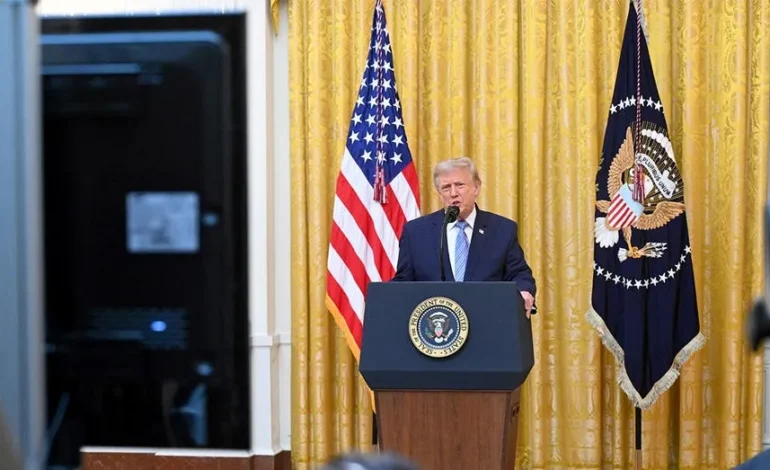

Several major television networks, including ABC, NBC, and CNN, opted not to broadcast President Donald Trump’s primetime address on election security live on Thursday evening. The speech, which focused on alleged vulnerabilities in the 2020 election, was instead carried by some on streaming platforms or covered later in special reports.
Networks’ Decision on Live Broadcast
The decision by ABC, NBC, and CNN to forgo a live airing of President Trump’s remarks marked a notable departure from typical coverage of presidential addresses. The speech centered on claims that “vital information” regarding the 2020 election had been “covered up and hidden” from the public. President Trump asserted that China had interfered in the election, citing newly declassified documents that he claimed showed the Chinese Communist Party (CCP) aimed to prevent his reelection. He also alleged that intelligence from the FBI indicated China attempted to create illegal ballots for Joe Biden.
A spokesperson for CNN explained the network’s approach, stating they intended to cover the speech “as a news event, and monitor it for news developments,” offering on-air analysis and commentary. The network also made the speech available on its website and streaming service. CNN anchor John King elaborated on this decision, citing the President’s “history of misleading, and in some cases, simply false statements” concerning elections and election security. The network aimed to independently verify the declassified documents released by the Trump administration.
Alternative Coverage and Network Responses
ABC News provided coverage of the speech through its streaming platform and ABC News Radio. A network representative had indicated that regular newscasts would address the speech. NBC News followed a similar path, carrying the address on its streaming platform and later airing a special report on its broadcast network shortly after the President concluded his remarks.
However, some affiliated stations did deviate from the network’s decision. Sinclair Broadcasting Group stations, which are affiliated with ABC and NBC, preempted regular programming to air the speech live. In response to the networks’ decisions, President Trump criticized ABC and NBC during his address, labeling them “fake news.” He suggested their avoidance of the topic stemmed from an unwillingness to expose the perceived corruption within the election system and accused the media of being complicit in a plot to continue what he termed a “fraud” and protect the “radical left.” He further argued that such perceived dishonesty in elections and reporting should warrant the revocation of broadcast licenses, emphasizing the value of the public airwaves used by these networks.
ABC News and NBC News did not immediately provide further comment when reached for their reactions.
Other Networks’ Broadcast Strategies
CBS News offered a different approach, airing a special report that included initial analysis before broadcasting portions of the speech a few minutes after it began. The network reportedly cut away from the address shortly after President Trump began criticizing ABC and NBC. MS NOW broadcast the initial 15 minutes of the speech live before transitioning to commentary.
In contrast, Fox News carried President Trump’s entire address live. The decision by major networks to skip presidential addresses is not without precedent. For instance, ABC, CBS, and NBC did not air President Barack Obama’s 2014 primetime speech on immigration. Similarly, these three broadcast networks also opted out of airing President Joe Biden’s 2022 speech addressing MAGA Republicans, which was delivered outside Independence Hall in Philadelphia.
Context of Election Security Discussions
The President’s speech and the networks’ subsequent coverage highlight the ongoing and often contentious debate surrounding election integrity and security in the United States. The release of declassified documents, as mentioned by President Trump, is part of a broader effort to scrutinize the processes and outcomes of recent elections. Intelligence agencies and government bodies continue to assess foreign influence and domestic factors related to election security, a topic that remains a significant focus for policymakers, media, and the public.
The differing media strategies in covering such events underscore the complex relationship between political figures, the press, and the public’s right to information. While some networks prioritized immediate, unfiltered presidential remarks, others opted for a more curated approach, emphasizing verification and analysis. This divergence reflects varied editorial judgments on how best to serve their audiences while navigating sensitive political discourse and the President’s own criticisms of media coverage.