



NYC Mayor Mamdani’s ‘Working Class’ Definition Sparks Debate
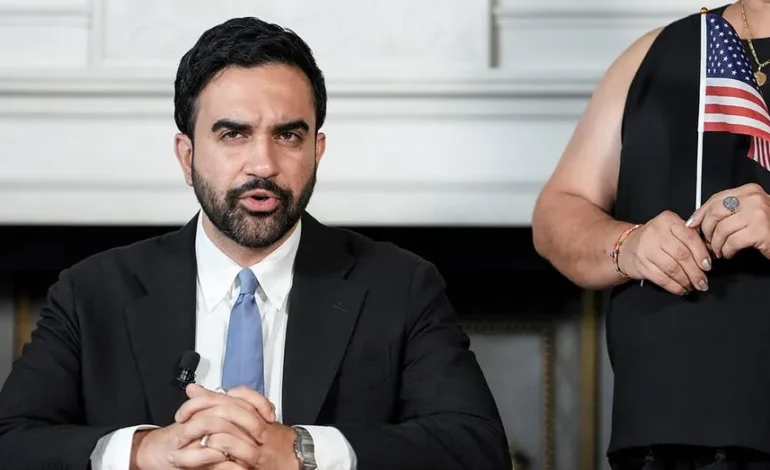

New York City Mayor Zohran Mamdani found himself in a semantic tangle during a recent interview, struggling to pin down a precise definition for the “working class,” a group he and his political allies frequently champion. When pressed by New York Times journalist Lulu Garcia-Navarro on Saturday about whether he and the Democratic Socialists of America (DSA) possess a clear definition of the working class they represent, Mamdani offered a broad interpretation.
Defining the Undefined?
Mamdani’s initial response suggested that anyone who “has to work to pay your bills” could be considered part of the working class. This expansive view immediately prompted a follow-up from Garcia-Navarro, who questioned whether an individual earning $250,000 annually would fall under this umbrella. Mamdani acknowledged he hadn’t meticulously drawn lines but elaborated, stating, “those who are working to try and afford the basic dignities of life and aren’t able to do so, I think that that is also working class.” He further posited that the country is largely defined by a single majority: the working class.
However, Garcia-Navarro expressed skepticism, noting that Mamdani’s definition, which seemed to include anyone receiving a salary, didn’t quite “ring true.” She pressed him on whether he drew any boundaries at all. Mamdani eventually indicated a threshold of “about a million dollars a year” as a point of distinction, particularly concerning fiscal policy. He clarified that his interest lies in expanding opportunities rather than excluding people, aiming for a vision where everyone feels included, regardless of their specific financial standing. He reiterated his support for raising taxes on those earning over a million dollars annually.
The Janitor and the Lawyer
The journalist highlighted the potential incongruity of lumping a janitor and a lawyer into the same “working class” category, questioning the accuracy of such a broad classification. Mamdani appeared to pivot from the direct definition, reflecting on his own campaign experiences. He recalled that voters often weren’t concerned with precise definitions of democratic socialism but rather with whether they were included in his vision for the city. He emphasized that New Yorkers, while facing different struggles and earning varying amounts, largely want assurance that their hard work can lead to a good life in the city.
Mamdani’s remarks on the working class gained traction amid other notable comments made during the interview. He revealed that his administration is actively exploring legal avenues against Israeli Prime Minister Benjamin Netanyahu, whom he labeled a “war criminal” who “belongs in The Hague.” This stance aligns with Mamdani’s stated intention to honor any potential International Criminal Court arrest warrant for Netanyahu, should the Prime Minister visit New York for the United Nations General Assembly in September.
Broader Political Context
The discussion around defining the working class touches upon a long-standing debate in political and economic discourse. Historically, the term has been associated with manual labor and industrial jobs, but its meaning has evolved significantly with shifts in the economy, particularly the rise of the service sector and the gig economy. Contemporary definitions often grapple with income levels, job security, access to benefits, and the ability to achieve economic stability.
Mamdani’s approach, emphasizing the struggle for basic dignities and economic security, reflects a more inclusive, needs-based interpretation. This contrasts with more traditional definitions tied strictly to occupation or income brackets. His focus on fiscal policy and tax increases for high earners suggests a political strategy aimed at redistributing wealth and funding public services, a common tenet among democratic socialist platforms.
The journalist’s persistent questioning aimed to uncover the practical implications of such a broad definition. If everyone earning under a million dollars is considered working class, it encompasses a vast spectrum of professions and income levels, potentially diluting the term’s specificity and its utility in targeted policy-making. However, Mamdani’s redirection toward the broader sentiment of inclusion and opportunity suggests a strategic effort to appeal to a wide base of voters who feel economically precarious, regardless of their specific job title or salary.
Ultimately, the interview highlighted the complexities of applying rigid definitions to dynamic social and economic categories. Mamdani’s comments, while perhaps lacking a neat, quantifiable definition, underscored a political philosophy centered on economic fairness and ensuring that all New Yorkers can afford a decent quality of life through their labor. The debate over who constitutes the “working class” is likely to continue as economic landscapes evolve and political rhetoric adapts.