




SEC Commissioner Greg Sankey Pushes for More Playoff Favoritism
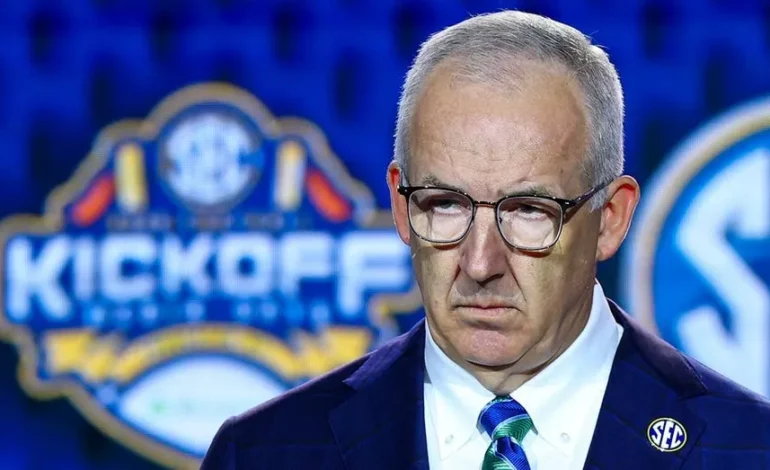

College football’s landscape is constantly shifting, and recent seasons have seen the Southeastern Conference (SEC) struggle to maintain its perceived dominance. For the third consecutive year, the SEC failed to secure a spot in the National Championship game. Furthermore, the conference’s performance in bowl games against other Power 4 opponents was a dismal 1-8, and their record within the College Football Playoff itself stood at 0-3. This trend isn’t an anomaly; over the past three playoff tournaments, including games against non-Power 4 teams and conference rivals, the SEC holds a mere 5-9 record. In stark contrast, the Big Ten Conference, its closest competitor, boasts a 13-5 record during the same period.
SEC’s Historical Advantage Under Scrutiny
For many years, the SEC benefited from a reputation of superiority, often leading to preferential treatment in playoff selections. This perception was so ingrained that even teams with questionable records sometimes found themselves included. A prime example from the 2025 season involved the Alabama Crimson Tide. Despite losing to Florida State and being decisively beaten by Georgia in the SEC Championship Game, Alabama was still selected for the playoff. This marked the first time in the history of the selection committee’s rankings that a team lost its conference championship game and did not fall in the polls, a testament to the assumption that merely reaching the SEC Championship and competing against Georgia was an accomplishment worthy of high regard.
This situation led many observers outside the conference to believe the selection committee was giving the SEC undue credit. However, for SEC Commissioner Greg Sankey, it presented an opportunity to advocate for even more favorable treatment. According to reporting by Brett McMurphy of On3, Sankey described his discussions with College Football Playoff staff as “unsatisfactory,” citing a perceived lack of understanding regarding the SEC’s inherent strength.
Sankey’s Complaints and the Reality of Performance
During the spring meetings, Sankey expressed his concerns, stating, “I’m actually one who believes competitors want a great challenge. We have heard about strength of schedule, strength of record. We had what I would call an unsatisfactory conversation with College Football Playoff staff. We have questions about them understanding the strength (of the SEC).” This sentiment comes despite the fact that five of the twelve teams in the previous year’s playoff field hailed from the SEC. Sankey, at the time, had publicly voiced his belief that even more SEC teams should have been included. Texas head coach Steve Sarkisian echoed this sentiment, arguing that excluding the 9-3 Longhorns would have been a “disservice to the sport.”
The persistent complaints from the SEC often involve hypothetical scenarios and a tendency to dismiss negative data. Common arguments include claims that SEC teams would dominate other conferences, or that playing within the SEC is inherently more challenging than any other league, even when non-conference schedules are perceived as weaker. Arguments are often made about the difficulty of playing road games against teams like Mississippi State, or the supposed rigor of playing four non-conference games against less competitive opponents, or even playing FCS teams late in the season as a sign of schedule depth. The emphasis frequently shifts from current performance to historical recruiting rankings and the number of former players in the NFL, rather than objective measurements of current team strength.
For instance, as pointed out by Bud Elliot on X, some SEC teams, like Tennessee and Missouri, did not secure a single victory against a team with a winning record in the regular season. LSU, another prominent SEC program, finished the season with a 7-6 record. These statistics often seem to be overlooked or downplayed in favor of the conference’s established name recognition.
Selection Committee’s Role and Future Outlook
Fortunately for the integrity of the playoff system, the College Football Playoff staff did not appear to yield to Sankey’s complaints. While it is the commissioner’s role to advocate for his conference’s interests, the selection committee’s mandate is to objectively choose the best twelve teams for the tournament. Given the SEC’s recent struggles in bowl games and the playoff itself, a compelling argument can be made that the conference should, in fact, receive fewer playoff berths rather than more.
The narrative surrounding the SEC’s playoff representation highlights a broader debate about how conference strength is evaluated. While the SEC has a rich history of success, recent on-field results suggest that its perceived advantage may be diminishing. The selection committee faces the challenge of balancing historical prestige with current performance, a task that is becoming increasingly complex as other conferences continue to elevate their programs. The ongoing discussions, whether satisfactory or not for Commissioner Sankey, underscore the evolving dynamics of college football and the criteria used to determine playoff eligibility.