Sacramento Mayor’s Hot Mic Moment: Banning Disruptors?

A live microphone inadvertently captured a candid discussion between Sacramento’s mayor and vice mayor regarding the possibility of barring disruptive individuals from future city council meetings. The exchange occurred shortly after a contentious immigration-related debate devolved into chaos, leading officials to clear the chambers.
Disruptions and Debate
The incident unfolded Tuesday during a Sacramento City Council meeting that became increasingly heated. The council was deliberating the city’s continued participation in a regional intelligence-sharing center, the Central California Intelligence Center (CCIC). Vice Mayor Karina Talamantes advocated for the city’s involvement, arguing that Sacramento’s status as a sanctuary city and its protections for immigrants made it well-suited to oversee federal grant funding for the center. She stated that rejecting the funds could lead to other counties applying for and receiving them, potentially without adequate safeguards for immigrant communities.
However, dozens of speakers urged the council to reject the agreement. Their primary concern was that the intelligence center could facilitate information sharing with federal immigration authorities, thereby undermining Sacramento’s sanctuary city policies. Police officials present at the meeting countered these claims, assuring council members that Sacramento does not share personal identifying information for civil immigration enforcement and adheres to California’s SB 54 sanctuary law.
Escalating Tensions
As public comment grew more intense, one speaker directly addressed Mayor Kevin McCarty, demanding his attention and using expletives. Following Talamantes’ remarks defending the CCIC funding, further shouting erupted. One attendee directed an insult at Talamantes, while others chanted “Shame on you.”
Mayor McCarty issued what he termed a “final notice,” stating that the council would proceed with deliberations but would ask the audience to leave if further outbursts occurred. Despite this warning, disruptions escalated. Attendees shouted objections, asserting their role as the community and the representatives of the people. The persistent disruptions ultimately led council officials to pause the meeting and clear the chambers to allow deliberations to continue.
The Hot Mic Conversation
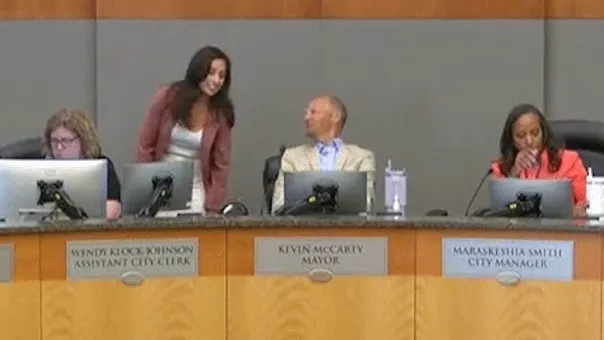
It was during this period of recess and public removal that the live microphone caught a private conversation between Mayor McCarty and Vice Mayor Talamantes. Talamantes was heard discussing the need to address disruptions, suggesting a process for barring individuals from future meetings. “We should go over this disruptions thing, because if we want to ban somebody in the future, like to take them out, we have to point out specifically…” she stated.
Mayor McCarty responded, citing legal constraints. “I know, but the city attorney said we can’t do that,” he replied. Talamantes countered, “We did it last time.” McCarty, shaking his head, reiterated the prohibition: “We can’t.” He added that he had spent considerable time exploring options, including a form of probation for attendees. Talamantes then appeared to realize the microphone was still active and quickly switched it off before the conversation continued, though its substance was already captured.
Differing Perspectives on the Exchange
Following the meeting, Mayor McCarty issued a statement clarifying the intent behind the private discussion. He emphasized that the conversation focused on existing procedures for ensuring orderly and transparent council meetings, rather than establishing new restrictions. “Every Tuesday, Vice Mayor Talamantes and I are responsible for overseeing and ensuring transparent, accessible, and open Council meetings,” McCarty stated. “Unfortunately, when meetings are repeatedly disrupted, we must discuss existing policies and rules to ensure Council meetings remain effective, orderly, and respectful for both the residents in attendance and the Councilmembers. We are committed to ensuring that all members of the public can access and engage safely without distraction or intimidation.”
The Sacramento City Attorney’s Office declined to comment on McCarty’s reference to legal advice during the hot-mic exchange, stating only, “The City Attorney’s Office has no comment and will not be providing comment on this matter.”
However, some activists and residents interpreted the exchange differently. Joshua Masias, a volunteer organizer with the Sac Immigration Committee, suggested to The Sacramento Bee that Talamantes’ comments indicated an authoritative desire to silence dissent. “It’s very authoritative how she wants to use her power,” Masias commented, adding that he found it notable that she was the one attempting to quiet the crowd.
Leanna Hunt, a vocal critic of the council, also voiced her frustration, comparing the situation to a monarch addressing subjects. “I’m fed up,” Hunt told the Bee. “It’s not even a tactic — I’m just tired of being treated like we are an audience and that the king is deigning to see us peasants today and when the peasants are unruly, the king gets upset.”
The city’s published meeting rules stipulate that members of the public have two minutes per agenda item and can speak on a maximum of four items per meeting, measures designed to facilitate the council’s business.
Ensuring Orderly Public Discourse
The incident highlights the ongoing challenge faced by many local governments in balancing the public’s right to express opinions during meetings with the need to maintain order and conduct official business. While the hot-mic conversation was brief and seemingly cut short, it has sparked debate about the boundaries of public participation and the methods officials consider for managing disruptive behavior. The city attorney’s office has remained silent on the specifics of the legal advice Mayor McCarty alluded to, leaving the precise limitations on barring attendees unclear.
Moving forward, Sacramento officials face the task of navigating these complex issues. The commitment to transparency and public engagement, as stated by Mayor McCarty, will be tested as the council seeks to uphold its meeting rules while respecting the diverse voices within the community. The underlying tension between immigration policy, sanctuary city status, and public input continues to be a significant factor in the city’s governance.