IOC Won’t Probe Infantino Over Trump’s Call on Balogun Red Card
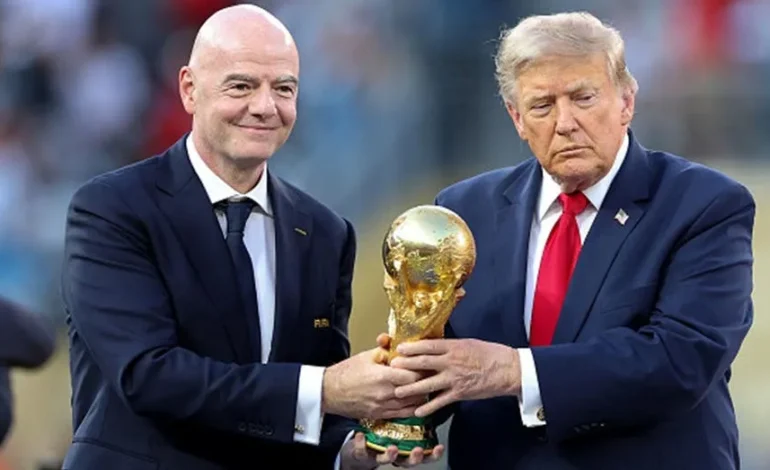

The International Olympic Committee (IOC) has announced it will not launch an investigation into FIFA President Gianni Infantino concerning a phone call he received from former U.S. President Donald Trump. The call reportedly discussed a controversial red card issued to American soccer player Folarin Balogun during a World Cup match.
No IOC Investigation into FIFA President
The IOC stated on Friday that the complaint filed against Infantino did not fall within its jurisdiction. A London-based non-governmental organization, FairSquare, had lodged a formal complaint with the IOC’s ethics commission earlier this month. The group cited the Olympic Charter’s emphasis on neutrality as a core principle for sports bodies like FIFA, of which Infantino has been a member of the IOC since 2020.
However, the IOC clarified that the complaint was focused on FIFA’s internal governance, its management practices, and its relationships with governments, rather than any direct dealings with the Olympic body itself. “Consequently, the complaint falls outside the IOC ethics commission’s jurisdiction,” the committee stated.
The Folarin Balogun Red Card Controversy
The incident in question involved Folarin Balogun, a key player for the U.S. Men’s National Soccer Team (USMNT), who received a red card in a round of 32 World Cup match. This initial dismissal would have made him ineligible for the subsequent game. The decision sparked considerable debate, with many arguing that the foul did not warrant a sending-off.
Following the controversy, FIFA ultimately decided to suspend the red card, allowing Balogun to participate in the next round. This reversal added another layer of contention to an already heated situation.
Trump’s Account of the Call
Donald Trump himself later confirmed that he had spoken with Gianni Infantino about the red card. According to Trump, he requested a review because he did not believe the action constituted a foul. He described the incident as a collision between two athletes rather than a deliberate act of aggression.
“All I did was, I asked for a review, because I didn’t think it was a foul,” Trump stated at the time. He elaborated that he believed it was a situation where two players became entangled, not a clear instance of violent conduct.
Trump emphasized that he did not instruct Infantino on what decision to make, suggesting that a committee, rather than Infantino directly, made the final call. He expressed his view that preventing a top player from participating would have been a significant blemish on the competition, and he felt the committee made the correct decision by overturning the card.
FIFA’s Stance and Match Outcome
FIFA maintained that its decision regarding Balogun’s red card was not influenced by the call from President Trump. The organization asserted that the review process and subsequent decision were handled according to its established protocols.
Despite the successful appeal and Balogun’s availability, the U.S. team’s World Cup run ended with a 4-1 loss to Belgium in the match where Balogun played.
FairSquare’s Concerns
The complaint by FairSquare highlights broader concerns about the governance and potential external influences on international sports federations. The organization’s action underscored the importance of maintaining the integrity and neutrality of sports organizations, particularly those with global reach and significant influence, aligning with the spirit of the Olympic Charter.
The IOC’s decision not to investigate means that the matter, as it pertains to the Olympic Committee’s ethics commission, is closed. FIFA’s internal processes and the specifics of its relationship with national governments and its own rules remain outside the IOC’s purview for this particular complaint.