


Ryan Clark’s Most Controversial ESPN Moments
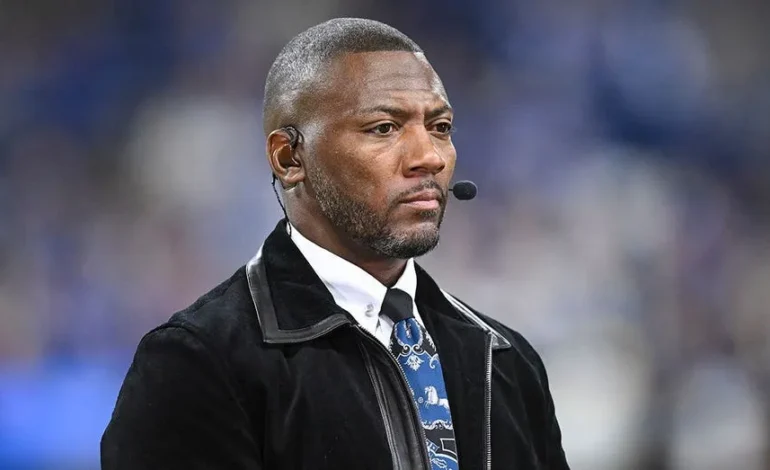

Ryan Clark is no longer a fixture on ESPN, concluding his tenure with the network amid a flurry of controversy. While the exact circumstances of his departure remain somewhat opaque, the period leading up to it was marked by a series of widely debated on-air comments and opinions that often ignited passionate responses from viewers and colleagues alike.
Shedeur Sanders’ Draft Slide and Race
One of the more striking claims made by Clark during his time at ESPN involved the 2025 NFL Draft and the perceived draft slide of quarterback Shedeur Sanders. As Sanders fell to the fifth round, some analysts suggested racial bias played a role. Clark echoed these sentiments, suggesting that factors beyond his lineage as Deion Sanders’ son contributed to his draft position. He posited that Sanders’ demeanor, his appearance, and even the color of his skin could be scrutinized at his position, implying these elements factored into teams’ decisions.
Sherrone Moore and the Fallout for Black Coaches
Following news that Sherrone Moore, then the head football coach at the University of Michigan, was involved in an affair with a staffer, Clark drew a connection to the hiring prospects of Black coaches in college football. Appearing on “First Take,” Clark asserted that the actions of Moore, who was the first African American head coach at Michigan, would unfairly impact the hiring landscape for other Black coaching candidates. He argued that a community of coaches would be judged based on Moore’s conduct, a viewpoint that drew significant criticism for its broad generalization and perceived racial framing.
Tom Brady: Not a ‘Generational Talent’?
In a discussion about what constitutes a “generational talent” in football, Clark sparked considerable debate by omitting Tom Brady from that elite category. While discussing Arch Manning, Clark stated that he did not consider Brady, Drew Brees, or Peyton Manning to be generational talents. This assertion stood in contrast to many observers who widely regard Brady as the greatest quarterback in NFL history. Clark’s stance, which included naming John Elway and Andrew Luck as generational talents while excluding Brady, was seen by many as a particularly contentious take, especially given Brady’s unparalleled career achievements.
‘America’s History’ and NFL Head Coaching Hires
During the 2026 NFL offseason, when few minority candidates were hired for head coaching positions, Clark suggested that the broader history of the United States played a role. While acknowledging that racism might not be the sole factor, he argued that the nation’s historical context, including its legacy of prejudice, influenced the outcomes. He touched upon the difficulty for Black individuals to accumulate generational wealth, which he linked to ownership demographics and, consequently, the coaching pipeline. This perspective framed the lack of Black head coaches not just as a current issue within the sport, but as a symptom of deeper societal and historical factors.
Critique of Peter Schrager’s Analyst Role
A particularly sharp exchange occurred when Clark questioned the credibility of fellow ESPN personality Peter Schrager, a non-player, as an NFL analyst. During a debate on “Get Up,” Clark remarked that Schrager’s perspective might be limited by his lack of playing experience, stating, “that’s the non-player in you.” Schrager immediately challenged the comment, asking Clark not to belittle him and asserting his right to offer alternative viewpoints. Clark’s remarks were perceived by some as arrogant and dismissive, particularly when contrasted with how he might engage with other analysts who also lack playing backgrounds.
Kyren Lacy Incident and Apology
In one of the most serious controversies, Clark made definitive statements regarding the case of former LSU player Kyren Lacy, who died by suicide in April 2025 after facing charges including negligent homicide. While discussing the case, Clark asserted that Lacy was innocent and that police had manipulated statements. He stated, “Kyren Lacy was innocent. Kyren Lacy should be here with us.” However, after the Louisiana State Police released footage showing Lacy speeding and driving recklessly shortly before the fatal crash, Clark was compelled to issue a live on-air apology. He acknowledged failing to gather all factual information before speaking and expressed regret for his premature declarations about Lacy’s innocence.
Feud with Robert Griffin III Over Angel Reese and Caitlin Clark
Clark also engaged in a public feud with Robert Griffin III (RGIII) concerning discussions about Angel Reese and Caitlin Clark. On his podcast, Clark told RGIII that he was not permitted to discuss perceived animosity from Reese toward Clark due to RGIII’s marriages to white women. Clark argued that RGIII could not authentically speak on the experiences of Black women in sports without such conversations occurring within his own household. This comment was widely criticized as intrusive and irrelevant, leading to an eventual apology from Clark after RGIII publicly called him out for bringing his family into the debate.
Conclusion
Ryan Clark’s tenure at ESPN was undeniably eventful, marked by a consistent willingness to engage in provocative discussions. His commentary frequently centered on race, talent evaluation, and the broader societal context of sports, often drawing sharp reactions. While his supporters might view his contributions as fostering necessary dialogue, critics often pointed to his statements as divisive and lacking in factual rigor. The series of controversies, culminating in his departure, leaves a complex legacy regarding his impact on sports media discourse.