



American Climber’s Remains Found After Broad Peak Avalanche
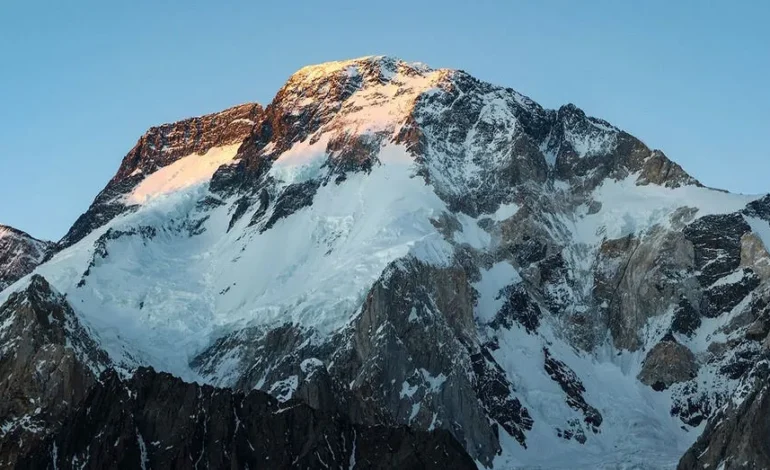

The search for climbers lost in a devastating avalanche on Pakistan’s Broad Peak concluded with the grim discovery of remains belonging to an American national, officials confirmed Friday. Sarah Mallory Geis was among a group of at least 10 international climbers who were caught in the disaster while ascending the formidable mountain on Thursday.
Rescue teams also located the remains of Nadhira Ahmed Abdullah Al Harthy from Oman and Pur Bahadur Gurung from Nepal on Friday. Drone footage captured by the rescue operation revealed indications of additional bodies in the search area, according to local authorities. The perilous conditions have complicated efforts to recover all those affected.
Broad Peak Avalanche Claims Lives Amidst Challenging Rescue Operations
Broad Peak, standing at an imposing 26,414 feet, ranks as the twelfth-tallest mountain globally and presents extreme challenges to even the most experienced mountaineers. The avalanche struck a diverse group of climbers, including individuals from Nepal, Pakistan, China, and the United Kingdom.
Among the missing is Nirmal Purja, a celebrated 43-year-old British mountaineer of Nepalese origin, widely recognized for his record-setting feat of scaling the world’s 14 highest mountains in a single expedition. Purja’s remarkable achievements were notably chronicled in the popular Netflix documentary, “14 Peaks: Nothing Is Impossible.” His presence on Broad Peak highlighted the mountain’s allure for elite climbers pushing the boundaries of human endurance.
Rescue Efforts Halted and Resumed Amidst Extreme Conditions
The Alpine Club of Pakistan, through its president Irfan Arshad, expressed a commitment to continuing search operations. “We hope to continue our operations, both aerial search and the ground rescue, till the time we find the survivors or the dead bodies,” Arshad stated on Friday. However, the operation faced a temporary setback when severe weather conditions forced a halt on Friday night.
Sajid Hussain, deputy director of the tourism department in Gilgit-Baltistan, described the rescue zone as “remote and difficult,” underscoring the logistical hurdles faced by emergency responders. The Gilgit-Baltistan police shared an update on Facebook Friday, detailing the ongoing efforts:
- High-altitude porters and rescue teams are actively working to retrieve the bodies.
- The recovered remains are being transported to the base camp.
- The operation is being conducted with extreme caution due to the rugged terrain and challenging weather.
The treacherous nature of Broad Peak, combined with unpredictable mountain weather, creates an environment where rescue operations are inherently fraught with danger and complexity. The dedication of the rescue teams, despite these formidable obstacles, underscores the profound risks undertaken in high-altitude mountaineering.
The Dangers of High-Altitude Mountaineering
Incidents like the Broad Peak avalanche serve as a stark reminder of the inherent dangers associated with climbing the world’s highest peaks. Factors such as extreme altitude, unpredictable weather patterns, and the risk of avalanches contribute to a high-stakes environment where survival is often a matter of split-second decisions and sheer luck.
Broad Peak, while not as technically demanding as some of its neighbors in the Karakoram range, still presents significant physiological and environmental challenges. The sheer scale of the mountain and its exposure to the elements mean that even minor issues can quickly escalate into life-threatening situations. The international composition of the affected group also highlights the global appeal and inherent risks of extreme mountaineering, drawing adventurers from across the world to test their limits against nature’s most formidable challenges.
The ongoing efforts to locate any potential survivors and recover the deceased underscore the commitment of the mountaineering community and Pakistani authorities to ensuring that no climber is left behind, even in the face of overwhelming adversity. The focus now shifts to the careful and respectful recovery of all individuals lost in this tragic event.