




Psychosis Expert’s Testimony Aids Lindsay Clancy Defense
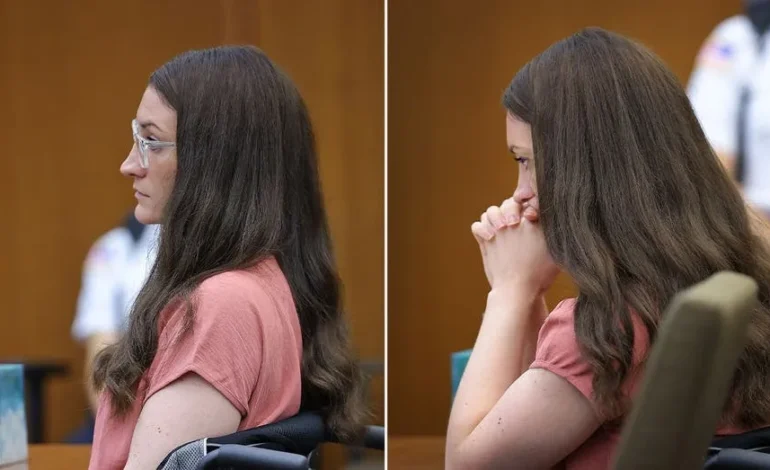

In the ongoing trial of Lindsay Clancy, accused of tragically killing her three young children, the defense has secured a significant concession from a key prosecution witness. A psychiatrist testifying for the prosecution acknowledged that individuals experiencing psychosis can still communicate, formulate plans, and act on those plans, a point crucial to the defense’s argument that Clancy was not criminally responsible due to postpartum psychosis.
Defense Strategy Focuses on Mental State
During cross-examination, defense attorney Kevin Reddington pressed Dr. Sejal Shah, an associate chief of psychiatry and medicine at Brigham and Women’s Hospital, on the nature of psychosis. Reddington specifically questioned whether a person must exhibit extreme physical incapacitation, such as “drooling and stumbling,” to be considered psychotic. Dr. Shah confirmed that this is not the case and agreed that a person in a psychotic state can still communicate effectively with others.
Lindsay Clancy faces charges of murder and strangulation in the deaths of her children: Cora, 5, Dawson, 3, and Callan, 8 months. The family resided in Duxbury, Massachusetts. While prosecutors contend Clancy acted with deliberate intent and full awareness, her defense team asserts she was suffering from severe postpartum psychosis at the time of the events.
Expert Weighs in on Case’s Central Question
Seth J. Zuckerman, a seasoned criminal defense attorney and founder of Zuckerman Legal Group, highlighted that the ultimate determination in the case will hinge on Clancy’s mental state at the precise moment the children died. “What was in her mind at the exact time that she killed her children?” Zuckerman commented, noting that prosecutors have sought to establish Clancy’s lucidity by examining her husband Patrick Clancy’s activities and communications during the critical period.
Psychiatrist’s Initial Evaluation and Defense’s Interpretation
Dr. Shah first evaluated Clancy five days after the children’s deaths. She testified that Clancy appeared confused and made errors during a cognitive assessment. Furthermore, Clancy reported experiencing visual hallucinations following spinal surgery. Dr. Shah diagnosed delirium, attributing it to potential factors such as anesthesia, oxygen issues, or an elevated heart rate. These symptoms reportedly resolved by the following day.
In subsequent evaluations, Clancy presented as calm and cooperative, exhibiting organized and goal-directed thinking. She denied experiencing hallucinations and did not report suicidal or homicidal intentions during these later assessments. Reddington skillfully used this testimony to argue that these later observations did not preclude the possibility of psychosis during the killings.
Reddington’s line of questioning aimed to establish that Clancy was not exaggerating her symptoms for legal advantage. When asked if Clancy was an honest patient, Dr. Shah responded affirmatively. The defense attorney further probed, asking if Clancy had claimed to be seeing visions, hearing voices, or experiencing suicidal or homicidal ideation during their interactions. Dr. Shah confirmed that Clancy had not made such claims to her.
“So this is not, in your opinion, someone who was trying to exaggerate her conditions for some legal reason, correct?” Reddington asked. “No,” Shah replied.
Defense Sees ‘Extremely Helpful’ Testimony
Zuckerman described Dr. Shah’s concession as “extremely helpful to the defense,” though he cautioned it was not a definitive victory. “They want to portray her as someone who wasn’t manipulative, who didn’t have some grand plan,” he explained, referring to the prosecution’s likely strategy.
During redirect examination, prosecutors sought to counter the defense’s narrative by focusing on Clancy’s medication history. Dr. Shah acknowledged that Clancy was not consistently taking all prescribed psychiatric medications and was unaware that some prescriptions had been minimally used or left untouched. Additionally, Dr. Shah confirmed that Clancy had requested do-not-resuscitate (DNR) status after surviving a fall from a second-story window following the incident. The hospital initially deferred the DNR request due to the reported suicide attempt, and Clancy later agreed that stabilizing her mental health should precede any reconsideration of the status.
Legal Standard in Massachusetts
Zuckerman reiterated that Monday’s cross-examination provided valuable testimony supporting the defense’s position that Clancy could exhibit periods of lucidity while simultaneously experiencing severe psychiatric symptoms. However, he stressed that the defense must ultimately link these symptoms directly to the time of the children’s deaths.
A unique aspect of Massachusetts law places the burden on the prosecution to prove beyond a reasonable doubt that a defendant was criminally responsible at the time of the offense. “That is unique to Massachusetts, and I think it’s beneficial to the defense here,” Zuckerman stated.
Lindsay Clancy, a former labor and delivery nurse at Massachusetts General Hospital, has pleaded not guilty to three counts each of murder and strangulation. The presiding judge, William Sullivan, has instructed the jury that the prosecution must establish Clancy’s criminal responsibility at the time of the killings to secure a conviction.