



Fetterman Urges Democrats to Reject Radical Fringe
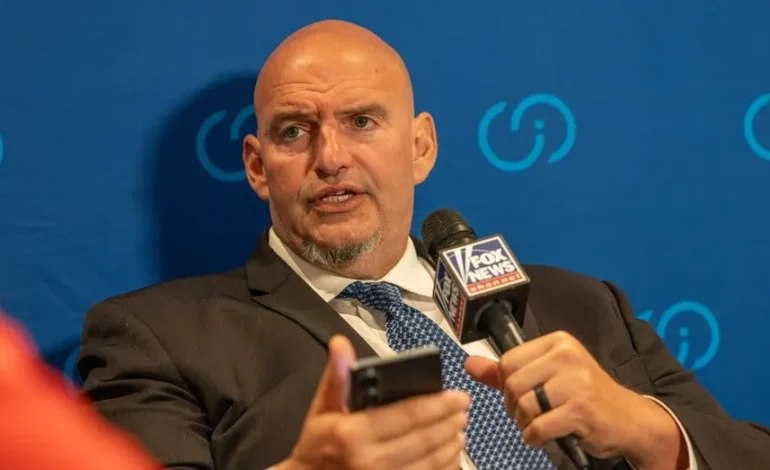

Pennsylvania Senator John Fetterman has issued a stark warning to the Democratic Party, urging them to steer clear of what he describes as a growing embrace of socialist and communist ideologies. Speaking on Tuesday, Fetterman expressed concern that certain influential figures, particularly online streamers with large followings, are pushing the party towards a more radical political landscape. He specifically called out streamer Hasan Piker, whose past praise for figures like Mao Zedong and the Cuban regime, Fetterman argues, is fundamentally at odds with Democratic values.
Fetterman’s Concerns Over Party Direction
“I would never try to elevate… a communist just because [Piker] has followers on some, on Twitch, whatever that is,” Fetterman stated, emphasizing that any Democrat should find it “foreign” to align with someone who praises Mao and Cuba. He believes this ideological alignment is beginning to significantly impact the party’s direction.
Fetterman voiced these sentiments on the sidelines of the Israel on Campus Coalition conference, where he addressed attendees. He described the current trajectory of the Democratic Party as “troubling” and pointed to recent primary elections as a critical test of whether the party will continue to embrace candidates associated with its progressive wing. The senator suggested that the party’s core values are being jeopardized by attempts to “pander to the fringe.”
Primary Election Results and Shifting Alliances
The senator’s remarks come as primary elections have shown mixed results for different factions within the Democratic Party. While establishment candidates secured several victories, including the defeat of a prominent progressive challenger in Missouri, other high-stakes races remained too close to call. In Michigan, the Democratic Senate primary saw a contest between a candidate supported by socialists and a more moderate incumbent, highlighting the internal party debates.
Fetterman observed that in recent electoral contests, candidates who are perceived as more radical or anti-Israel have gained traction. He specifically referenced Governor Gavin Newsom’s past description of Israel, suggesting such characterizations are inaccurate and politically damaging. “He knows better, that that’s not true,” Fetterman commented regarding such statements.
The Israel-Palestine Conflict as a Dividing Line
The ongoing conflict between Israel and Palestine has emerged as a significant point of contention within the Democratic Party, according to Fetterman. He noted that even pro-Israel Democrats now feel compelled to qualify their support for the Jewish state, a trend he finds concerning. Fetterman stated that terms like “Zionist” are increasingly being used negatively, turning pride in supporting Israel into something that requires defense.
“In other words, being proud, pro-Israel, that’s become a slur, and people have to defend that,” he explained. This shift, he believes, indicates a broader ideological drift away from traditional Democratic stances.
Fetterman on Foreign Policy and Presidential Authority
Beyond domestic political dynamics, Fetterman also touched upon foreign policy, particularly concerning Iran. He highlighted his divergence from many Senate Democrats by supporting the Trump administration’s decision to strike Iranian nuclear facilities. Fetterman framed this action as a logical step to prevent Iran from acquiring nuclear weapons.
“If you don’t want them to acquire a nuclear bomb, it’s pretty reasonable to bomb their nuclear facilities, they want to build one,” Fetterman reasoned. He also pointed out his consistent voting record against presidential war powers legislation, underscoring his stance on executive authority in foreign conflicts. He reiterated his long-held view that Iran itself poses a significant problem that successive American presidents have grappled with.
Broader Context: Warnings from Across the Political Spectrum
Fetterman’s warnings echo sentiments expressed by former President Donald Trump earlier in the summer. Trump had cautioned that the Democratic Party was moving beyond traditional socialism, characterizing some elements as “hardcore, godless communists.” He described this trend as a “major threat to our country.” Following recent primary results, Trump suggested that the Democratic Party was in disarray and proposed that its more radical members might consider forming a “communist of America party.”
The Israel on Campus Coalition’s National Leadership Summit, where Fetterman spoke, convened over 800 pro-Israel students for advocacy training, networking, and discussions focused on supporting Israel, combating antisemitism, and strengthening U.S.-Israel relations on college campuses. The senator’s address aimed to reinforce these themes amidst the backdrop of evolving political discourse within his own party.
Ultimately, Fetterman’s public statements serve as a clear signal from within the Democratic Party itself, urging a return to core principles and a rejection of ideologies that he believes alienate mainstream voters and undermine the party’s foundational values. The senator’s focus on issues like support for Israel and the dangers of embracing communist or radical socialist platforms underscores his commitment to what he perceives as the pragmatic center of American politics.