


Senate Advances Funding Bill, Averting Shutdown Until December

The U.S. Senate has taken a significant step toward preventing a government shutdown, advancing a funding bill that will keep federal agencies operational until early December. This development follows months of intense negotiation and uncertainty, ultimately leading Senate Democrats to agree to a deal that pushes the funding deadline past the upcoming November elections.
Averting the Crisis
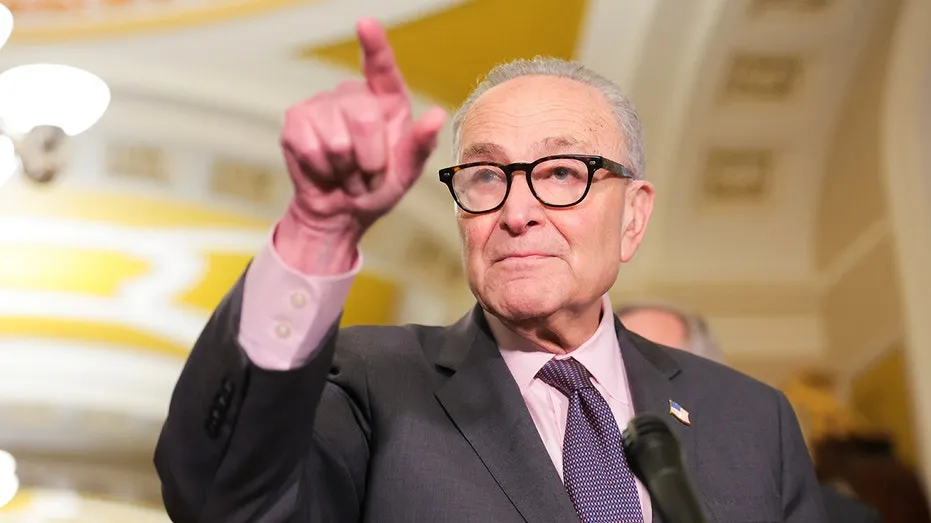
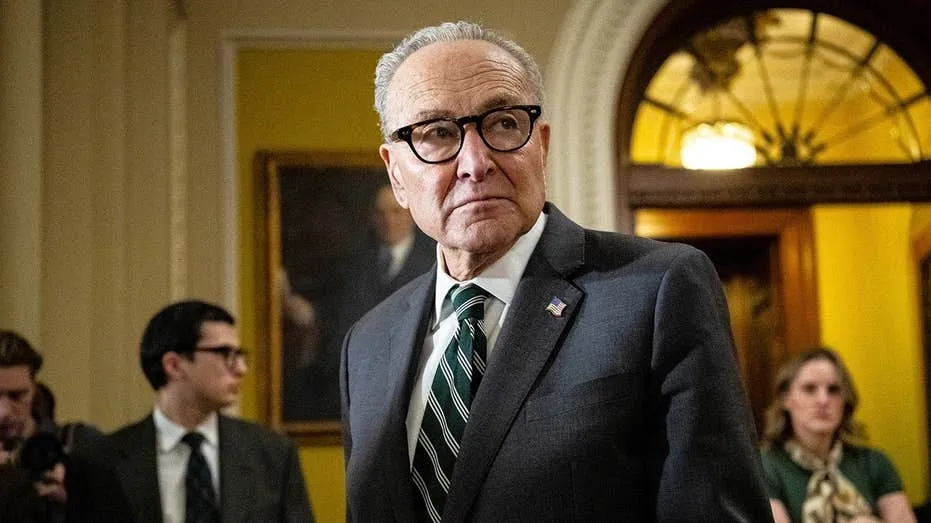
The agreement, reached on a Saturday, represents a compromise between the parties to extend government funding through a continuing resolution (CR). This move effectively sidesteps a potentially disruptive shutdown that could have had significant political ramifications in the lead-up to the midterm elections. Senate Majority Leader Chuck Schumer, D-N.Y., and his Democratic colleagues ultimately relented on their previous stances, adhering to a bargain struck with Republicans to maintain government operations well into the fall.
The decision to advance the bill was seen by some Republicans as a strategic political calculation. Senate Minority Leader John Thune, R-S.D., suggested that Democrats likely opted to avoid the political fallout of being associated with a government shutdown. “I think they didn’t want to spend the next, well… three months defending attacks from Republicans about wanting to shut the government down,” Thune commented, implying that Democrats recognized the potential electoral disadvantage of such a scenario.
Schumer Claims Concessions
Despite the Republican perspective, Senator Schumer framed the outcome as a victory for Democrats, emphasizing their long-standing desire to keep the government funded. He highlighted that the bipartisan continuing resolution included key concessions from the Trump administration concerning changes to federal grant rules. “We want to reach across the aisle and hammer out a budget that delivers for the American people,” Schumer stated on the Senate floor. He added that the CR provides “the breathing room necessary to work out a budget that helps make life more affordable to working families and reigns in Trump’s rampant chaos, his rampant corruption.”
Republican Messaging and Past Shutdowns
For months, Republicans had been actively messaging that congressional Democrats might be willing to orchestrate another government shutdown. In the Senate, discussions had even surfaced about measures to hold lawmakers accountable, such as agreeing to forgo their salaries during a shutdown. This comes after two notable government shutdowns in recent history, one lasting 43 days and another stretching to 76 days.
According to Thune, the political climate this time did not appear to favor Democrats initiating a shutdown. He suggested that Democrats perceived the current issue set as more advantageous for their electoral prospects in the fall. “I think they view a government shutdown or the prospect of not funding the government as creating uncertainty that perhaps didn’t help their chances,” Thune explained.
The Road Ahead: House and Post-Election Negotiations
While the Senate has resolved its immediate funding challenge, the battle is set to continue in the House of Representatives. If the bill passes the House, it will grant lawmakers additional time to engage in stalled negotiations over the full appropriations process for the upcoming fiscal year.
However, the timeline presents a unique political dynamic. By the time the appropriations process resumes in earnest, Congress will likely be in the post-midterm election “lame duck” session. The willingness and political appetite for reaching a comprehensive funding deal during this period could be significantly influenced by the election outcomes.
The prospect of finalizing a budget by the new December 11 deadline remains uncertain. Senator John Kennedy, R-La., expressed skepticism about the likelihood of a timely resolution, humorously remarking that such an outcome would be as improbable as “frozen hell” or “donkeys flying.” His comment underscores the deep-seated challenges and potential for further political maneuvering that lie ahead in the quest for a stable federal budget.
Key Takeaways
- The Senate has advanced a continuing resolution (CR) to fund the government, averting a shutdown.
- The CR extends funding until December 11, pushing the deadline past the November elections.
- Democrats claimed victory, citing concessions on federal grant rules, while Republicans suggested it was a political move to avoid shutdown blame.
- The funding bill now moves to the House of Representatives for consideration.
- Finalizing appropriations is expected to occur during the post-election lame duck session, presenting potential challenges.
This agreement provides a temporary reprieve, allowing lawmakers to focus on the upcoming elections while deferring the complex task of full budget reconciliation to a later, potentially more politically charged, period.