



Jayden Daniels’ LSU Jersey Dispute: A Fight for Respect or a Reputational Blunder?
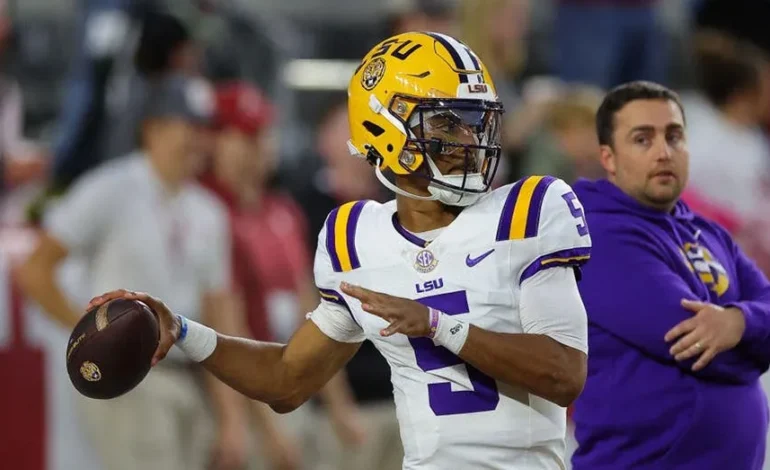

The college football offseason, already a whirlwind of NIL deals and transfer portal drama, has been further complicated by a public dispute between former Heisman Trophy winner Jayden Daniels and his alma mater, LSU. Representatives for Daniels have issued a cease-and-desist letter to the university, demanding that LSU stop using his name in connection with the No. 5 jersey, a number he famously wore during his decorated collegiate career. This move, framed by Daniels’ camp as a matter of “respect,” has ignited a debate about legacy, promises, and the evolving landscape of college athletics.
The Genesis of the Dispute: A Coveted Jersey Number
At the heart of the conflict is the No. 5 jersey, a number now assigned to freshman quarterback DJ Pickett. According to reports, Pickett was promised the jersey number during his recruitment by a previous LSU coaching staff. This promise, however, put the current administration in a difficult position, caught between honoring a commitment to a current player and respecting the legacy of a Heisman winner.
The issue of who should wear Daniels’ former number has reportedly been a point of discussion since Brian Kelly took over as head coach. While Kelly may have harbored reservations, the commitment made to Pickett appears to have been the deciding factor for the current coaching staff. LSU head coach Lane Kiffin has stated that he felt he had no choice but to honor the promise made to Pickett, emphasizing that he wasn’t present for the initial agreement and wouldn’t judge it.
“That was a situation that was promised to him in recruiting here for him to sign here,” Kiffin explained recently. “And I’ve done a lot of research on that with the family and the representatives and people. And so, really, I didn’t have a decision to make. It was promised to the kid. I’m not going to judge something that I wasn’t here for. But when a kid’s promised something to come to school, he should wear it.”
Daniels’ Camp Cries Foul: A Matter of Respect
Jayden Daniels’ representatives, including his mother Regina Jackson who acts as his agent, have characterized LSU’s decision to allow Pickett to wear the No. 5 as a “disrespectful” act. This perception has led to the issuance of the cease-and-desist letter, a strong legal measure aimed at preventing LSU from leveraging Daniels’ name or likeness in relation to the jersey. The move suggests a significant breakdown in communication and a feeling of being slighted by the university that propelled Daniels to national stardom.
The timing of this dispute is particularly notable, as Daniels is preparing for his rookie NFL season with the Washington Commanders. His camp’s decision to engage in a public battle with his former school, especially over a jersey number, has raised eyebrows and led to questions about the advice Daniels is receiving. While the pursuit of “respect” is understandable, picking a fight with the institution that provided him with a platform for his Heisman campaign and subsequent NFL draft selection appears, to some observers, to be a misstep.
The NIL Era and Shifting College Football Norms
This conflict underscores the complex realities of the Name, Image, and Likeness (NIL) era in college football. Unlike previous generations, where a player’s legacy was primarily tied to on-field achievements and the indelible mark left on a program, the current environment is fraught with commercial considerations and contractual agreements.
The article draws a contrast with past Heisman winners like Tim Tebow, who, despite his iconic status at Florida with the No. 15 jersey, did not publicly object to other players wearing his number after his departure. The implication is that Tebow understood that his legacy was cemented by his actions and accomplishments, not by exclusive ownership of a jersey number. Similarly, Joe Burrow, another LSU legend who wore No. 9, is unlikely to object to future Tigers donning the number, as his place in LSU lore is secured by his national championship and Heisman win.
Daniels’ camp, however, seems to be operating under a different set of expectations, one where the “respect” factor extends to controlling who wears their former numbers. This perspective, while perhaps stemming from a desire to protect their legacy, clashes with the more fluid and business-driven nature of modern college athletics.
Daniels’ Public Statement and the Path Forward
In response to the escalating situation, Jayden Daniels himself posted a statement on social media, attempting to de-escalate the conflict. He expressed gratitude for his time at LSU and pride in his team’s accomplishments, while acknowledging that “issues to be worked out between my team and LSU.” He emphasized his focus on preparing for his NFL career with the Commanders and expressed trust that the matter could be resolved privately.
“I have been locked in on training camp and that’s been my number one focus,” Daniels wrote. “I have a lot of gratitude for my time at LSU and I’m proud of what my teammates and I accomplished there. Obviously there are issues to be worked out between my team and LSU and my hope is that it will get done privately. My sole personal focus is on Commanders’ football. I realize the business of football is unique and I trust this can all be resolved.”
A Question of Strategy and Reputation
The decision by Daniels’ camp to pursue a public legal challenge against LSU, particularly before his rookie NFL season has even begun, has drawn criticism. Some suggest that this approach might have been intended to garner public support against a perceived slight, but it appears to have backfired, potentially tarnishing Daniels’ reputation among both college football fans and NFL decision-makers.
The article questions the strategic wisdom of this dispute, suggesting that Daniels may not have fully grasped the potential ramifications. While the NIL landscape allows athletes more leverage, the manner in which this leverage is applied can significantly impact public perception. The hope, as expressed in the original reporting, is that the resolution of this dispute proves to be financially worthwhile for those advising Daniels, given the potential reputational cost.
Conclusion: Legacy Beyond the Jersey
Ultimately, the conflict over the No. 5 jersey highlights the complex interplay of personal legacy, institutional promises, and the commercial realities of modern college sports. While Jayden Daniels’ achievements at LSU are undeniable and have earned him a place in the program’s history, the dispute over a jersey number raises questions about how athletes and their representatives navigate these new frontiers. The true measure of a player’s legacy, as history has shown, often lies not in who wears their number, but in the indelible impact they leave on the game itself.