

DOJ Probes William & Mary Over Race-Conscious Scholarships
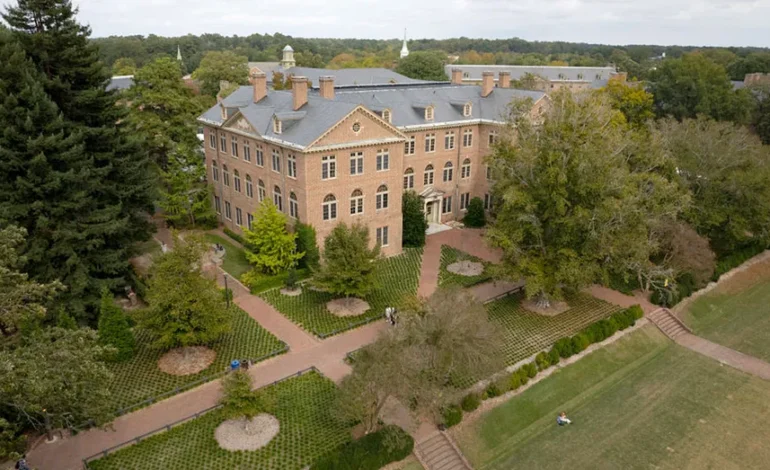

The U.S. Department of Justice has launched an investigation into the College of William & Mary, examining whether certain scholarships and student benefits at the Virginia-based public university employ unlawful race-based criteria. The probe, announced Monday, centers on potential violations of Title VI of the Civil Rights Act of 1964, which prohibits racial discrimination in federally funded programs.
Justice Department Cites Concerns Over Race-Based Preferences
Harmeet Dhillon, Assistant Attorney General for Civil Rights, stated that awarding opportunities based on skin color is illegal and contradicts the principles of a color-blind Constitution. The department intends to ascertain if William & Mary’s scholarships or other student benefits provide preferential treatment based on race. “The Department will not turn a blind eye to race-based preferences, however they are packaged or portrayed by universities,” Dhillon affirmed.
The investigation follows a pattern of scrutiny by the Justice Department towards educational institutions regarding admissions, scholarships, and diversity initiatives. The DOJ has requested specific documents and information from William & Mary by September 8, aiming for voluntary compliance but reserving the right to pursue formal action, potentially including the termination of federal financial assistance, if necessary.
Specific Programs Under DOJ Review
The DOJ’s review encompasses several programs at William & Mary:
- W&M Scholars Program: This undergraduate scholarship, which covers at least the full cost of in-state tuition and fees, is not explicitly race-limited. However, the DOJ noted that applicants expressing an “interest in diverse people and perspectives” receive “top consideration,” alongside academic merit and socioeconomic factors.
- Martha L. Muguira Fellowship: A need-based graduate fellowship within the W&M School of Education, which the DOJ states gives preference to Hispanic or Latina women demonstrating financial need.
- Holmes Scholars Program: This doctoral program within the School of Education, described by the DOJ as targeting “future education leaders of color,” offers mentorship, career fair access, and professional development opportunities. William & Mary’s current website characterizes participants as students “from traditionally under-represented backgrounds.”
- Lemon Legal Scholars Program: The DOJ indicated that the W&M Law School offers up to five full scholarships that appear to be exclusively for graduates of Historically Black Colleges and Universities (HBCUs). William & Mary’s current website confirms it will award at least five full scholarships to HBCU graduates admitted to its JD program, along with networking and academic support.
- Reaching Back Scholarship: Also at the Law School, this need-based scholarship reportedly offers a preference to HBCU graduates or those who enhance the diversity of the law school community, according to the DOJ.
Some of these programs were reportedly established to address the historical legacy of slavery and racial discrimination at William & Mary. The university’s current descriptions often frame these initiatives around supporting students from under-represented backgrounds or fostering diversity.
William & Mary Responds
In response to the federal inquiry, William & Mary issued a statement emphasizing its commitment to maintaining nondiscriminatory learning environments and adhering to all applicable laws. The university stated, “We are committed to nondiscriminatory learning environments across our campus and complying with all state and federal laws.”
The Department of Justice clarified that the investigation has not yet reached any conclusions. This review adds to a broader trend of federal scrutiny concerning race-conscious policies in higher education, particularly following shifts in legal interpretations regarding affirmative action and diversity, equity, and inclusion (DEI) programs.
Context of Federal Scrutiny
The investigation into William & Mary is part of a wider pattern of actions taken by the Justice Department under the Trump administration targeting educational institutions. These actions have frequently focused on issues such as race-based admissions, scholarships, DEI programs, and allegations of antisemitism on college campuses. The legal landscape surrounding affirmative action and race-conscious policies in education has been particularly dynamic, with significant Supreme Court rulings influencing how universities can consider race in their admissions and program offerings.
The DOJ’s Civil Rights Division plays a crucial role in enforcing federal laws that prohibit discrimination. Its compliance reviews are designed to ensure that institutions receiving federal funds operate in accordance with these legal mandates. The department’s approach often involves initial requests for information and voluntary resolution, but it possesses the authority to escalate to more formal legal proceedings if compliance is not achieved.
Looking Ahead
The outcome of the William & Mary investigation could have implications for how universities across the country structure their diversity-focused programs and financial aid offerings. As institutions navigate the evolving legal and social environment, they face the challenge of promoting inclusivity while strictly adhering to anti-discrimination laws. The DOJ’s continued focus on these issues signals an ongoing effort to review and potentially reshape race-related policies within the higher education sector.