
WNBA Fans Recount Ejection Threat Over XX-XY Athletics Shirt
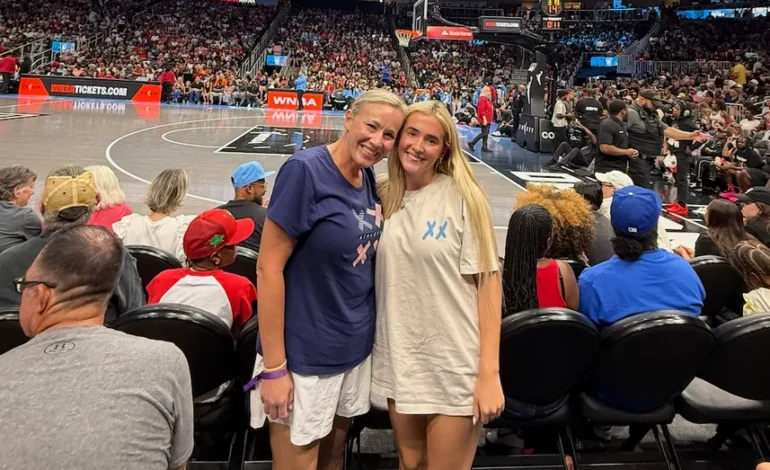

A mother and daughter attending a WNBA game in Atlanta were reportedly told by security they might be ejected if they didn’t cover up shirts displaying “XX-XY Athletics.” Kasey Thomason and her daughter Annie shared their experience on Monday, recounting the incident that occurred during a game between the Indiana Fever and the Atlanta Dream at State Farm Arena.
Incident at State Farm Arena
According to Kasey Thomason, a security guard approached them and requested they change their XX-XY Athletics shirts, suggesting they wear an Atlanta Dream t-shirt instead. She stated the guard seemed unsure of the specific reason for the request, only that someone had deemed the shirts offensive.
“He didn’t know what was offensive about it,” Kasey recounted. “He said he didn’t even understand but since someone told on us and said that they were offensive, we had to cover up, put on our Atlanta Dream shirts instead of our XX-XY.”
Annie Thomason expressed her shock at the situation. “I was flabbergasted. It was the first time I experienced anything like that. I just had no words except like who is offended by the T-shirt at this point?” she said.
WNBA Responds to Fan Accounts
The WNBA acknowledged the incident in a statement released Monday. A league spokesperson confirmed awareness of interactions where fans were asked by league security to cover their shirts, adding, “This should not have happened.”
However, Annie Thomason felt the league’s statement did little to alleviate her concerns. “It’s 100% going to happen again until people actually do something about it,” she stated. “And no, it does not make me feel better because they’re not going to do anything about it.”
Public Opinion on Transgender Athletes in Women’s Sports
The incident has brought renewed attention to the ongoing debate surrounding transgender athletes in women’s sports. A survey conducted in 2025 by The New York Times and Ipsos shed light on public sentiment regarding this issue.
The poll, which surveyed 2,128 individuals, found that a significant majority of Americans, including a majority of Democrats, believe transgender athletes should not compete in women’s sports. Specifically, 79% of all participants indicated that individuals who identify as women but were assigned male at birth should not be allowed to participate in women’s athletic competitions.
Breaking down the political affiliations, the survey revealed that 67% of Democrats or those leaning Democrat held this view. Among Republicans surveyed, the number was substantially higher, with 94% expressing the same opinion.
Kasey Thomason suggested that the actual level of agreement among Americans might be even greater than the poll indicated. “I’m pretty sure we’re like 90-10, 95-5 on men in women’s sports, but that 5 or 10% is so loud against us and it makes no sense,” she commented. “Like, common sense, people. That’s all we’re asking for.”
Broader Context and Fan Reactions
The XX-XY Athletics brand positions itself as a supporter of biological sex distinctions in sports. Their merchandise often features slogans and designs that align with this viewpoint, sparking discussions and, at times, controversy among sports fans.
Fans attending sporting events often express their allegiances and opinions through apparel. While most fan attire is accepted without issue, certain messages or symbols can sometimes lead to friction with venue staff or other attendees, particularly when they touch upon sensitive social or political topics.
The WNBA, like other professional sports leagues, navigates a complex landscape of fan engagement, league policies, and societal discussions. The league’s statement indicates an acknowledgment that the security’s actions in this instance did not align with their intended protocols.
For Kasey and Annie Thomason, the experience at the Atlanta game was a stark reminder of how deeply divisive the issue of transgender participation in sports has become, leading to unexpected confrontations even in casual settings like a basketball game.
The differing perspectives highlighted by the survey and the personal account from the Thomasons underscore the ongoing national conversation about gender identity, athletic competition, and the boundaries of free expression at public events.