


Publix Ditches 10-Item Limit in Express Lanes
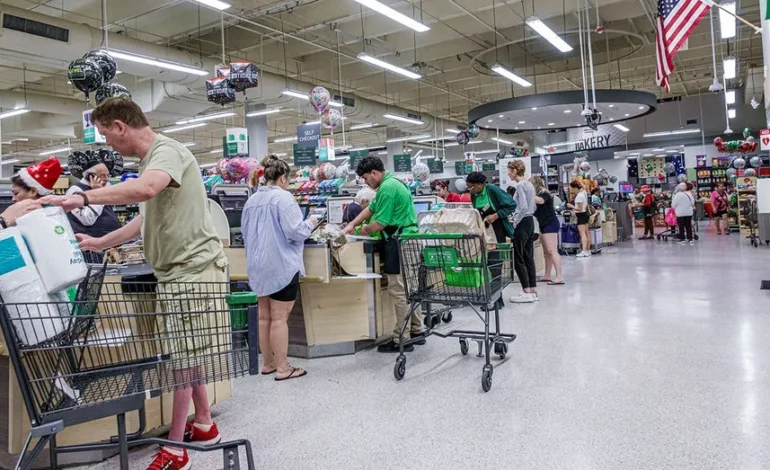

Publix, the beloved supermarket chain with a strong presence across the Southeastern United States, is making a significant adjustment to its checkout process. The company has quietly retired the long-standing 10-item limit previously enforced in its express checkout lanes. This move aims to grant employees greater discretion in managing customer flow, with the ultimate goal of speeding up the checkout experience for everyone.
A Shift in Express Lane Strategy
For years, shoppers have navigated the familiar “10 items or less” signage at designated express lanes. However, these signs are now being replaced with simpler “express” labels. A spokesperson for Publix explained the rationale behind this strategic shift, stating, “To better serve our customers and improve checkout efficiency, we recently updated our express lane process to provide associates with greater flexibility in managing customer flow.” The emphasis, according to the company, is no longer on a strict item count but on ensuring customers are processed as swiftly and efficiently as possible.
This change doesn’t signal the end of express checkout at Publix. Instead, it represents a move away from a rigid numerical rule. The updated policy allows store associates to consider various factors when directing customers to lanes. These might include the overall busyness of the store, the size of a customer’s order, or even the complexity of scanning certain items. This flexibility could prove particularly useful during peak shopping hours or when dealing with orders that, while under the old limit, might still take a considerable amount of time to process.
Customer Reactions and the Rise of Self-Checkout
As expected, the alteration to the express lane policy has sparked considerable discussion among Publix patrons. Online forums and social media platforms have become hubs for shoppers to share their thoughts. Some express concern that removing the item limit could undermine the very purpose of an express lane, potentially leading to longer wait times if customers with larger or more complex orders begin to utilize it. One widely shared sentiment on Reddit echoed this concern: “An express lane with no item limit is just another checkout lane.”
This perspective has led some to suggest that Publix should lean more heavily into self-checkout options for smaller purchases. “Just make it another regular register and push SCO [self-checkout] as the express option,” proposed one commenter, implying that self-checkout stations are inherently faster for those with only a few items.
However, not all feedback has been negative. Others have voiced support for the change, arguing that the number of items doesn’t always correlate with the time spent at the checkout. Factors like payment method, coupon usage, or the type of items being scanned can significantly impact transaction duration, regardless of the quantity. “I actually kinda like this,” shared one shopper. “Express is meant for quick orders.” This viewpoint suggests that Publix’s trust in its associates to make judgment calls is a positive step towards optimizing the checkout experience.
Publix’s Broader Checkout Landscape
The adjustment to express lanes occurs as Publix continues to expand its self-checkout offerings across its more than 1,400 stores. These stations provide an alternative for customers seeking a rapid way to pay for smaller baskets. The company, headquartered in Lakeland, Florida, operates supermarkets in Alabama, Florida, Georgia, North Carolina, South Carolina, Tennessee, and Virginia.
While the exact effective date and the universality of the new express lane policy across all Publix locations were not immediately detailed, the company’s statement indicates a clear direction towards enhanced operational flexibility. This aligns with broader retail trends focused on improving customer convenience and operational efficiency through adaptable in-store processes.
A Commitment to Customer Satisfaction
Beyond checkout efficiency, Publix continues to uphold its established customer service standards. The company accepts a wide array of payment methods, including cash, checks (with valid identification), debit and credit cards, and various contactless payment options. Furthermore, Publix remains committed to its well-known “Publix Promise.” This policy ensures that if a customer is charged a higher price for an item than what is indicated on the shelf or in advertising, they will receive that item for free. (Note: This promise excludes alcohol and tobacco products, and any additional quantities of the item will be charged at the lower advertised price.)
The decision to remove the item limit from express lanes represents a notable evolution in Publix’s approach to checkout management. By empowering its staff with more discretion, the supermarket chain is signaling a commitment to adapting its services based on real-time store conditions and customer needs, aiming for a smoother shopping journey for all.