



Nearly 850 Pounds of Khat Seized from London Flight at BWI
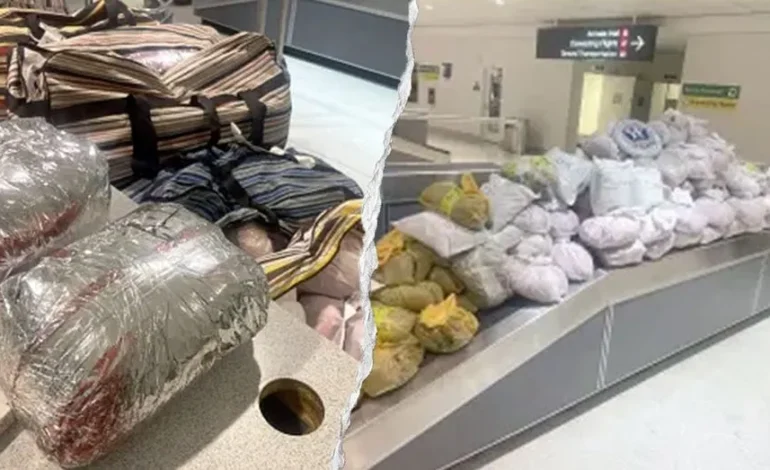

U.S. Customs and Border Protection (CBP) officers at Baltimore/Washington International Thurgood Marshall Airport (BWI) intercepted a substantial shipment of khat, a stimulant plant, totaling nearly 850 pounds. The illicit substance was discovered packed into 12 suitcases belonging to two U.S. citizens who had recently arrived on a flight from London.
Massive Khat Haul Uncovered
The incident occurred on August 13, when the two travelers, both residents of New York, arrived at BWI and were selected for a secondary inspection. During a thorough examination of their luggage, CBP officers found what initially appeared to be a large quantity of tea leaves. Subsequent testing confirmed the substance to be khat, scientifically known as Catha edulis.
Each traveler was found to have six soft-sided suitcases filled with the plant material. In total, the seized khat weighed approximately 847 pounds and is estimated to have a street value of around $100,000. The individuals were allowed to leave the airport pending the outcome of further investigations.
Understanding Khat
Khat, also referred to as Abyssinian tea or African salad, is a flowering shrub native to East Africa and the Arabian Peninsula. Traditionally, its leaves are chewed for their stimulant properties, which are often compared to amphetamines. Alternatively, dried khat leaves can be steeped in hot water to create a tea.
According to the Drug Enforcement Administration (DEA), khat contains two primary stimulants: cathinone, classified as a Schedule I controlled substance, and cathine, a Schedule IV controlled substance. The World Health Organization recognized khat as a drug of abuse as early as 1980.
Health Risks Associated with Khat Use
The consumption of khat can lead to a range of adverse health effects. The DEA notes that symptoms of khat toxicity may include delusions, appetite suppression, respiratory difficulties, elevated blood pressure, and an increased heart rate. These risks underscore the importance of CBP’s efforts to intercept such substances.
Previous Khat Seizures at BWI
This significant seizure follows another large discovery of khat at the same airport just days prior. In that instance, CBP officers seized 412 pounds of the plant from unclaimed baggage. Reports indicated that officers may have startled a suspected smuggler, who then abandoned the luggage and fled the inspection area.
CBP’s Stance on Smuggling
Adam Rottman, Baltimore Area Port Director for CBP, commented on the unusual nature of this particular seizure. “Customs and Border Protection officers have observed substantial quantities of khat being smuggled in commercial shipments, but smuggling loads of this volume inside traveler baggage is a bit unusual, and not any more successful,” Rottman stated.
He emphasized the illegality and dangers associated with khat. “Khat is illegal and poses severe health risks to users,” Rottman continued. “CBP will continue to seize khat and other dangerous drugs when we encounter it and we will work with our law enforcement partners to hold smugglers accountable.”
Broader Khat Interdiction Efforts
The agency’s commitment to combating the flow of illicit substances is evident in its seizure statistics. During the last fiscal year, CBP officers confiscated approximately 46,000 pounds of khat nationwide. For the current fiscal year, nearly 20,000 pounds have already been seized, highlighting the ongoing challenge of interdicting such contraband.
These interdictions at BWI demonstrate the vigilant efforts of CBP officers to detect and seize illegal substances, regardless of the method of concealment, thereby protecting public health and safety.