

IndyCar Takes on D.C. in Historic Freedom 250 Grand Prix
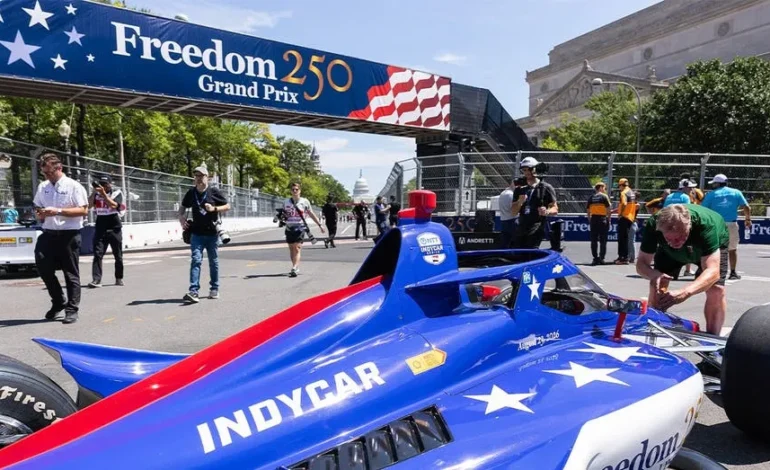

The NTT IndyCar Series is set to make history with the inaugural Freedom 250 Grand Prix, a groundbreaking event transforming the heart of Washington, D.C., into a high-speed race circuit. For dedicated fans, the sight of Pennsylvania Avenue serving as a start-finish straight with the U.S. Capitol as a backdrop is the culmination of an ambitious vision. For newcomers, understanding how this unique spectacle came to be offers a fascinating glimpse into a blend of political initiative and motorsport engineering.
From Executive Order to Asphalt: The Genesis of the Freedom 250
The improbable journey of an IndyCar race through the nation’s capital began with a presidential directive. In January, an executive order from President Trump mandated federal agencies to collaborate with the D.C. mayor’s office to establish a circuit suitable for IndyCar racing. The initial concept was to integrate the event into the broader America 250 celebrations, marking a significant national milestone. Interestingly, the specific 250-mile race distance wasn’t finalized until just a few weeks prior to the event. This timeline presented a considerable logistical challenge, especially considering the IndyCar schedule had already been released and was nearing its commencement.
Despite the tight turnaround, the commitment to realizing this once-in-a-lifetime event spurred swift action. The unique nature of the Freedom 250 necessitated a flexible approach, demonstrating how major sporting events can be conceived and executed even under demanding circumstances. The integration of racing into a prominent national landmark underscores a novel intersection of sports, culture, and civic pride.
Navigating the National Mall: The Freedom 250 Circuit
The Freedom 250 Grand Prix circuit carves a path through iconic Washington, D.C., landmarks, utilizing streets around the National Mall and directly in front of the U.S. Capitol building. A significant stretch of Pennsylvania Avenue has been repurposed to host the pit lane and the start-finish line, offering drivers and spectators an unparalleled view of historic architecture.
The track layout itself is characterized by its relative simplicity, featuring just seven corners. However, this apparent straightforwardness belies the technical demands it presents. Most turns are sharp, 90-degree or near-90-degree angles, requiring precision and quick reflexes. A notable challenge is Turn 6, which forms a narrow chicane, a detail that might not be immediately apparent on maps but is crucial for navigating at speed. Onboard footage from demonstration laps has highlighted the demanding nature of this section.
Adding another layer of complexity is the pit lane entrance. Positioned immediately after Turn 1, it appears to be a tight and potentially tricky maneuver for drivers entering or exiting the pit, demanding heightened awareness and control amidst the race’s intensity.
The Paddock Puzzle: Accommodating Motorsport in D.C.
A critical element of any major motorsport event is the paddock area, which requires substantial space for team transporters, garages, and support infrastructure. Establishing such an area within the dense urban environment of Washington, D.C., presented a unique logistical puzzle. The solution involved utilizing Constitution Avenue NW and 7th Street to house the team facilities. This strategic placement allows teams to efficiently transport their cars to the pit lane for all scheduled on-track sessions, ensuring minimal disruption to the race operations.
More Than Just IndyCar: The IROC Revival
While the NTT IndyCar Series takes center stage, the Freedom 250 weekend also features a significant revival of a historic racing series: the International Race of Champions (IROC). Although IndyCar’s developmental series, Indy NXT, will not be participating, two IROC races are scheduled for Saturday. The IROC series, which originally ran from 1973 to 2006, is making a comeback for select events, pitting elite drivers from diverse motorsport disciplines against each other in identical machinery.
For this D.C. event, the iconic Pontiac Firebirds, famously used in IROC from 1996 to 2006, will be the cars of choice. The star-studded driver roster reads like a who’s who of racing legends. Representing NASCAR are Hall of Famers and champions such as Jeff Gordon, Bill Elliott, Bobby Labonte, Rusty Wallace, and Kurt Busch. Joining them from the IndyCar world are revered figures like Tony Kanaan, Helio Castroneves, and Dario Franchitti, promising thrilling, multi-discipline competition.
Securing a Spot: Tickets and Viewing Information
Access to the Freedom 250 Grand Prix weekend has been a hot commodity. While some high-tier premium tickets remain available, general admission tickets were offered free of charge and were reportedly claimed within minutes of release, underscoring the immense public interest. Organizers are projecting substantial crowds, with estimates suggesting up to 140,000 attendees could be present on each of the two event days.
For those unable to attend in person, multiple viewing options are available. Practice and qualifying sessions for IndyCar on Saturday, along with Sunday morning’s warm-up, will be broadcast on FS1 and FS2. The main event, the Freedom 250 Grand Prix, will have extensive pre-race coverage beginning at 11:30 a.m. ET on FOX, with the green flag set to drop at 1:00 p.m. ET.
The Freedom 250 Grand Prix represents more than just a race; it’s a unique convergence of American history, political will, and high-octane motorsport, promising an unforgettable weekend for fans and participants alike.