



Flock Safety CEO Seeks Middle Ground on Surveillance Cameras

The chief executive of Flock Safety, a company known for its automated license plate readers, is calling for a national dialogue to balance public safety concerns with individual privacy rights. Amidst growing public resistance, including acts of vandalism and protest against the technology, CEO Garrett Langley emphasized the need for compromise rather than outright bans.
The Growing Debate Over License Plate Readers
Flock Safety’s cameras, which capture images of vehicles and their license plates, have become a tool for law enforcement agencies across many states. These systems are designed to assist in criminal investigations by recording vehicle data. However, their widespread deployment has ignited significant privacy concerns among residents who worry about constant surveillance and the potential for misuse of their personal travel information.
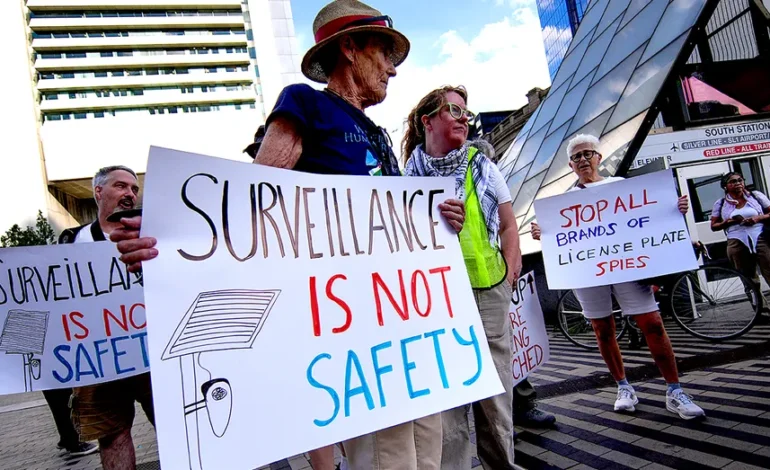
The pushback has manifested in various ways. In some communities, residents have resorted to physically obstructing the cameras with signs, as seen in a recent protest in St. Petersburg, Florida, where an individual held a “Down with the Flock” sign. Reports have also surfaced of camera poles being vandalized or the devices themselves being stolen in states like New York, Minnesota, California, and Illinois. This public outcry has even prompted action on Capitol Hill, with Senator Bernie Sanders proposing a complete ban on the technology and Representative Tim Burchett advocating for the cessation of federal funding for such installations.
Flock Safety’s Stance: Safety and Compromise
Garrett Langley, in a recent interview, argued that focusing solely on either privacy or safety presents a false dichotomy. “When people talk about just one of these, privacy or safety, they’re prioritizing the wrong thing, and what we have to prioritize as a country is compromise,” Langley stated. He believes the core challenge lies in finding a way to ensure community safety while simultaneously safeguarding personal privacy.
Flock Safety’s official stance, as presented on its website, is that its tools help communities deter crime, respond to emergencies, and investigate safety incidents, all while aiming to maintain a balance with privacy. The company highlights its role in assisting law enforcement with over a million investigations and aiding in the recovery of more than 10,000 missing individuals. Langley pointed to these successes as evidence of the technology’s positive impact.
Addressing Misuse and Advocating for Regulation
Langley acknowledged the validity of concerns regarding potential misuse and the lack of clear regulatory frameworks. “Today, it is too often that in Flock and in other technologies, there’s no regulation. There’s no accountability, and we think that’s wrong,” he commented. To address these issues, Flock Safety has implemented internal measures, such as recommending a maximum of seven-day data retention periods for the information captured by their cameras.
Furthermore, the company is pushing for greater accountability and transparency. Langley indicated that Flock Safety has introduced changes requiring audits and utilizing tools designed to detect abnormal behavior within their systems. He also called for state regulators to shift their focus from outright bans to ensuring robust accountability mechanisms for law enforcement agencies that utilize the technology. This approach, he suggested, would foster responsible use and build public trust.
The Path Forward: Regulation and Accountability
The debate surrounding automated license plate readers like those from Flock Safety touches upon fundamental questions about the role of technology in public spaces and the boundaries of government surveillance. While proponents emphasize the crime-fighting and life-saving capabilities, critics raise serious alarms about the potential for a pervasive surveillance state and the erosion of personal privacy.
Langley’s call for compromise suggests a recognition that the technology’s future depends on addressing public apprehension. By advocating for stricter regulations, transparent data handling practices, and clear accountability for misuse, Flock Safety appears to be attempting to navigate the complex landscape of public opinion and legislative scrutiny. The effectiveness of these measures and the willingness of lawmakers and the public to engage in a balanced discussion will ultimately shape the future of this widely debated technology.
The core of the issue remains how to harness the benefits of surveillance technology for public good without infringing upon the fundamental right to privacy. As communities grapple with this challenge, the dialogue initiated by Flock Safety’s CEO may provide a starting point for finding a workable equilibrium.