


El-Sayed Faces Backlash for Social Media Posts Targeting Women
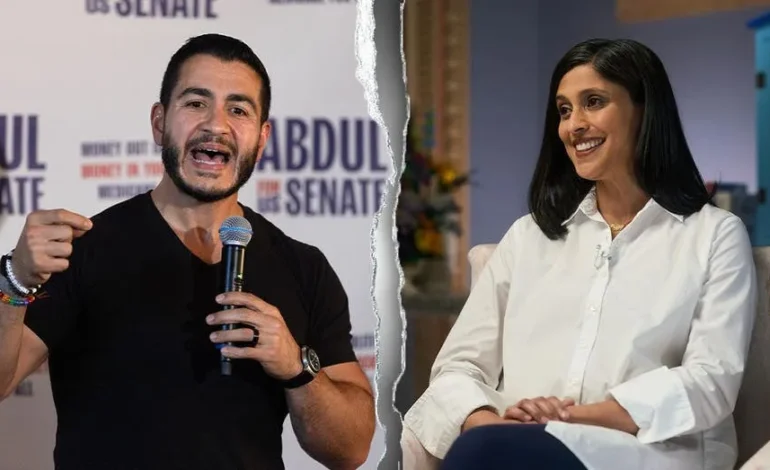

Michigan Senate candidate Abdul El-Sayed has ignited a firestorm of online criticism following a series of social media posts over the weekend that targeted women associated with political figures, prompting questions about his potential conduct toward female staff if elected.
Weekend Social Media Barrage Sparks Controversy
The controversy erupted on Saturday when El-Sayed, a Democrat running against Republican former Congressman Mike Rogers, posted remarks that appeared to draw on the ethnicity of Second Gentleman Doug Emhoff’s wife, Usha Vance, in a jab at Vice President Mike Pence. The posts came after Pence had criticized El-Sayed’s past statements on Sharia law during a rally in Ohio. Pence suggested that such a practice would be foreign to his own grandfather, whom he affectionately called “Papaw.”
El-Sayed’s response, posted on social media, questioned whether Pence would take Usha Vance back in time to meet his grandfather. This remark was widely interpreted as a reference to Usha Vance’s Indian heritage, leading to accusations of racism and insensitivity.
El-Sayed’s campaign did not respond to requests for clarification on the intended meaning of his posts.
Reactions and Accusations Fly
The posts quickly drew sharp rebukes from various political figures and commentators. Former Florida state representative Ben Graber questioned El-Sayed’s approach, posting on X, “El Sayed is now attacking Wives [sic] of US leaders? What a guy.”
Texas Republican Congressman Brandon Gill responded to El-Sayed’s remarks by asking, “Why does Abdulrahman Mohamed El-Sayed just assume that all White midwestern grandparents are racist?” Commentator Ryan Girdusky echoed this sentiment, stating, “If you’re a rural White American living in Michigan, just remember El-Sayed believes you’re a racist.”
Further fueling the backlash, an X account associated with Democrats supporting El-Sayed’s opponent, Mike Rogers, accused the candidate of being “deeply sexist and misogynistic.” The account asserted, “He has so much contempt for women. If you’re over the politics of division. Reject Abdul El-Sayed.”
Journalist Emily Schrader directly labeled El-Sayed a “racist creep” in response to his post.
Targeting Another Political Aide
The controversy did not end with the remarks concerning Usha Vance. Earlier on Saturday, El-Sayed also directed a post at Natalie Harp, an aide to former President Donald Trump. This came after Trump had criticized El-Sayed at a rally for campaigning with Hasan Piker, a figure who has made controversial statements, including about the 9/11 attacks.
In his post directed at Harp, El-Sayed suggested she had given Trump “a little too much iPad for the week” and that Trump “needs his rest,” implying Trump was overreacting or unwell.
Broader Concerns About Conduct
GOP strategist Matt Whitlock shared screenshots of both posts, characterizing them as indicative of a “bad campaign, bad candidate, bad instincts.” He added, “Sitting at home on a Saturday morning tweeting bad takes that any normal campaign would shut down.”
Tudor Dixon, a former Republican gubernatorial candidate in Michigan, voiced concerns about El-Sayed’s broader behavior. “He goes after Usha. He goes after Natalie [Harp],” Dixon stated. “This coward picks on women who are not in his fight. Imagine how he would treat female staffers in the halls of Congress.”
The vice president’s office and a representative for Usha Vance were contacted for comment but had not immediately responded at the time of reporting.
Context of the Exchange
The exchange began when Vice President Pence, during a rally in Ohio, directly addressed El-Sayed’s past comments regarding his adherence to Sharia law. Pence invoked his own family history, specifically his grandfather, to highlight what he saw as a disconnect between El-Sayed’s views and traditional American values. “So do we think JD is taking Usha with him back in time to meet Papaw, or no…” El-Sayed’s post read, a remark that critics interpreted as a racially tinged jab.
The criticism leveled against El-Sayed suggests a pattern of behavior that opponents believe is disqualifying. The focus on his social media activity raises questions about his judgment and temperament, particularly concerning how he would interact with women in professional settings should he succeed in his bid for the Senate.
This incident highlights the often-intense scrutiny faced by political candidates, especially concerning their public statements and online presence. The rapid dissemination of information and opinions on social media platforms means that controversial remarks can quickly escalate, drawing widespread attention and debate.
As the election cycle progresses, these exchanges are likely to remain a point of contention, with El-Sayed’s campaign needing to navigate the fallout from these widely publicized social media posts.