

Judge Halts Trump Mail-In Ballot Order Again Before Midterms
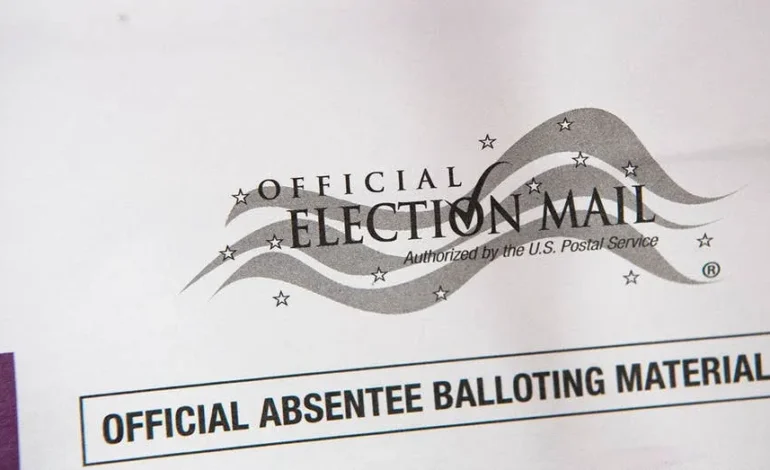

A federal judge has once again put a halt to President Donald Trump’s executive order concerning mail-in voting, issuing a temporary restraining order just about a week before the first mail ballots are slated to be sent out for the upcoming midterm elections. U.S. District Court Judge Indira Talwani’s decision on Thursday marks the second time she has blocked the directive, which aimed to change how states prepare and submit mail ballots for acceptance by the U.S. Postal Service.
Temporary Restraining Order Issued
Judge Talwani’s ruling established a 14-day temporary restraining order against the enforcement of the new Postal Service rule. This latest development comes after the Supreme Court recently allowed the administration to proceed, though the high court’s decision focused on procedural grounds, stating that Talwani had acted prematurely in her initial ruling, rather than addressing the core legality of Trump’s order. Following the Supreme Court’s clarification, Democrats and voting rights organizations promptly refiled their lawsuits to align with the new legal landscape.
The administration has since formalized its rule, outlining the requirements for states to prepare and submit mail ballots. This move effectively resets the legal battle, bringing it back to a point where its impact on the November midterms is a significant concern. With nearly a third of Americans opting to vote by mail, election officials have voiced worries about the feasibility of adapting their systems to meet the new directives in such a short timeframe.
Concerns Over Election Integrity and Logistics
Under the proposed rule, the Postal Service indicated it would not accept outbound mail ballots if states fail to provide required recipient information through its designated portal and adhere to specific envelope and barcode standards. Judge Talwani highlighted these logistical hurdles in her ruling, stating, “Plaintiff states have neither time nor funds to design new mail ballots, seek approval of the new designs, order production of mail ballots, update their own election management systems, train election officials to use the USPS portal and upload citizen data to the portal, all before the midterms.” A hearing on the matter is scheduled for September 3.
Voting rights advocates and Democratic officials argue that both the Postal Service’s rule and Trump’s original order overstep constitutional boundaries. They contend that the authority to set election rules rests with the states and, in certain instances, with Congress, not with the President or the Postal Service. Conversely, the USPS maintains that its rule does not dictate voter eligibility or cross-reference submissions with state voter rolls, asserting that states retain full control over mail-in voting processes.
“This rule is a clear attempt by the federal government to interfere in elections it has no power to control. Today, a federal court halted it before this administration could wreak havoc on our elections,” stated New York Attorney General Letitia James, one of many Democratic attorneys general who joined the legal challenge.
Background of the Mail-In Voting Dispute
President Trump has frequently voiced skepticism about mail-in voting, linking it, without evidence, to his 2020 election loss. Ironically, he himself utilizes mail-in voting as a registered voter in Florida. The initial executive order, issued last year, was previously blocked on grounds that it attempted to alter election procedures in ways that exceeded presidential authority. These changes included requiring additional documentation for voter registration, such as passports or REAL IDs.
Research from institutions like the Brookings Institution suggests that instances of mail-in voting fraud are exceedingly rare, with reports indicating only about four cases per 10 million ballots cast between 2016 and 2022. This contrasts sharply with claims of widespread fraud often made by Trump and his supporters.
The legal challenges began shortly after Trump issued the executive order in March. While a federal judge in Washington initially declined to block the order, deeming the challenge premature before its implementation, the Supreme Court’s recent procedural decision paved the way for refiled lawsuits. The plaintiffs, bolstered by the Postal Service’s publication of its final rule, are now presenting a more robust case against the directive.
Potential Impact on the Midterms
The ongoing legal battles and the uncertainty surrounding mail-in voting procedures could have significant implications for the upcoming midterm elections. The logistical complexities and potential delays in adapting to new rules raise concerns among election officials about ensuring smooth and accessible voting processes for millions of Americans. The outcome of this legal fight, which may well return to higher courts, will be closely watched as election day approaches.