

AI Child Abuse Image Ruling Highlights Legal Tech Gap

A federal appeals court has ruled that it was compelled by existing Supreme Court precedent to shield the private possession of AI-generated child sexual abuse material (CSAM), a decision that underscores the growing chasm between established legal principles and rapidly evolving artificial intelligence. Judges on the Seventh Circuit expressed concern that current technology has outpaced legal frameworks established nearly 25 years ago, leaving them with little room to maneuver.
Precedent Forces Court’s Hand on Virtual CSAM
The Seventh Circuit found itself bound by a 2002 Supreme Court decision, Free Speech Coalition v. Reno, which had previously limited restrictions on sexually explicit depictions of fictional children when no actual child was involved in their creation. This precedent, however, is proving increasingly difficult to reconcile with modern AI capabilities.
In a concurring opinion, Judge John Lee highlighted the stark contrast between the technology of the early 2000s and today’s AI. “Indeed, in Free Speech Coalition, the Supreme Court addressed the scope of First Amendment protections for virtual CSAM, but that was nearly twenty-five years ago, and the image-generation technology available today was likely unimaginable back then,” Lee wrote. He added, “Given the relentless advancement in artificial intelligence models, we have some concerns about the lines these cases draw, but we are not free to redraw them ourselves.”
Case Involves AI-Generated Images Found in Wisconsin Home
The ruling came as the Seventh Circuit upheld a lower court’s decision to dismiss one of four charges against Steven Anderegg. Investigators had reportedly found hundreds of AI-generated sexually explicit images depicting children on devices seized from his Wisconsin residence. Anderegg faced charges including producing, distributing, and possessing such material, as well as transferring it to a minor under 16.
A federal district court had previously dismissed only the possession charge, citing First Amendment protections. The Justice Department appealed this dismissal, arguing that the government should have the authority to prohibit the possession of obscene virtual CSAM, even if no real child was depicted or harmed in its creation. However, the Seventh Circuit ultimately sided with the lower court’s interpretation.
The Complicated Distinction Between Real and Virtual Harm
Generally, the government is restricted from criminalizing the private possession of obscene material within a person’s home. This principle is balanced against the government’s compelling interest in prohibiting the possession of CSAM that involves real children, due to the exploitation and harm inherent in its creation. The Supreme Court’s 2002 decision complicated this distinction by striking down restrictions on fictional child pornography, reasoning that the state’s interest in protecting children was not as directly applicable when no actual child was involved.
Hans von Spakovsky, a senior fellow at Advancing American Freedom, commented that the appeals court “had no choice but to uphold the dismissal under the First Amendment” due to the Supreme Court’s prior ruling. However, he echoed the concerns raised by Judges Lee and Joshua Kolar, suggesting that the rapid evolution of AI necessitates a re-examination of this precedent.
“Unfortunately, AI-generated images are now virtually indistinguishable from the real thing, and some of these images can be created based on real child sexual abuse material,” von Spakovsky stated. “Technology may have overtaken and overwhelmed the reasoning used in those prior decisions.”
AI’s Impact on Investigations and Potential Links to Real Abuse
The rise of AI-generated CSAM presents significant challenges for law enforcement. Justice Department lawyers have warned that the increasing realism and volume of these images could make it harder for investigators to identify actual victims of child abuse, potentially bogging down investigations.
Judges Lee and Kolar also raised a related concern in their concurrence, referencing research that identified hundreds of CSAM images within a large dataset used to train AI image-generation models. This raises the possibility of a link between AI-generated material and the exploitation of real children, although the judges noted this issue was not formally raised in the case and the evidence was insufficient to address it.
A Glimpse of Future Legal Challenges
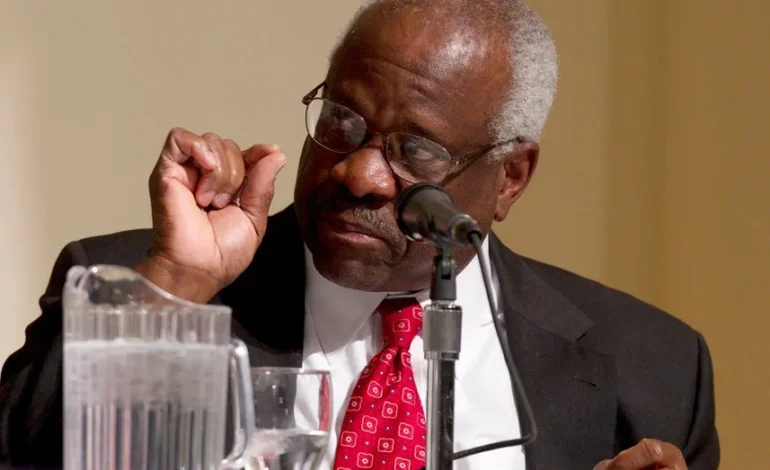
The dilemma faced by the Seventh Circuit was, in a way, anticipated over two decades ago. In his 2002 concurrence, Justice Clarence Thomas foresaw the potential for technological advancements to blur the lines between virtual and real child abuse material. He suggested that if technology hindered the prosecution of unlawful speech, the government might eventually need to regulate certain categories of “lawful speech” to effectively enforce laws against CSAM involving real victims.
“If technological advances thwart prosecution of ‘unlawful speech,’ the Government may well have a compelling interest in barring or otherwise regulating some narrow category of ‘lawful speech’” to uphold laws against material produced through the abuse of real children, Thomas wrote at the time. The Seventh Circuit’s recent ruling suggests that Thomas’s foresight is now a pressing reality, pushing the legal system to grapple with the implications of AI-driven content.