

NFL’s Social Justice Push Faces Scrutiny Amid Player Misconduct
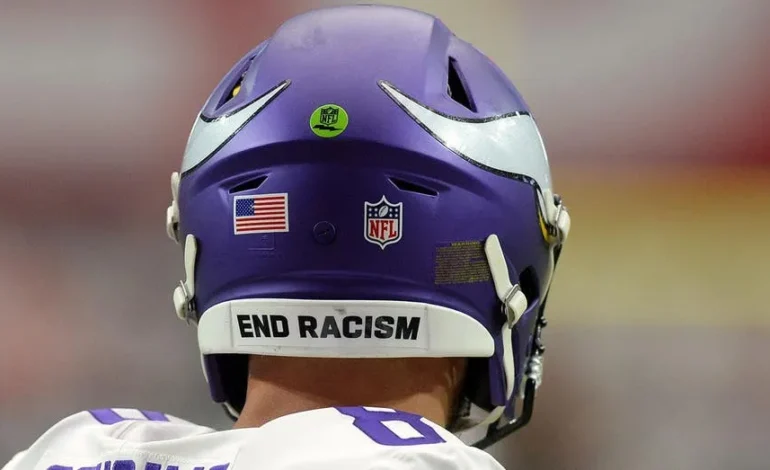

The National Football League is set to reintroduce its social justice messaging for the 2026 season, with end zones and player helmets once again featuring slogans like “Stop Hate” and “End Racism.” This initiative aims to promote the idea that everyone deserves equal rights, a commendable goal. However, the league’s renewed focus on these issues comes at a time when it is grappling with a significant number of arrests and investigations related to criminal conduct among its players and personnel, including incidents of domestic abuse, driving under the influence, and even prostitution.
Social Justice Messaging Returns Amidst Internal Issues
For the upcoming 2026 season, NFL teams will once again have the option to select from a range of social justice slogans to be stenciled in their end zones and displayed on player helmets. The available messages include “Choose Love,” “Inspire Change,” “End Racism,” and “Stop Hate.” Additionally, for the opening week of the season, teams can opt to use “Never Forget” as a tribute to the victims of the September 11, 2001, terrorist attacks. This marks a continuation of a league-wide effort that began in 2020.
While the league champions these messages of equality and anti-hate, critics point to a perceived disconnect between these public statements and the ongoing legal troubles faced by individuals within the NFL. The league’s personal conduct policy is frequently tested by arrests and court proceedings, raising questions about the NFL’s internal priorities and the effectiveness of its messaging in addressing broader societal issues, let alone its own internal challenges.
Rising Hate Incidents Contrast with League’s Campaign
Statistics released by the FBI and the Anti-Defamation League paint a concerning picture of increasing bias-motivated incidents. Between 2020 and 2024, the FBI reported a 51% rise in bias-motivated incidents. The Anti-Defamation League noted a dramatic surge in antisemitic incidents, escalating from 2,024 in 2020 to 9,354 in 2024 – a more than fourfold increase. Similarly, FBI data showed hate crimes climbing from 7,759 in 2020 to 10,881 in 2025.
These figures, while not directly attributable to the NFL’s campaigns, do raise questions about the reach and impact of its social justice initiatives. The league’s efforts to combat hate and racism are commendable, but the rising statistics suggest that the intended audience may not be fully receptive or that the campaign’s impact is limited. This has led to discussions about whether the NFL could, and perhaps should, extend its messaging to address other pressing societal problems, particularly those that have manifested within the league itself.
Calls for Messaging on DUI, Domestic Violence, and Human Trafficking
The NFL’s current social justice framework does not prominently feature messages addressing issues like drunk driving, domestic violence, or human trafficking. This is particularly notable given recent high-profile incidents involving individuals associated with the league. For instance, Jed York, owner of the San Francisco 49ers, was reportedly arrested in Ohio as part of a prostitution sting operation conducted by a human trafficking task force. He later pleaded no contest to lesser charges.
The league’s struggles with impaired driving are also evident. Several individuals connected to NFL teams have faced legal consequences for DUI or related offenses. Examples include Washington Commanders tight end coach Ben Steele, who was fired following a DWI arrest, and Minnesota Vikings defensive backs coach Gerald Alexander, who received a suspension after pleading guilty to DWI. The Los Angeles Chargers released guard Ben Cleveland after multiple arrests, including one for DUI and another for speeding and driving with a limited permit. Even former Cowboys quarterback and current analyst Tony Romo has faced charges related to operating while intoxicated in Wisconsin.
Domestic violence incidents have also cast a shadow over the league. Players such as Green Bay Packers running back Josh Jacobs, Atlanta Falcons edge rusher James Pearce, Baltimore Ravens receiver Rashod Bateman, Denver Broncos linebacker Jonathon Cooper, Rams offensive lineman Alaric Jackson, and free agent receiver Tyreek Hill have all been involved in legal issues related to domestic incidents this year.
A Call for Broader Responsibility
The juxtaposition of the NFL’s social justice campaigns with these internal and external legal challenges has prompted calls for the league to broaden its messaging. Many believe that the NFL could effectively use its platform to advocate against drunk driving, domestic abuse, and human trafficking, just as it does for racial equality and anti-hate initiatives. Such campaigns would not necessarily be mutually exclusive and could potentially resonate with fans and the broader community.
The argument is that if the league is committed to using its visibility to promote positive social change, it should apply that commitment to a wider array of critical issues. Suggestions for end zone stencils like “Stop drinking and driving” or “Tackle men but don’t touch women” highlight the desire for the NFL to address these problems with the same vigor it applies to its current social justice messaging. The league’s ability to influence public discourse is undeniable, and many hope it will leverage this power to tackle a more comprehensive set of societal ills, both within and outside its own ranks.