




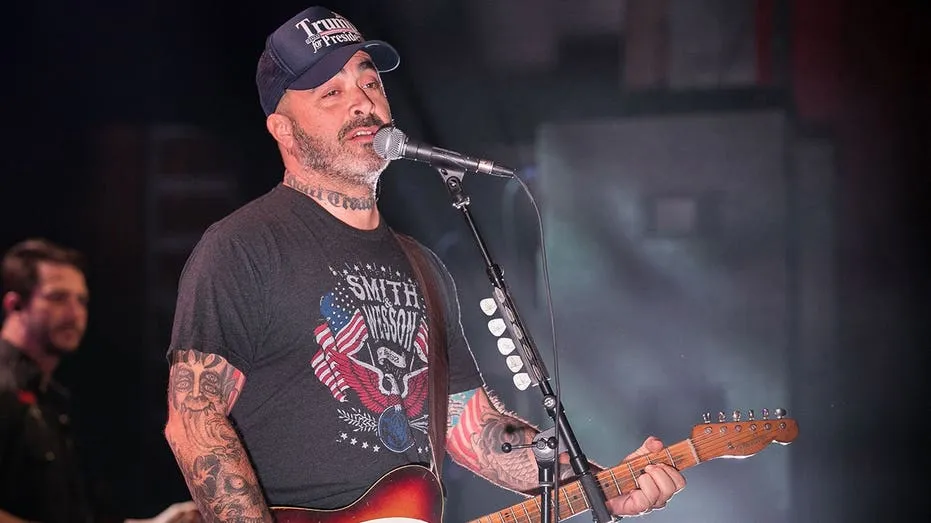
Musician Aaron Lewis believes his outspoken political views have led to him being sidelined by the music industry. The frontman, known for his work with the band Staind and his subsequent solo career, shared his perspective during a recent appearance on the “Pickin’ It Out with Andrew Pope” podcast. Lewis, 54, suggested that the current climate in the music business is overly politicized, impacting his professional opportunities.
Industry Rejection and Political Stance
Lewis stated that despite a history of performing at the Grand Ole Opry, he no longer receives invitations to appear there. He directly linked this perceived snub to his patriotic sentiments, asserting, “All because I believe in this beautiful, amazing country that we’re so blessed to have.” This sentiment underscores his feeling that his public support for the United States has created a rift with industry gatekeepers.
The artist, who first achieved fame with Staind before launching a solo career in 2010, reflected on his nearly three-decade tenure in the music business. He expressed gratitude for his continued ability to create music, noting that Staind is now eligible for Hall of Fame consideration, though he expressed skepticism about such an honor ever materializing for him. His upcoming sixth studio album, slated for release on July 17, is titled “Give My Country Back,” a title that further emphasizes his political leanings.
Lewis acknowledged that his music might not be easily accessible through conventional industry channels. “You got to look for it. Any of my stuff,” he explained to host Andrew Pope. “The machine that is, has no problem turning its back on me.” This suggests a deliberate effort by Lewis to connect directly with his audience, bypassing what he perceives as a resistant industry apparatus.
Echoes of Political Backlash in Entertainment
Lewis’s experience is not unique. Other artists have recently faced similar challenges when their political stances or associations have drawn criticism. Vanilla Ice, for instance, encountered backlash following his announced participation in the Great American State Fair, an event commemorating America’s 250th anniversary. The lineup announcement on May 29 led to several other artists, including Martina McBride, Bret Michaels, Young MC, the Commodores, and Morris Day, withdrawing from the event.
Vanilla Ice defended his decision to perform at President Donald Trump-backed Freedom 250 events, characterizing himself as merely an entertainer. He argued that artists should not be drawn into political disputes and that the focus should be on enjoying the music and celebrating the country. “I think people are taking everything too serious, and you should enjoy this concert, this celebration of our country, and we should all come together. That’s what music’s for anyway, to bring people together,” he stated. “Music brings people together, and that’s what it’s all about.” While he chose to proceed with his performance, Vanilla Ice expressed understanding for the other artists’ decisions, recognizing that they had their own reasons and lived in different circumstances, but he felt honored to participate in a national celebration.
The Role of Music in Society
The discussions surrounding Lewis and Vanilla Ice highlight a broader tension between artistic expression and political alignment. Lewis’s assertion that the industry has “turned its back” on him suggests a perceived intolerance for dissenting or unconventional political viewpoints within certain music circles. Conversely, Vanilla Ice’s comments emphasize the unifying potential of music, advocating for its power to transcend political divides.
Lewis’s upcoming album title, “Give My Country Back,” signals a continued commitment to expressing his political convictions through his music. His candid remarks on the podcast offer a glimpse into the challenges faced by artists who navigate the intersection of their personal beliefs and their professional careers in an increasingly polarized cultural landscape. The artist’s journey underscores the complex dynamics at play when personal politics intersect with the business and reception of popular music.


