

Abbey Gate Survivor Recounts Chaos, Calls Evacuation Botched

Retired Marine Sgt. Tyler Vargas-Andrews, a survivor of the deadly Abbey Gate bombing in Afghanistan, has described the chaotic scene and the perceived lack of preparedness during the U.S. withdrawal. Speaking on “The Big Weekend Show,” Vargas-Andrews, who sustained severe injuries in the August 26, 2021, attack, asserted that American forces were left to manage an overwhelming situation with insufficient support and planning.
A Ground-Level Perspective on the Evacuation
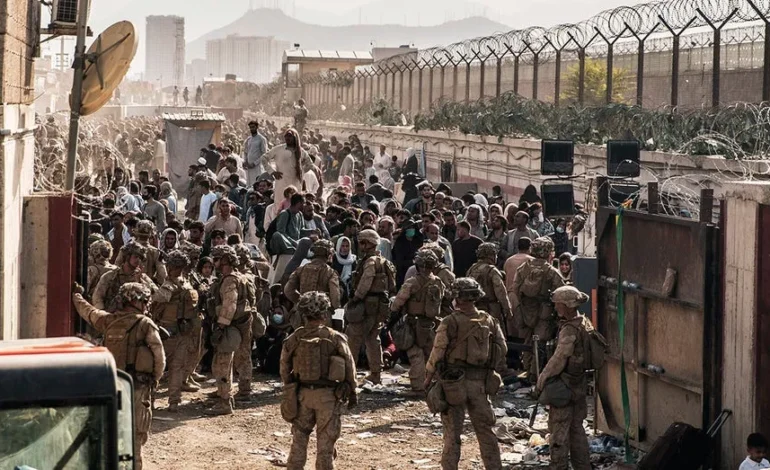
Vargas-Andrews, who lost his right arm and left leg in the suicide bombing, detailed the challenging conditions faced by Marines at Hamid Karzai International Airport in Kabul. He stated that despite leadership being aware of the potential severity of the evacuation, the Marines on the ground were largely left to improvise. “Everything we were doing while we were there was like figuring it out on the go,” he explained, while also acknowledging the inherent Marine training to “adapt, improvise and overcome.”
The veteran emphasized that the issues leading to the tragic attack predated the first explosion, reigniting his calls for accountability. He recounted a severe lack of basic resources for the desperate crowds seeking evacuation. “We were lacking in the support. We were giving [the refugees] our food. We were giving them our water. There was no tent set up to process refugees,” Vargas-Andrews stated.
Recalling the Overwhelming Scene
Describing the sheer scale of the crowds, Vargas-Andrews likened the scene to something from the movie “World War Z.” He painted a vivid picture of the overwhelming numbers, saying, “It was just hundreds of thousands of people. And if I filled up the whole room with sand, that’s how many people it felt like [were] there.”
He expressed that the troops found themselves in an extremely vulnerable position that could have been mitigated with better planning in the preceding weeks and months. “We were just put in a very, very precarious situation that could have been better prepared for over the weeks and months prior leading up to that,” Vargas-Andrews recalled. “And that decision was never made.”
Intelligence and Accountability
Vargas-Andrews confirmed that intelligence warnings about potential threats had been received. However, he maintained that proactive measures to avert the danger were not taken. While he refrained from assigning blame to any specific individual or entity, he pointed to a broader pattern of failures involving multiple administrations, the State Department, and other organizations, citing “decades of action and inaction and just poor decision-making.”
Recognition and Unmet Expectations
Recently, the Department of the Navy recognized Marines who served during the Afghanistan evacuation. Vargas-Andrews welcomed this acknowledgment, calling it “a good step in the right direction.” However, he stressed that this recognition should not overshadow the ongoing absence of true accountability for the events that transpired.
“I think that the real important things still haven’t happened, but we hope it does and we pray that it does,” Vargas-Andrews concluded, expressing a persistent desire for further action regarding the failures that led to the Abbey Gate attack and the broader challenges of the withdrawal.