




Abdul El-Sayed Compares CNN Appearances to ‘Non-Consensual Colonoscopy’
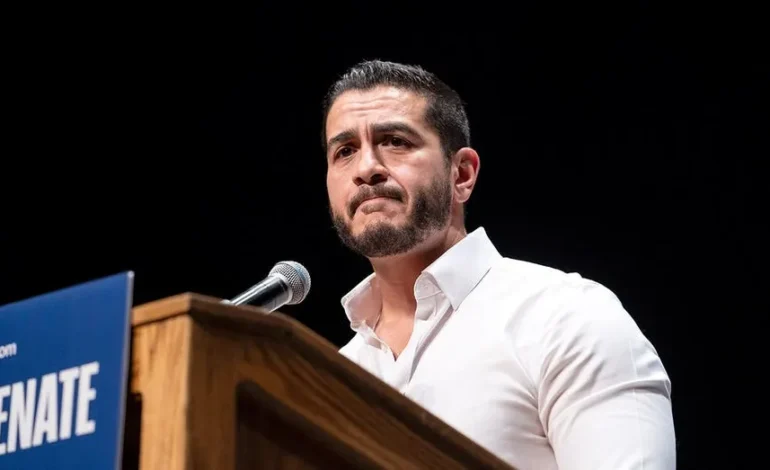

Michigan Democratic Senate hopeful Abdul El-Sayed has voiced his frustration with CNN interviews, humorously likening the experience to a “non-consensual colonoscopy” during a recent rally. El-Sayed, who is seeking the Democratic nomination for the U.S. Senate, made the remark on Sunday in Grand Rapids, drawing laughter from attendees.
El-Sayed’s Critique of CNN’s Interview Tactics
The candidate elaborated on his analogy, suggesting that CNN often steers conversations toward foreign affairs in a way he finds unproductive. “I go on CNN every once in a while and I get a non-consensual colonoscopy,” El-Sayed quipped. “And then, all they ask me about is another country, and they’re like, ‘All he’s ever talking about is another country.’ No! I just want everybody to understand that there’s an opportunity cost to the money being sent over there, and that is what we could have over here.”
This sentiment comes as El-Sayed navigates a competitive Democratic primary in Michigan. His campaign has garnered support from progressive figures such as Senator Bernie Sanders and Representative Alexandria Ocasio-Cortez, both of whom appeared with him at the Sunday rally.
Tense Exchanges on ‘State of the Union’
Earlier on Sunday, El-Sayed appeared on CNN’s “State of the Union,” where anchor Jake Tapper questioned him about a previously surfaced audio recording. In the recording, El-Sayed appeared hesitant to comment on the killing of Iranian Ayatollah Ali Khamenei in February, citing a desire not to offend constituents, particularly in Dearborn, Michigan.
Tapper pressed El-Sayed on his concerns, asking, “Why were you worried about people who supported the ayatollah?” El-Sayed, however, largely deflected the question, framing it as a “ridiculous pretext.” Instead, he pivoted to express condolences for the three U.S. service members killed in a recent attack in Jordan, attributing the strike to Iranian forces. He emphasized his focus on domestic issues relevant to his Michigan constituents.
“Look, let’s have a conversation based in Michigan. I’m running for Senate in Michigan. And I think here in Michigan, all of us are probably sad about the fact that we went to a war that we never should have fought. I’d rather our money be spent here,” El-Sayed told Tapper. Tapper reiterated his point, stating, “I was specifically asking you about comments you didn’t want to make because you didn’t want to offend people in Dearborn, which is in Michigan,” before moving on to other subjects.
Past Clashes with CNN Anchors
This is not the first time El-Sayed has expressed friction with CNN anchors. Earlier in the month, he engaged in a heated discussion with anchor Kasie Hunt regarding his past social media posts where he expressed support for defunding the police. During that exchange, El-Sayed accused the network of prioritizing “clickbait” over substantive policy discussions that matter to voters.
El-Sayed, a former mayor of Hamtramck, Michigan, has positioned himself as a progressive voice in the Democratic party. His primary opponent in the race for the Senate seat is Michigan Representative Haley Stevens. The primary election is seen as a significant test for the progressive wing of the Democratic party.
El-Sayed’s Political Stance and Primary Challenge
El-Sayed’s political platform often emphasizes a critique of American foreign policy and a call for greater investment in domestic infrastructure and social programs. His supporters view him as a champion for working-class families and a voice against what they see as the excesses of corporate power and unchecked military spending. His campaign has energized a segment of the Democratic base that aligns with more socialist-leaning policies.
The endorsement from prominent progressives like Sanders and Ocasio-Cortez underscores his appeal within the left wing of the party. However, his primary battle against Stevens, who is considered more of a centrist Democrat, highlights the ongoing ideological tensions within the party as it seeks to unify ahead of the general election. The outcome of this primary could signal the direction of the Democratic party in Michigan and its ability to mobilize different factions of its electorate.
The Broader Context of the Michigan Senate Race
The Michigan Senate race is shaping up to be one of the most closely watched contests in the upcoming election cycle. The seat is currently held by a Republican, making it a key target for Democrats aiming to regain control of the Senate. The primary contest between El-Sayed and Stevens is not just a battle for a nomination but also a referendum on the party’s identity and future direction.
El-Sayed’s willingness to engage in pointed criticism of media outlets, even those that have provided him with a platform, suggests a strategy of directly addressing his audience and challenging conventional political discourse. His comparison of CNN interviews to a “non-consensual colonoscopy” is a vivid, albeit unconventional, way of expressing his dissatisfaction with the line of questioning he has faced, indicating a desire for more substantive policy-focused conversations rather than what he perceives as gotcha journalism.
As the primary election approaches, the focus will remain on how effectively each candidate can connect with Michigan voters and articulate a vision for the state and the country. El-Sayed’s campaign appears intent on framing the election around economic opportunity and a reevaluation of national priorities, using sharp rhetoric to cut through the noise of political media cycles.