



Abdul El-Sayed Faces Scrutiny Over Sharia Law, Wealth Tax Views
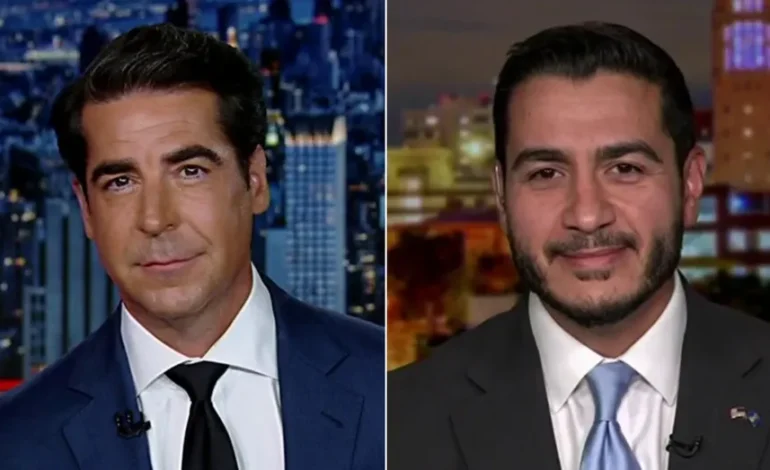

Michigan’s Democratic Senate hopeful, Abdul El-Sayed, found himself in a spirited interview on ‘Jesse Watters Primetime’ Monday, where he fielded pointed questions about his progressive policy stances and his high-profile race against former Republican Congressman Mike Rogers. The conversation delved into El-Sayed’s past remarks on Sharia law and his views on taxing the wealthy, topics that have drawn significant attention.
Clash Over Sharia Law Remarks
A central point of contention during the interview was El-Sayed’s adherence to Sharia law, a stance recently criticized by Vice President JD Vance. El-Sayed was pressed on previous statements where he linked efforts to abolish Sharia law to White supremacy. He defended his position by emphasizing religious freedom in America.
“Nobody is trying to push Sharia law on anyone else, just like I hope nobody is trying to push Canon law on anybody else, because we live in an America where you should have the freedom of your religion,” El-Sayed told host Jesse Watters. He reiterated that he would “never” impose his faith on others.
El-Sayed also asserted that there is evidence suggesting the Trump administration may have targeted him due to his Muslim faith. “There’s statistical evidence that the president and the vice president like to target me simply as a function of my faith,” he stated.
The Democratic nominee also voiced his disapproval of Senator Tommy Tuberville’s proposed legislation aimed at barring foreign nationals who advocate for Sharia law from entering the U.S., citing bills like the “No Sharia Act” and the “Preserving a Sharia Free America Act.”
“The idea, that you have somebody like Tommy Tuberville – who barely was good at coaching football – is out here trying to ban Sharia Law when there’s less than 1% of the Muslim community in America, as if somehow Muslims are out here trying to push Sharia law, that seems to me to be deliberately targeting the Muslim Community, because they’re different,” El-Sayed remarked.
Debate on Taxing the Wealthy
The discussion then shifted to El-Sayed’s proposal for increasing taxes on high-net-worth individuals. He had previously suggested on “The Ansari Podcast” that individuals with over $100 million should face wealth taxes.
“I also think we got to start taxing wealth for people who know have over $100 million. I mean at that point like what are gonna even do with more money?,” El-Sayed had said. When Watters responded with “Whatever I want!” to the question of what one would do with more money, El-Sayed countered by framing the debate around public investment versus private accumulation.
El-Sayed, who has frequently criticized the influence of the wealthiest Americans on politics, argued that his tax proposals are intended to benefit average citizens through improvements in infrastructure and education.
“The question ultimately is, ‘Do you want to drive on good roads, or would you rather have a billionaire make a second billion?’ That’s what Mike Rogers wants. That’s why Donald Trump wants. Apparently, that’s what you want. I think the people in Michigan want something different,” he stated, drawing a contrast with his opponent, Mike Rogers.
The interview also touched upon El-Sayed’s own household income, which was reported as $686,069 in 2025, placing them among Michigan’s higher earners. Watters questioned El-Sayed’s stance on taxing the rich given his income level.
El-Sayed accused Watters of “defending billionaires.” Watters responded by asserting the right to the “fruits of my own labor” and stating that El-Sayed’s proposals were not communist. El-Sayed countered that even with a 7% tax increase, billionaires would still retain substantial wealth.
“If we tax you at 7%, you’re still going to make what? A cool $30 million off your billion dollars? I think that’s okay, they’re going to be okay, Jesse,” El-Sayed said.
Broader Political Exchanges
Beyond these specific policy discussions, El-Sayed also directed criticism at his opponent, Mike Rogers, referring to him as a “beta” male who he felt was mischaracterizing the nature of the Senate race. El-Sayed accused Rogers of avoiding interviews.
However, El-Sayed himself faced questions about whether he had avoided certain topics during the interview, including his past characterizations of the NFL as racist and his views on men competing in women’s sports. He also commented on broader issues, stating that the consideration of reparations for Black Americans “shouldn’t be a crazy thing” and that the U.S. should avoid engaging in conflicts without clear exit strategies, referencing the conflict in Iran.
The interview highlighted the sharp contrasts in policy and political philosophy between El-Sayed and his Republican opponent, Mike Rogers, as the Michigan Senate race intensifies.