




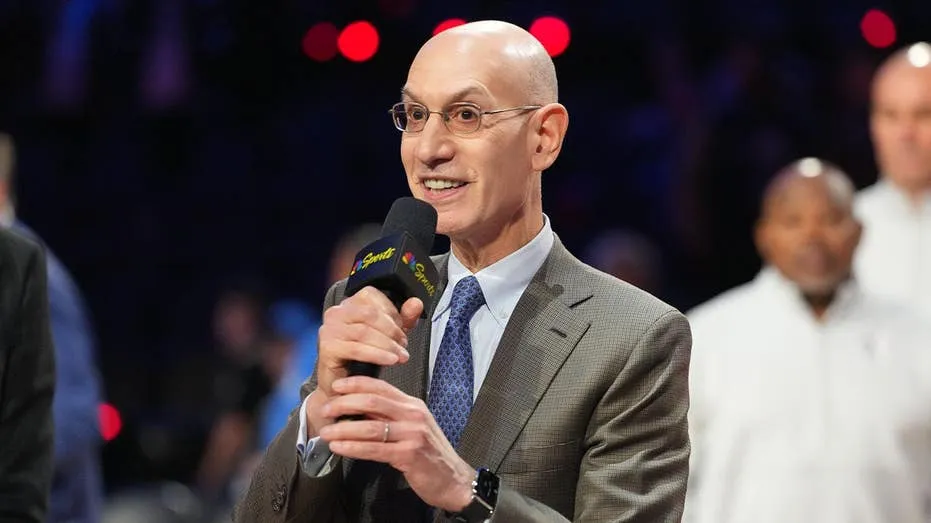
NBA Commissioner Adam Silver has characterized the intense focus on Caitlin Clark’s treatment in the WNBA as a political issue, suggesting the controversy surrounding the rookie sensation has become a “political football.” Speaking at a CNBC Sports Summit in New York, Silver addressed the repeated physical play directed at Clark, but instead of emphasizing accountability for such actions, he pointed to the broader political climate as the primary driver of the controversy.
Silver’s Perspective on the Clark Controversy
Silver expressed sympathy for Clark, stating, “I’ve come to know Caitlin really well. She’s an incredible player and also an incredible person. And she wants to focus on being the best player she can.” He continued, “She has become a bit of a political football in this country, and I think it’s incredibly unfair to her…. It’s become political ping-pong with her.”
This framing, however, has drawn criticism from many who believe Silver is sidestepping the core issue: the physical nature of the game Clark has faced and the league’s response. Critics argue that the commissioner is deflecting attention from the on-court incidents, including hard fouls and confrontations, that have fueled the widespread debate about player safety and officiating standards.
Silver suggested that the “issues around Caitlin Clark are not largely about officiating,” and that a specific controversial incident was not primarily about whether a foul should have been called. This viewpoint contrasts sharply with the experiences of many observers and supporters of Clark, who have witnessed numerous instances of aggressive play against her throughout the season.
Questions Surrounding League Response
The league’s handling of incidents involving Clark has come under increased scrutiny. Reports indicated that Silver consulted with WNBA Commissioner Cathy Engelbert prior to the suspension of Phoenix Mercury forward Alyssa Thomas, who was penalized for a throat strike against Clark. When directly questioned about these reports, Silver declined to confirm or deny them, stating, “I’m not going to comment on [the Engelbert report], because I don’t think it’s fair to Caitlin, and to Cathy Engelbert either.”
While Silver did concede that “Do we need to improve WNBA officiating? No doubt about it,” he quickly shifted the focus away from the broader implications for Clark’s safety and treatment within the league. This approach has led some to believe that the league is prioritizing public perception and damage control over decisive action to address the underlying issues.
Broader Context and Player Safety
The debate surrounding Caitlin Clark’s treatment highlights ongoing discussions about physicality in women’s basketball and the league’s commitment to player safety. As a highly publicized rookie, Clark has drawn immense attention, and the intensity of the physical play she has endured has become a focal point for fans, media, and former players alike.
Many point to the increased attention on the WNBA, largely driven by Clark’s arrival, as a reason for the league to set a higher standard for player conduct and officiating. The argument is that with this heightened visibility comes a greater responsibility to ensure a safe and fair playing environment for all athletes, especially its most prominent star.
The narrative that the controversy is primarily political risks alienating fans who are concerned about the genuine physical challenges Clark faces on the court. For supporters, the issue is less about partisan politics and more about the fundamental respect and safety owed to any player in the league. They argue that strong officiating and clear consequences for dangerous play are essential, regardless of the political commentary surrounding the situation.
Looking Ahead for the WNBA
As the WNBA season progresses, the league faces continued pressure to address these concerns. The commissioner’s comments suggest a belief that the external noise is overshadowing the game itself. However, for many, the “noise” is a direct result of what is happening on the court and how the league is responding to it.
The coming weeks and months will likely reveal whether the WNBA, under the guidance of its leadership, will take a more proactive stance on player safety and officiating, or if the focus will remain on managing the public relations aspect of the ongoing discussions. The hope among many is for a resolution that prioritizes the well-being of its players and the integrity of the game.


