




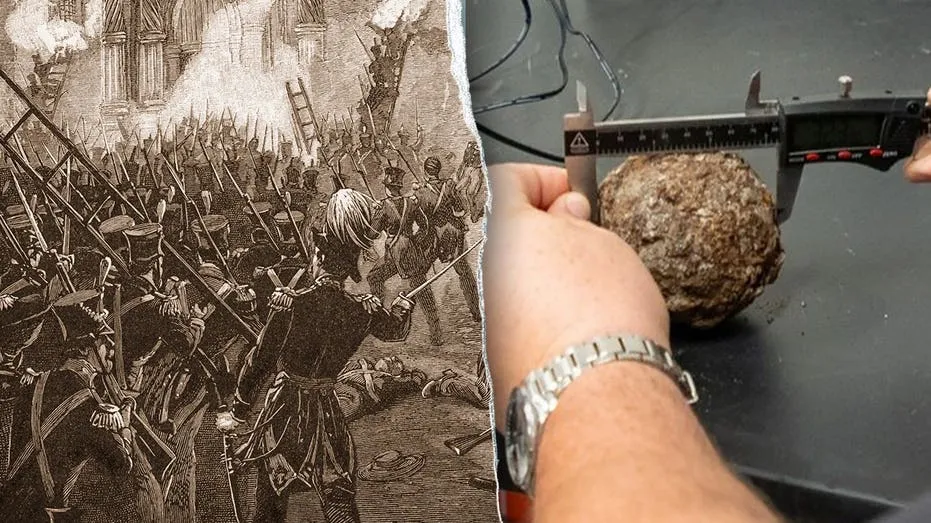
Archaeologists excavating near the historic Alamo Church have unearthed a second cannonball, believed to have lain undisturbed for nearly 190 years since the pivotal 1836 battle. The discovery, made on June 2, follows a similar find just three months prior, adding another tangible link to one of Texas’ most defining historical conflicts.
The Alamo Trust, the nonprofit stewards of the historic site, announced the recovery on June 16. This latest artifact was found outside the northeast corner of the Alamo Church, within an excavation area adjacent to where a previous intact cannonball was recovered in March. Both discoveries were made at approximately the same depth, leading archaeologists to conclude they have likely remained buried and untouched since the tumultuous events of 1836.
A Glimpse into the Past
Tiffany Lindley, director of archaeology at the Alamo, expressed the significance of these finds. “So whenever they were dropped, the very first time — possibly in 1836, probably — they haven’t been touched since,” she stated in a press release. “And that’s what makes them extra special.” The implication is that these objects have remained precisely where they landed during the battle, offering a rare, direct connection to the past.
The Battle of the Alamo, a critical event in the Texas Revolution, pitted a determined group of Texian defenders, including legendary figures like Davy Crockett and William B. Travis, against a significantly larger Mexican army. The 13-day siege, which concluded on March 6, 1836, resulted in the defeat of the Texian forces but galvanized the Texan cause, becoming a powerful rallying cry for independence.
Surprising Discoveries Amidst Development
Lindley shared that the discovery of a second cannonball was particularly surprising. The area surrounding the Alamo has a long and complex history, marked by extensive use over the centuries. This includes periods of occupation by the U.S. military as a quartermaster depot and considerable commercial development that has altered the landscape.
“We find what gets left behind, and often that means broken and discarded items,” Lindley explained. “All of that has impacted a significant portion of the underground resources.” She added, “It was amazing to find one cannonball, and then to follow it up a couple of months later with a second was quite surprising.” The ongoing archaeological work aims to uncover and preserve remnants of the site’s rich past, even amidst the challenges posed by its layered history.
Material Differences in Artifacts
While both cannonballs are significant historical artifacts, they differ in their material composition. The cannonball discovered in March was made of solid bronze, contributing to its better state of preservation. The more recent find, however, is constructed from solid iron and shows heavier rust, appearing orange-brown in color. Despite the difference in preservation, Lindley noted that the iron cannonball is “still in pretty good condition.”
Plans are underway to send both artifacts for professional conservation. This process will help stabilize the objects and ensure their long-term preservation, allowing them to be studied and potentially displayed in the future.
A Wealth of Historical Finds
The excavation project at the Alamo is yielding a consistent stream of historical discoveries. Lindley mentioned that the team uncovers dozens of significant historical artifacts daily, alongside a much larger quantity of less remarkable items like nails and brick fragments. These everyday objects, though less glamorous, also contribute valuable context to understanding the lives of those who inhabited the site throughout its history.
“We are finding dozens of exciting historic artifacts every day, along with hundreds of maybe not so exciting artifacts, like nails and brick,” Lindley said. “We find what gets left behind, and often that means broken and discarded items.”
While the cannonballs are certainly exciting finds, Lindley emphasized that they represent just a small fraction of the overall project’s scope. The ultimate goal of the ongoing excavations is to gather comprehensive data. “After excavations end, analysis of the data will provide valuable insight into the daily lives of the inhabitants of the site,” she concluded. The insights gained from these meticulous archaeological efforts promise to enrich our understanding of the Alamo’s multifaceted past, extending far beyond the famous battle itself.


