

Alito Warns SCOTUS Ballot Ruling Invites Voter Fraud Risks
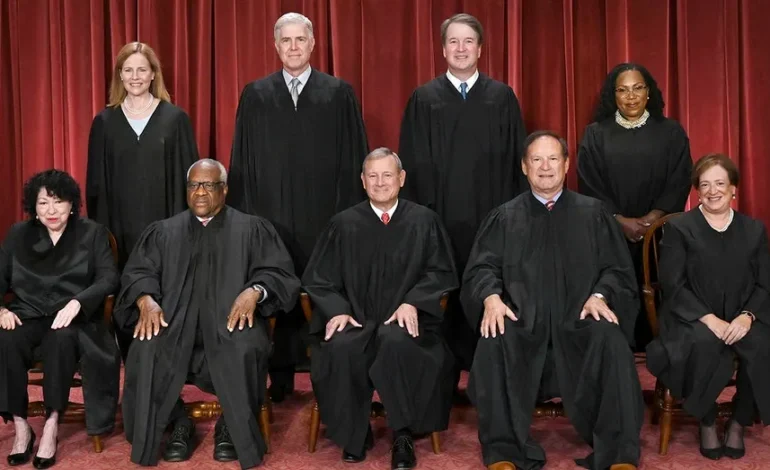

Justice Samuel Alito has voiced strong objections to a recent Supreme Court decision concerning the counting of ballots received after Election Day. In a dissenting opinion, Alito argued that the ruling not only misinterprets the law but also poses a significant threat to public confidence in the integrity of American elections, potentially opening the door to voter fraud.
Concerns Over Election Integrity
Alito’s dissent focused on what he described as the majority’s misinterpretation of when the “electorate’s choice” is legally determined. Beyond the legal technicalities, he issued a stark warning about the practical consequences of allowing late-arriving ballots to influence election outcomes long after the initial vote. He contended that such a practice could severely erode the trust Americans place in their electoral processes.
“Not only is today’s decision inconsistent with statutory text, legal context, historical practice, and precedent; it also threatens to produce lamentable consequences,” Alito wrote. He further elaborated that the majority’s stance “spawns a slurry of troubling election-law questions and risks further undermining Americans’ confidence in election integrity.”
A Hypothetical Scenario of Doubt
To illustrate his point, Justice Alito presented a hypothetical scenario involving a presidential election. In this scenario, one candidate initially appears to hold a substantial lead of 15,000 votes on Election Night. However, as late-arriving mail-in ballots are tallied over the subsequent days, the opposing candidate gradually gains ground. Ultimately, just days before the Electoral College is set to vote, the second candidate pulls ahead by a slim margin of fewer than 100 votes.
This hypothetical situation, Alito warned, could ignite widespread accusations of a rigged election. During the oral arguments for the case, Justice Brett Kavanaugh echoed similar sentiments, noting, “If the apparent winner the morning after the election ends up losing due to late arriving ballots, charges of a rigged election could explode.”
The Specter of Voter Fraud
Alito’s critique extended beyond the perception of elections, directly addressing the potential for actual voter fraud. He asserted that the Court’s decision creates vulnerabilities that could be exploited, further damaging faith in the electoral system. “Today’s decision leaves open opportunities for voter fraud that may further undermine Americans’ faith in the integrity of this country’s elections,” he stated, adding that “Diverse sources have recognized that mail-in ballots increase the potential for fraud.”
As evidence, Alito referenced a 2005 report from a committee chaired by former President Jimmy Carter and former Secretary of State James Baker. This report identified absentee voting as “the largest source of potential voter fraud” in American elections.
While instances of voter fraud using mail-in ballots have been documented, it is important to note that there is no widespread evidence of such fraud occurring in recent presidential elections, including 2020 and 2024.
Arguments for Ballot Access
Conversely, proponents of counting mail-in ballots that are postmarked by Election Day but arrive shortly thereafter argue that such measures are crucial for ensuring that all eligible citizens have the opportunity to participate in the democratic process. This perspective emphasizes accessibility and the right to vote for individuals who may face practical barriers to voting in person on Election Day.
Representative Marie Gluesenkamp Perez, a Democrat from Washington, expressed relief that the Supreme Court was not interfering with her state’s established mail-in ballot system. She highlighted the practical benefits for constituents, stating on the social media platform X, “If you work a shift job, have young kids, or live out in the woods, you can’t just knock off for the day to go stand in line at a polling place. For decades, Washington’s secure vote by mail system has made it easy for these folks to participate in democracy and make their voice heard.” Her comments underscore the view that vote-by-mail systems can enhance voter participation among diverse populations.
The Court’s Limited Scope
The majority opinion, authored by Justice Amy Coney Barrett, sidestepped the policy debate surrounding the merits of counting late ballots. The Court’s focus, according to Barrett, was strictly on the legal authority to intervene, not on whether such policies are sound or beneficial. “Finally, plaintiffs assert that requiring ballots to be received by Election Day protects election integrity and increases voter confidence in election results,” Barrett wrote. “As we have said time and again, however, policy arguments are properly directed to legislatures, not courts.”
This framing indicates that the Court viewed the core issue as one of legislative prerogative rather than judicial determination of election policy. Therefore, while Alito raised significant concerns about potential fraud and public trust, the majority concluded that addressing such policy considerations falls outside the judiciary’s purview, resting instead with elected lawmakers.