




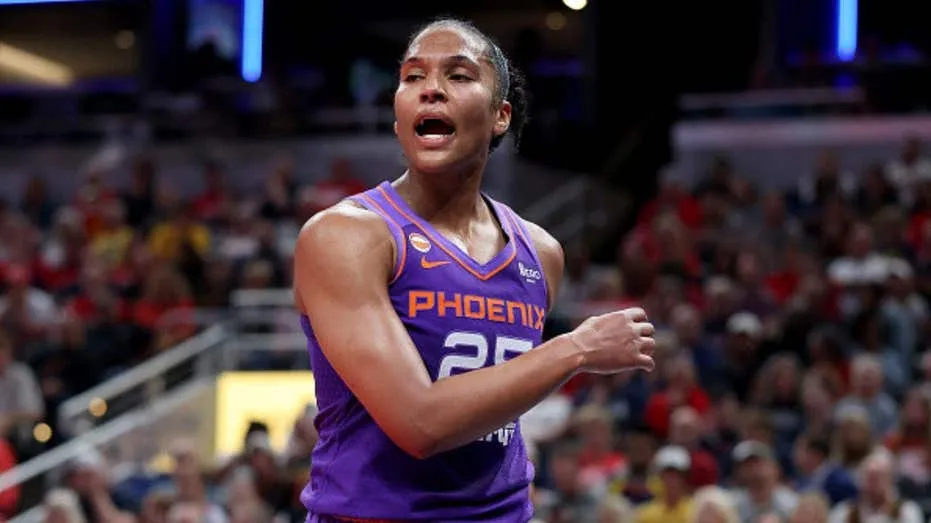
Phoenix Mercury forward Alyssa Thomas has voiced strong criticism of the WNBA’s leadership, particularly Commissioner Cathy Engelbert, following her one-game suspension for a flagrant foul on Indiana Fever star Caitlin Clark. Thomas, who received the suspension for a hit to Clark’s throat during a recent game, stated she was informed of the disciplinary action just moments before it was publicly announced. She expressed disappointment with Engelbert’s perceived silence on player safety issues amidst growing backlash and threats directed at players.
Thomas Expresses Frustration with League Response
Speaking after her suspension, Thomas articulated her dismay, noting, “Honestly, I didn’t even know I was being suspended until 10 minutes before it was put on social media. We still have yet to hear anything from Cathy. It’s no surprise.” She highlighted the contrast between the public discourse on social media and the league office’s lack of direct communication, adding, “You can see what’s being said on social media. Yeah, I mean, it’s unfortunate, but as usual she remains silent, and that’s unfortunate when our lives are being threatened.”
The suspension stemmed from a play involving Caitlin Clark, which the WNBA deemed warranted additional discipline beyond the initial call on the court. Thomas described the broader narrative surrounding the incident as difficult, stating, “It’s crazy, you know, playing the game, being suspended, just the whole narrative that’s being painted out there. It’s unfortunate that it’s come to this over basketball.” She further elaborated on the impact of the situation, noting that many players, herself included, only became fully aware of the play’s severity after the game, only to find themselves being characterized negatively. “A lot of us, myself included, didn’t even know the play took place until after the game and now we’re being painted as thugs. And death threats out on us, so it’s really unacceptable. It is something that needs to change in this league, and I’m just really sick and tired of it.”
Debate Over Player Safety and Officiating
Thomas’s comments have reignited discussions about player safety and officiating standards within the WNBA, particularly concerning the treatment of star player Caitlin Clark. Clark has been the subject of numerous hard fouls and intense physical play since entering the league, drawing attention to the league’s handling of such incidents. While the WNBA has faced scrutiny for its response to the increasing physicality, the focus often shifts when disciplinary actions are taken against veteran players.
The league’s decision to suspend Thomas, a player known for her physical style of play, has led to a complex debate. Critics point out that Thomas’s remarks seemed to deflect from the nature of the foul itself, instead emphasizing her own punishment and the subsequent online threats as the primary injustices. This perspective suggests a reluctance to fully acknowledge the play that led to the suspension, which involved a flagrant hit to Clark’s throat.
The situation underscores a recurring tension within the league: how to balance aggressive play, which can be part of the sport’s appeal, with the need to protect its athletes, especially its most prominent stars. The surge in popularity and viewership driven by players like Clark has amplified these concerns, as the league navigates increased attention and the associated pressures.
Clark’s Resilience Amidst Physical Play
Throughout this period of heightened attention and physical challenges, Caitlin Clark has largely maintained a composed public demeanor. Despite enduring a level of physical treatment that few superstars in professional sports face, especially while simultaneously driving unprecedented interest and viewership for the WNBA, Clark has continued to perform on the court. Her approach has been to focus on her game, saying little publicly about the fouls she absorbs, a strategy that contrasts with the public statements made by other players involved in disciplinary matters.
The narrative surrounding Clark’s experience highlights the dual challenge the WNBA faces: managing the intense physicality directed at its most popular player while also addressing the safety concerns and potential for escalation that such plays can create. The league’s disciplinary actions, like the suspension of Thomas, are often scrutinized in the context of this ongoing debate about player protection and the league’s overall approach to maintaining a safe yet competitive environment.
Accountability and League Governance
Thomas had the opportunity to address the incident by acknowledging that her actions warranted disciplinary review. However, her public statements instead framed her suspension and the subsequent online threats as the central issues, positioning herself as a victim of the circumstances. This stance has drawn criticism for potentially sidestepping accountability for the specific play that led to her suspension.
The ongoing dialogue emphasizes the need for clear communication and consistent policy enforcement from the WNBA’s leadership. As the league continues to grow in popularity, addressing player safety, officiating consistency, and public relations surrounding contentious on-court incidents will remain critical challenges for Commissioner Engelbert and the league office.
While the threats directed at players are unequivocally unacceptable and warrant serious attention, they do not alter the fundamental reason for Thomas’s suspension. The focus remains on ensuring a safe playing environment while upholding the integrity of the game and addressing the conduct of players on the court.


