




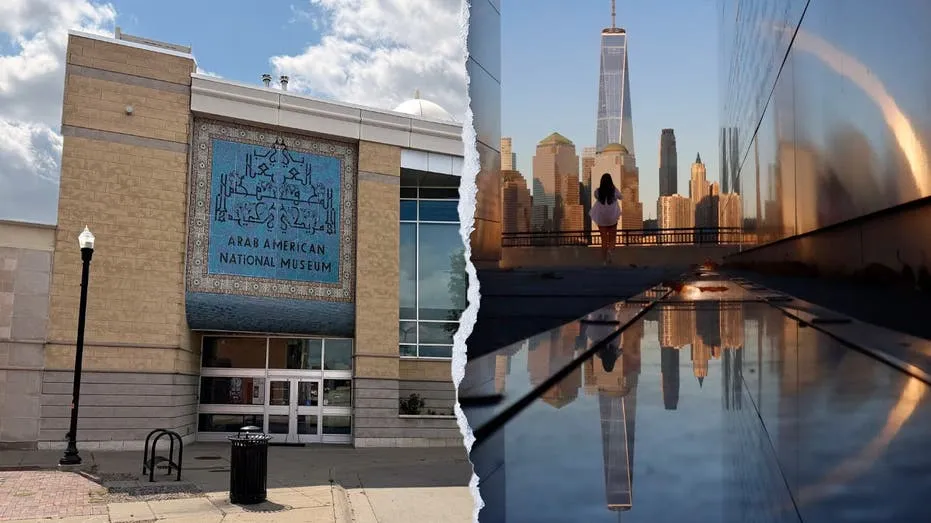
DEARBORN, MI – Nearly 25 years after the September 11th attacks, a museum affiliated with the Smithsonian Institution in Dearborn, Michigan, is drawing attention for its approach to the events of that day and their aftermath. The Arab American National Museum (AANM) features exhibits and programming that highlight the discrimination and government actions experienced by Arab Americans in the wake of 9/11, while dedicating less focus to the nearly 3,000 lives lost in the attacks themselves. This focus has led to scrutiny, particularly given the museum’s Smithsonian affiliation and its receipt of federal funding.
Examining the Post-9/11 Landscape
The AANM’s central exhibit addresses the dual impact of the 9/11 tragedy on the Arab American community. A museum display explains that Arab Americans “suffered two-fold as a result of the tragic events of September 11th.” It elaborates that while they shared in the national grief and horror, they were also “unfairly held responsible” for the attacks, despite no Arab American being found guilty of any connection. This sentiment is echoed on a placard that criticizes the government’s post-9/11 detention of immigrants investigated for potential terrorist links, noting that “virtually none were charged” with terrorism-related offenses.
The museum’s narrative suggests that Arabs faced intensified immigration enforcement following the attacks, with some individuals allegedly deported for minor visa violations or petty offenses that might have previously been overlooked. According to a Justice Department inspector general report, in the 11 months after 9/11, immigration authorities detained 762 noncitizens on immigration charges as part of the FBI’s terrorism investigation. The report indicated that some detainees without terrorism ties experienced harsh treatment and were held under unnecessarily restrictive conditions.
Programming and Public Perception
Beyond its permanent exhibits, the AANM has consistently used its anniversary programming to explore issues of discrimination and law enforcement policies impacting Arab and Muslim communities. The museum hosts an annual “solidarity” town hall, which often centers on criticisms of the American reaction to 9/11. The event’s description emphasizes providing a “safe space for communities to reflect and engage in dialogue about the harmful prejudices that Arab and Muslim (and anyone perceived to be Arab or Muslim) individuals face on both an individual and systemic level.” Past town halls have examined how “communities of color have been targeted through the frame of national security” and how leaders of these groups were “targeted” following 9/11.
Interestingly, public opinion data from the period following the attacks presents a more complex picture. While the museum’s narrative focuses on backlash, President George W. Bush publicly encouraged Americans not to blame Muslims for the attacks. Polling data from the Pew Research Center indicated a rise in favorable views toward Muslim Americans in the immediate aftermath, increasing from 45% in March 2001 to 59% by November of that year.
Funding and Affiliation
The Arab American National Museum, founded in 2005, has received substantial federal support. It is an affiliate of the Smithsonian Institution and has been awarded hundreds of thousands of dollars in grant funding from the National Endowment for the Humanities (NEH). Additional funding includes a $385,000 grant from the Department of Housing and Urban Development (HUD) for expansion in 2013, further HUD funding between 2017 and 2019, and at least $50,000 from the State Department between 2016 and 2017. This federal backing and Smithsonian affiliation have placed the museum under scrutiny, particularly as the Smithsonian itself faces criticism from some lawmakers regarding perceived political bias in its historical presentations.
Broader Exhibits and Controversies
The museum’s scope extends beyond its post-9/11 focus. A planned event on September 10th was set to feature a film portraying Hamas’s October 7th attack within the context of a long-standing Palestinian “struggle” and broader “anti-imperialist and decolonial movements.” During a recent visit, a section of the museum displayed art critical of Israel’s actions in Palestinian territories, with one piece accusing the Israeli government of perpetuating a system of “apartheid.”
A placard accompanying a sculpture cited If Americans Knew (IAK) in stating that Israel had killed over 2,000 Palestinian children since September 29, 2000. The sourcing itself is noted as controversial, with some pro-Palestinian organizations distancing themselves from IAK due to allegations of antisemitism and ties to white supremacists, claims IAK disputes. IAK’s news site has also published content questioning the designation of Hamas as a terrorist organization. Another placard featured a quote from Defense of Children International Palestine (DCIP), an organization designated as terrorist by the Israeli government in 2021, though DCIP and human rights groups contest this designation.
The museum’s gift shop offers Palestinian-themed merchandise, including magnets, keychains, coloring books focused on “Palestinian heritage,” and keffiyehs. The AANM, Smithsonian, National Endowment for the Arts, and NEH did not respond to requests for comment regarding these exhibits and programming.
Conclusion
The Arab American National Museum’s programming around 9/11 and its broader exhibits highlight a complex and often contentious dialogue surrounding national security, civil liberties, and international conflicts. While the museum aims to provide a platform for Arab American experiences and perspectives, its focus and the nature of some of its exhibits have sparked debate about historical interpretation and the role of federally funded institutions in addressing sensitive topics.


