



Aces Coach Becky Hammon Benches Stars in Apparent WNBA Scheduling Protest
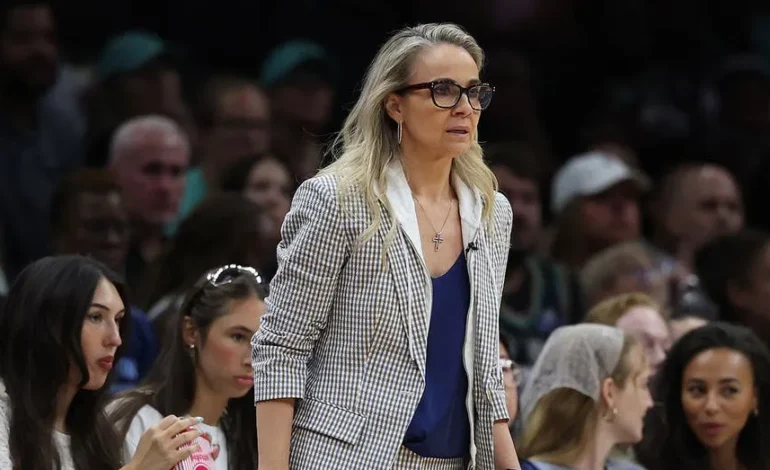

In a move that raised eyebrows across the WNBA, Las Vegas Aces head coach Becky Hammon opted to bench three of her team’s biggest stars for a nationally televised game against the New York Liberty on Sunday. The decision, which saw four-time MVP A’ja Wilson, Chelsea Gray, and Jackie Young sidelined for the entire contest, is widely interpreted as a protest against the league’s demanding schedule, particularly the short turnaround between road games.
A Curious Starting Lineup on National TV
The Sunday afternoon matchup in Brooklyn featured two of the WNBA’s top contenders, making the Aces’ unconventional starting five all the more striking. Instead of their usual formidable lineup, Hammon fielded Jewell Loyd, Dana Evans, and Brianna Turner against the Liberty. The sidelined stars, Wilson, Gray, and Young, not only missed the start but remained on the bench throughout the game, offering vocal support to their teammates but not participating in the action. This occurred during a high-profile ABC broadcast, amplifying the significance of Hammon’s choice.
Hammon Defends Player Health Over Immediate Results
Following the Aces’ decisive 111-71 loss to the Liberty, Hammon addressed the decision, emphasizing player well-being as the paramount concern. “The health and safety of players comes first,” she stated, as reported by Yahoo Sports. “Wherever we end up, we end up, and we’ll play whatever hand is dealt to us. To me, this was a bigger picture type of scenario, so you take the ‘L,’ understanding that it pays dividends on the back end.”
The Aces had played the Minnesota Lynx just the previous day, suffering a 98-87 defeat. In that Saturday game, Wilson logged 33 minutes, Young played 33 minutes, and Gray was on the court for 36 minutes, reflecting their typical heavy workloads. The quick turnaround, especially with travel involved, prompted Hammon’s drastic measure.
Addressing WNBA Scheduling Concerns
Hammon elaborated on her reasoning, highlighting the physical toll of constant travel and demanding schedules. “Not going to put (players) in any kind of jeopardy to get hurt when we’ve been expending a lot of energy and traveling a lot of miles back and forth, crisscrossing the country,” she explained. “It is what it is. I know these are big matchups, and these are what people want to see, but you should ensure that it’s fair.”
The WNBA’s new collective bargaining agreement, ratified by both the league and the players’ association, includes provisions aiming to ensure at least 20 hours between the start of consecutive games in a back-to-back scenario. Furthermore, league guidelines suggest a minimum of 22 hours between such games, with travel ideally not exceeding one time zone change. This structure mirrors practices seen in the NBA.
However, the Aces’ specific situation presented a challenge to these guidelines. Their Saturday game against the Lynx tipped off at 1 p.m. ET, while Sunday’s contest against the Liberty was scheduled for a 12:30 p.m. ET start. This timing provided just under 24 hours between games, but the travel from Minnesota to New York likely pushed the boundaries of what Hammon deemed acceptable for player recovery and fairness, especially considering the Lynx played their second game of a back-to-back at home on Saturday.
Rival Reactions and Future Implications
While the Liberty secured an easy victory without facing the Aces’ full roster, player Jonquel Jones acknowledged the competitive desire to play against top opponents. “Obviously, they have to do what’s right for their team,” Jones commented, via Yahoo Sports. “They have to do what’s right for their bodies. But as competitors, we really wanted to match up against them.”
The WNBA is set to expand its schedule in the coming seasons, with a 50-game slate planned for next year, an increase of six games from the 2026 season. This growth, while indicative of the league’s rising popularity, also brings increased scheduling complexities.
A Statement Beyond the Box Score
Hammon’s decision on Sunday may have been more than just a tactical adjustment for player health. It could signal a broader statement to the WNBA about the sustainability and fairness of its scheduling. By choosing to bench her stars on national television, even while technically adhering to minimum rest guidelines, Hammon appeared to be drawing a line, questioning whether the current scheduling practices adequately support player welfare and competitive balance, regardless of the game’s visibility.
This bold move by the Aces’ coach underscores the ongoing tension between maximizing broadcast appeal and ensuring the long-term health and performance of the league’s elite athletes. As the WNBA continues to evolve, such decisions may become crucial in shaping future scheduling policies.