




Sanders Frames Michigan Senate Race as ‘Billionaire Class’ vs. El-Sayed
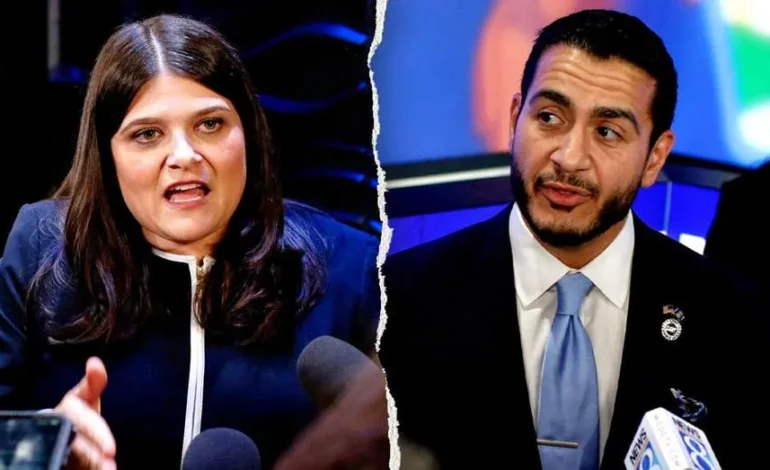

Senator Bernie Sanders has characterized the upcoming Democratic primary for Michigan’s Senate seat not as a contest involving Representative Haley Stevens, but as a pivotal battle against the influence of wealthy donors and the “billionaire class” seeking to thwart progressive candidate Abdul El-Sayed. Sanders articulated this perspective during a campaign rally in Detroit on Friday, appearing alongside El-Sayed, who is slated to compete against Stevens in the August 4th primary.
A Stark Choice: Progress vs. Plutocracy
“With all due respect to Haley Stevens, everyone understands that this election isn’t about her and Abdul,” Sanders declared to the assembled crowd. “This is an election between Abdul and the billionaire class. That is the essence of this contest.” He emphasized that substantial financial backing from wealthy individuals and outside organizations has been directed towards opposing El-Sayed, whom Sanders has endorsed as a leading progressive voice in the current Senate cycle.
Sanders highlighted the significant financial outlay against El-Sayed, stating, “The billionaire class, which has already — and there are two weeks left to go in the election — has already spent $50 million against him.” He urged attendees and viewers across the state to consider the implications of such extensive spending. “Now I want everybody here throughout the state, people turning on the TVs and they see all these ads, I want you to ask yourself a simple question: Why are the richest people in the country spending tens and tens of millions of dollars to defeat Abdul El-Sayed?”
Citing data that suggests outside groups have outspent El-Sayed’s campaign by a remarkable 12-to-1 ratio, Sanders presented this influx of funding as clear evidence that powerful interests perceive El-Sayed as a significant threat to their agenda. Reports from AdImpact indicate that super PACs supporting Stevens have allocated approximately $26.9 million for television advertisements in the five weeks leading up to the primary, contrasting sharply with the roughly $2.1 million spent by groups backing El-Sayed.
Michigan: A Microcosm of the Democratic Divide
The Michigan Senate primary has rapidly become one of the most closely scrutinized Democratic races of the 2026 election cycle, serving as a focal point for the ideological tensions within the party between its progressive and more establishment factions. El-Sayed’s campaign has garnered endorsements from prominent progressives, including Sanders, while Stevens has secured the support of Senate Minority Leader Chuck Schumer and the retiring Senator Gary Peters.
Stevens, who has represented Michigan’s 11th Congressional District since 2019, previously served on the Obama administration’s auto industry task force. Her campaign has recently drawn considerable attention, partly due to viral clips of her speeches. One particular speech, noted for its animated delivery, led to online comparisons with a memorable sketch from “Saturday Night Live.” Another moment that resurfaced involved a 2020 speech on the House floor where Stevens, wearing pink latex gloves during the COVID-19 pandemic, continued speaking beyond her allotted time, prompting repeated calls of “out of order” from the speaker pro tempore.
The race has intensified following the withdrawal of State Senator Mallory McMorrow earlier this month, leaving Stevens and El-Sayed in a direct contest. Many within the Democratic party view this matchup as a proxy battle that could significantly shape the future direction of the party. The winner of the primary is anticipated to face Republican Mike Rogers in the general election in November.
The Stakes Beyond Michigan
Sanders’ framing of the election underscores a broader narrative within the Democratic Party about the role of money in politics and the influence of progressive ideals. By positioning El-Sayed against a nebulous but powerful “billionaire class,” Sanders aims to mobilize voters who feel disenfranchised by the current economic system and are seeking fundamental change. This strategy seeks to elevate the campaign beyond a simple electoral contest and frame it as a struggle for the soul of the Democratic Party and its future policy direction.
The substantial spending by outside groups supporting Stevens highlights the perceived threat that a progressive victory in a key state like Michigan could pose to established political and economic interests. The contrast in campaign spending, with Stevens’ allies outspending El-Sayed’s by a wide margin, illustrates the resources being deployed to influence the outcome. This dynamic is not unique to Michigan but reflects ongoing debates within the party nationally about electability, ideology, and the types of candidates who can best represent Democratic values.
As the August primary date approaches, the focus remains on how voters will respond to Sanders’ call to action and whether they will rally behind El-Sayed as a champion against perceived corporate and wealthy influence, or gravitate towards Stevens, who represents a more traditional path within the party, backed by established leadership and significant financial resources. The outcome in Michigan is likely to be interpreted as a bellwether for the broader ideological battles shaping the Democratic Party’s trajectory.