




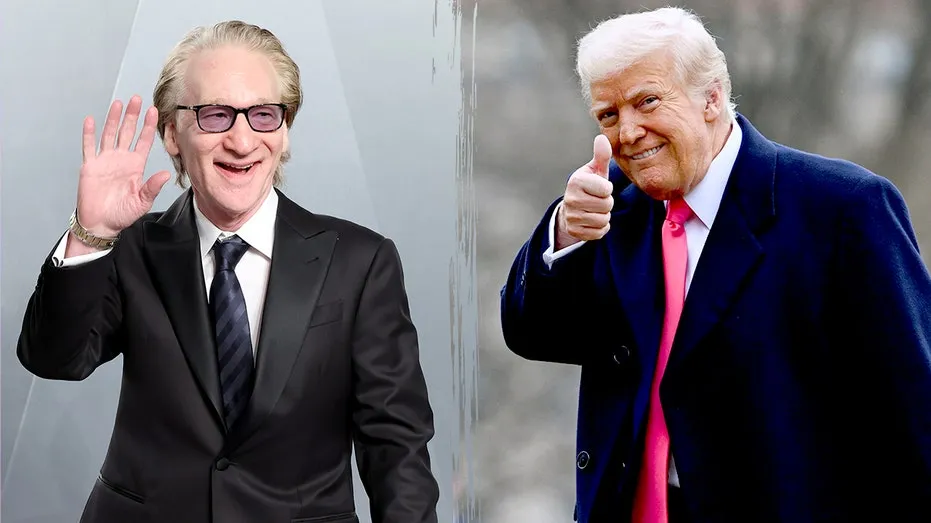
Comedian and television host Bill Maher suggested that former President Donald Trump feels a sense of betrayal stemming from their ongoing public disagreements, particularly after a seemingly cordial dinner they shared in 2025. Maher, known for his HBO show “Real Time,” elaborated on this dynamic during a recent appearance on ABC’s “This Week.” The remarks come in the wake of Maher receiving the Mark Twain Prize for American Humor at the Kennedy Center, an institution where Trump holds a significant role as chairman.
A Brewing Public Spat
The friction between Maher and Trump resurfaced notably before the award ceremony. Reports indicated that the Trump administration had initially attempted to prevent Maher from receiving the prestigious humor award. Maher, however, seemed to acknowledge the strategic nature of such a move, even expressing a degree of respect for the effort during an April episode of his “Club Random” podcast. “I love that, you know, he takes the game seriously. Like no, ‘I’m going to block this guy.’ I respect the move,” Maher commented. He also expressed his anticipation for the event, stating, “But I know that on June 28, it’s going to happen. We’re going to be at the Kennedy Center, and I couldn’t be more appreciative, honestly.”
The Dinner That Sparked Disagreement
Following the award ceremony, Maher addressed the renewed public sparring with Trump. He posited that the core of their conflict originated from his refusal to align with Republican viewpoints after their private dinner meeting the previous year. Maher clarified his position, explaining, “He was just mad at me because I went to his house for dinner with no guarantee that I would leave – guarantee? It was never in the cards that I was ever going to come over to their – his side.” He added, “You know, it’s better to just talk and go through this.”
During the interview with anchor Jonathan Karl, Maher was reminded of the criticism he faced for meeting with Trump. He defended his decision, stating, “I reported honestly that it, no, it wasn’t a terrible experience at all from a guy who has done some terrible things.”
Perceived Betrayal and Political Stance
Karl observed that Trump’s public criticisms of Maher appeared to intensify following their dinner. Maher responded, “Yes, because now he feels betrayed, which is silly because there was never a deal. It was only set up as, instead of shouting at each other, talk to each other.”
Despite his ongoing political disagreements with Trump, Maher revealed during the interview that his vote in the 2028 presidential election could be up for grabs. He indicated that he might consider voting for a Republican candidate, such as Vice President JD Vance, provided that the Democratic Socialists of America (DSA) do not endorse his opponent. “My vote is in play because it can’t be Trump running, so I’m not living in communist America,” Maher stated, emphasizing his opposition to a potential Trump candidacy and his desire to avoid what he perceives as an extreme political outcome.
A Complex Political Calculus
Maher’s comments highlight a complex interplay between personal interactions and public political personas. His willingness to engage with Trump privately, followed by his continued public criticism, seems to have created a perceived rift from Trump’s perspective. Maher’s framing of the situation suggests that Trump interpreted the dinner as a potential shift in Maher’s allegiance, a notion Maher firmly rejects. The comedian maintains that the meeting was intended for dialogue, not for a change in his fundamental political opposition.
Furthermore, Maher’s conditional openness to supporting a Republican in 2028, contingent on the absence of DSA backing for the Democratic nominee, underscores his position as an independent voice. He appears to be navigating a political landscape where his primary concern is preventing what he views as the worst possible outcomes, rather than wholeheartedly endorsing any particular candidate or party. This nuanced stance suggests a voter motivated by a specific set of red lines and a desire to maintain a political system he believes is not veering too far into ideological extremes.
The situation also touches upon the broader dynamics of political discourse and celebrity influence. Maher, as a prominent media figure, finds his personal interactions scrutinized and often politicized. His ability to maintain his critical stance while acknowledging the humanity of those he opposes, even if that acknowledgment is perceived as a personal slight by the individual, demonstrates a particular approach to political commentary. The ongoing public exchange with Trump, fueled by this perceived “betrayal,” continues to be a point of interest in the current political and media climate.


