




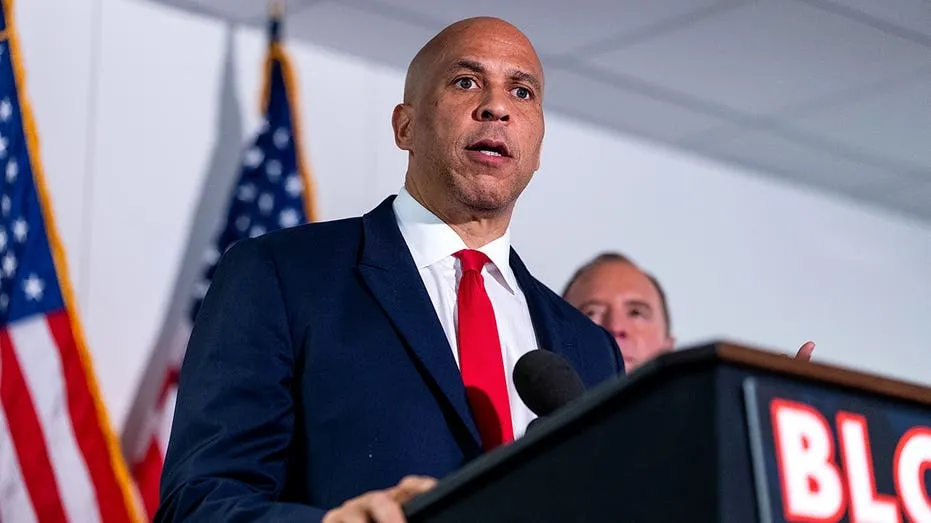
Senator Cory Booker, D-N.J., has reiterated his opposition to the SAVE America Act, asserting that a recent voter roll error in New Jersey, which mistakenly allowed thousands of noncitizens to be eligible to vote, does not validate the need for the federal legislation. The discovery of approximately 6,600 noncitizens on the voter rolls has ignited debate, with proponents of the SAVE Act pointing to it as evidence of systemic vulnerabilities. However, Booker maintains that the incident, attributed to a software malfunction, is unrelated to the core issues the SAVE Act aims to address.
New Jersey Voter Roll Glitch Sparks Debate
The controversy surfaced last week when New Jersey Governor Mikie Sherrill announced that a significant software flaw within the state’s Motor Vehicle System had resulted in noncitizens being erroneously added to the voter rolls, making them eligible for the upcoming presidential election. Governor Sherrill acted swiftly, ordering an investigation and ensuring that all affected individuals were removed from the rolls immediately upon discovery. She emphasized the state’s commitment to addressing the issue, stating, “We take this very seriously in New Jersey. People are stepping up.” Booker echoed this sentiment, noting, “We have a governor that’s saying this is unacceptable. We’re gonna make sure that we get to the bottom of it. People need to be held accountable.”
This incident has provided fuel for President Donald Trump’s campaign to push for the passage of the SAVE America Act. While some Republican lawmakers have expressed reservations, many Democrats, including Senator Booker, are staunchly against the bill, viewing it as a significant impediment to voting rights.
Booker’s Stance on Voter ID and Federal vs. State Control
Senator Booker argued that the New Jersey incident, and similar past occurrences in other states, would not have been prevented by the SAVE Act. “Nothing in the SAVE Act would have prevented a clerical error like we’ve seen in Texas and Oregon and New Jersey,” Booker stated, underscoring his belief that the legislation misses the mark. He added, “We’ve got to protect our voting systems.”
While opposing the SAVE Act, Booker did concede that proof of citizenship for voting is a necessary safeguard. However, he firmly believes this should remain under the purview of individual states, even for federal elections. “The states, as the Constitution says, should handle their voting when there’s problems or violations of the law. People should be prosecuted,” he asserted. This perspective highlights a fundamental disagreement on the appropriate level of federal intervention in election administration.
The SAVE America Act: A Point of Contention
The SAVE America Act, championed by President Trump, proposes stricter federal requirements for voter identification and registration. Democrats, however, argue that such measures would disproportionately disenfranchise eligible voters, particularly minority groups and those with less access to required documentation. Booker has characterized the bill as a “massive voter suppression bill,” predicting that it “would stop millions of Americans from voting.”
The lack of a uniform national standard for identifying and reporting voting system errors, as highlighted by the New Jersey situation, makes it challenging to gauge the full scope of such issues nationwide. Republicans contend that the SAVE Act would provide the necessary framework to expose and rectify these vulnerabilities. Booker, however, expressed concern that the New Jersey incident is being “weaponized by some people to advance schemes that actually would hurt Americans,” referring to the SAVE Act.
Looking Ahead: State Responsibility and Election Integrity
The debate over the SAVE Act underscores a broader tension between federal oversight and state autonomy in election management. While the New Jersey voter roll error has prompted calls for federal action from some quarters, Senator Booker and other Democrats emphasize the importance of state-level accountability and solutions. They argue that addressing specific failures at the state level, through investigation and prosecution where warranted, is a more targeted and less intrusive approach than enacting broad federal mandates that could potentially restrict access to the ballot box.
As the election cycle progresses, the differing viewpoints on election integrity, voter access, and the role of federal legislation are likely to remain a central theme in political discourse. The incident in New Jersey serves as a stark reminder of the complexities involved in maintaining secure and accessible elections, prompting ongoing discussions about the best path forward.


