
Idaho Murders: Defense Expert’s Hair Evidence Claims Spark Debate

New questions are emerging in the Bryan Kohberger case, this time concerning hair evidence found at the scene of the University of Idaho student murders. A forensic expert, who previously worked with Kohberger’s defense team, has raised doubts about the significance of certain hair strands discovered in the Moscow, Idaho, home where four students were killed. However, an attorney representing one of the victim’s families asserts that this evidence does not absolve the convicted killer.
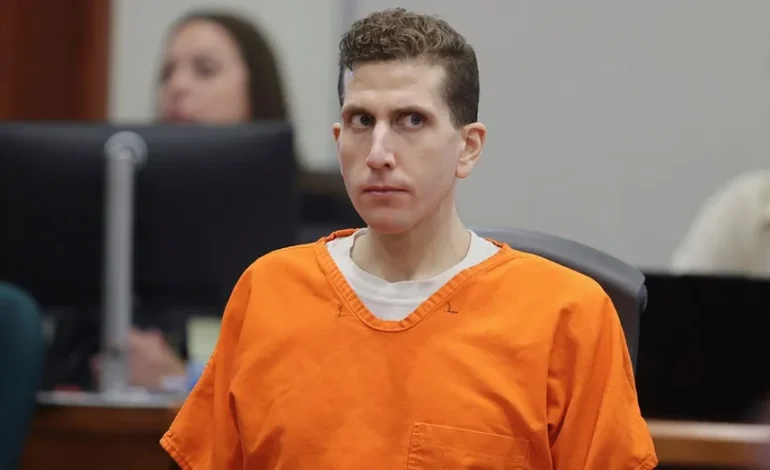
Bryan Kohberger pleaded guilty in July 2025 to the murders of Ethan Chapin, Xana Kernodle, Madison Mogen, and Kaylee Goncalves, which occurred in November 2022. He received a sentence of four consecutive life terms without parole, plus an additional ten years for burglary. Recently, Kohberger initiated a post-conviction relief petition, aiming to withdraw his guilty pleas. He contends that he was pressured into accepting the plea agreement and that his legal counsel failed to present potentially exonerating evidence.
Focus on Hair Evidence and Defense Expert’s Claims
Kohberger’s petition specifically references hair evidence collected during the investigation. These hairs were reportedly found adhered to the bed frame, near where Ethan Chapin’s right hand was photographed in Xana Kernodle’s bed. The location, by the side of the bed against the wall, was secured by dried blood. The existence of these hairs was first detailed in Christopher Whitcomb’s book, “Broken Plea,” a work Kohberger cited in a recent interview with The New York Times. He also highlighted the hairs in his post-conviction relief filing.
Before Kohberger’s sentencing, forensic expert Brent Turvey reviewed the prosecution’s evidence. Turvey, a forensic scientist and senior partner at Forensic Solutions LLC, who has extensive experience testifying in court, observed the hair strands still attached to the bed frame during an in-person review of the evidence in Moscow, Idaho. A photograph exists of this finding.
Visually, the hairs appear to be a mixture of light and dark brown, with more than two dozen visible strands. While no scale is present in the photograph for precise measurement, the strands seem to range from three to four inches in length. According to Turvey, the FBI laboratory’s analysis excluded Kohberger as the source of these hairs. “The FBI lab said Kohberger is excluded. This is not his hair,” Turvey stated.
It remains unclear whether all the recovered strands were subjected to testing or to whom they might belong. A representative for Fox News Digital noted that they had not independently verified the complete laboratory documentation supporting Turvey’s assertion. Reports from People magazine indicate that a DNA expert retained by Kohberger’s defense team tested at least one hair sample found in Chapin’s hand, concluding it matched Chapin. It is not definitively known if this sample is the same hair evidence that Turvey described.
Broader Allegations of Coercion and Ineffective Counsel
Beyond the hair evidence, Turvey believes Kohberger’s recent petition brings to light more significant issues. He argues that the court should thoroughly investigate the former criminology student’s claims of being coerced into a guilty plea and receiving inadequate legal representation.
“Everybody involved needs to be put under oath, starting with Anne Taylor and her legal team,” Turvey told Fox News Digital. He emphasized that the court has a responsibility to ascertain the basis for Kohberger’s accusations of coercion and ineffective assistance. “The court should want to know what evidence Bryan Kohberger has regarding these clear accusations of coercion and ineffective assistance.”
Turvey further stated that Kohberger’s claims warrant serious consideration and judicial investigation. “This will require Anne Taylor and her co-counsel to answer some very difficult questions,” he commented. “Not just why she attacked her own experts for revealing the possibility of the exculpatory material — but for failing to respond to another expert that is out there claiming he’s guilty and that he knew it from the start.”
Turvey has publicly clashed with Kohberger’s former defense attorneys. Anne Taylor and her co-counsel had previously accused Turvey of breaching a confidentiality agreement, expressing their dismay at his public statements, which Turvey denied involved disclosing protected information.
Attorneys for the victims’ families have responded to these developments. Shanon Gray, representing the family of Kaylee Goncalves, questioned the relevance of the hair evidence. “If he’s talking about the hairs, that’s not exculpatory evidence,” Gray stated.
Gray pointed out that the defense was already aware of this evidence and that it was intended to be presented. “The defense had that evidence. And someone was gonna testify about it,” she said. “The other glaring issue is that all that proves is that there could’ve been another person, not that he wasn’t present.”
Official Responses and Next Steps
When contacted, the FBI declined to provide a comment. Bryan Kohberger has not responded to any communications from Fox News Digital.
The defense expert’s claims about the hair evidence, coupled with Kohberger’s allegations of coercion and inadequate legal counsel, introduce a new layer of complexity to the post-conviction proceedings. The court will now face the task of evaluating these assertions and determining their impact on the established guilty pleas and sentences.