




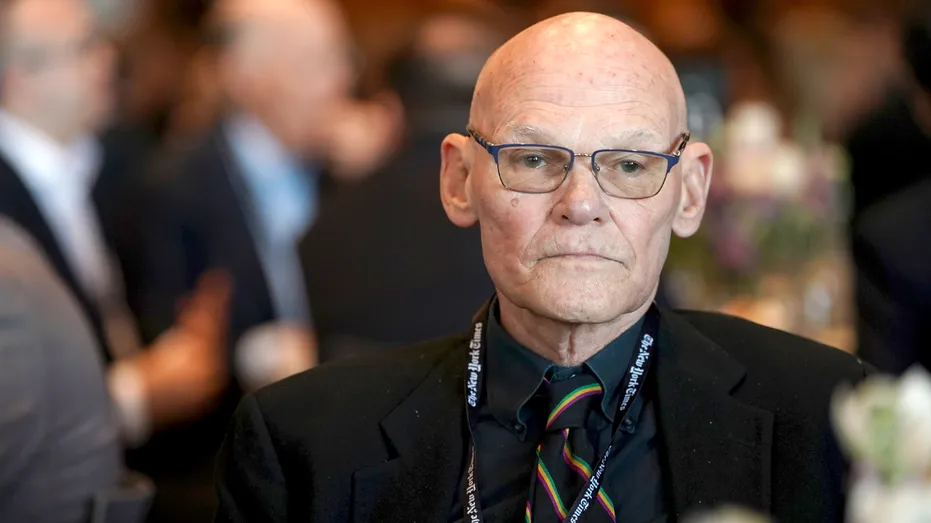
Veteran Democratic strategist James Carville has voiced significant concerns that the rise of far-left candidates, particularly those identifying as democratic socialists, could pose a substantial risk to the party’s electoral prospects in crucial swing states. Carville believes that the policy positions and the very association with these candidates could become a considerable burden for Democrats in the upcoming elections.
The Shifting Democratic Landscape
Recent primary election results have highlighted a noticeable shift towards the left within the Democratic Party. The victories of several democratic socialist candidates in New York City primaries, Abdul El-Sayed’s strong challenge for the Democratic nomination in Michigan’s U.S. Senate race, and Francesca Hong’s frontrunner status in the Wisconsin gubernatorial primary are seen by some as indicators of this trend.
While not everyone agrees that the far-left is poised to take over the party, the attention drawn by these candidacies could create a narrative problem. As Carville’s co-host Al Hunt noted on the “Politics War Room” podcast, this heightened focus might be exploited to suggest a radical takeover, potentially jeopardizing what could otherwise be a favorable year for Democrats.
‘Lunacy of the Highest Level’ Policy Concern
Carville specifically pointed to a policy proposal from Francesca Hong, a candidate in the Wisconsin gubernatorial primary, as an example of extreme thinking that could be politically damaging. He described her stance on policing as “lunacy of the highest level,” arguing that it would provide ample ammunition for Republican opponents.
“The problem we face right now in Wisconsin: this candidate doesn’t want to defund the police, she wants to abolish the police,” Carville stated emphatically. He elaborated that such a position, if championed by a Republican nominee in any state, would be entirely justifiable for Democrats to nationalize as an example of extreme ideology.
Carville expressed concern that this could lead to a situation where Democratic candidates in tight races are forced to defend or distance themselves from such radical proposals. “You go to a person in a tight race — you go to Roy Cooper, you go to Jon Ossoff, you go to Troy Jackson — and you say, ‘Your nominee in Wisconsin said this. What do you answer?’” he posed, framing it as an unavoidable and difficult question for vulnerable Democrats.
The “Democratic” Brand Dilemma
Adding to his frustration, Carville questioned the appropriation of the “Democratic” label by socialist candidates. He rhetorically asked why democratic socialists don’t adopt a different name if their platforms are so far removed from the mainstream party, suggesting it causes confusion and potentially harms the broader Democratic brand.
“Why don’t you get another name? Why are you dragging our names through the mud with your bulls—?” Carville exclaimed during the podcast. He drew a parallel to authoritarian states like North Korea, which also use the term “Democratic” in their name, to illustrate his point about the term’s potential for misinterpretation or dilution.
Carville urged voters in primaries to consider the broader implications of their choices. “You’re not just voting for a nominee for Senate in Michigan. You’re not just voting for a nominee for governor of Wisconsin. You’re voting on the image of the entire party,” he stressed. He characterized these primary votes, when they lean towards extreme candidates, as “vanity votes” that carry significant risks for the party’s national image.
Echoes of Past Campaigns
The discussion also touched upon historical parallels, such as the “defund the police” movement that gained traction after the killing of George Floyd in 2020. Hunt recalled how that slogan allowed Republicans to effectively paint the entire Democratic Party with a broad brush, regardless of individual candidates’ stances.
Carville fears a similar dynamic could unfold with the current wave of democratic socialist candidates. He believes that extreme policy proposals, particularly those related to policing and the economy, could be amplified by opponents to create a negative caricature of the Democratic Party as a whole, potentially alienating moderate voters in critical general election contests.
While Carville has historically been a strong predictor of Democratic success, his recent commentary reflects a growing unease about the internal direction of the party and its potential impact on its ability to win and govern effectively at the national level. His remarks underscore a strategic tension between energizing the party’s progressive base and maintaining broad appeal in diverse electoral landscapes.


