




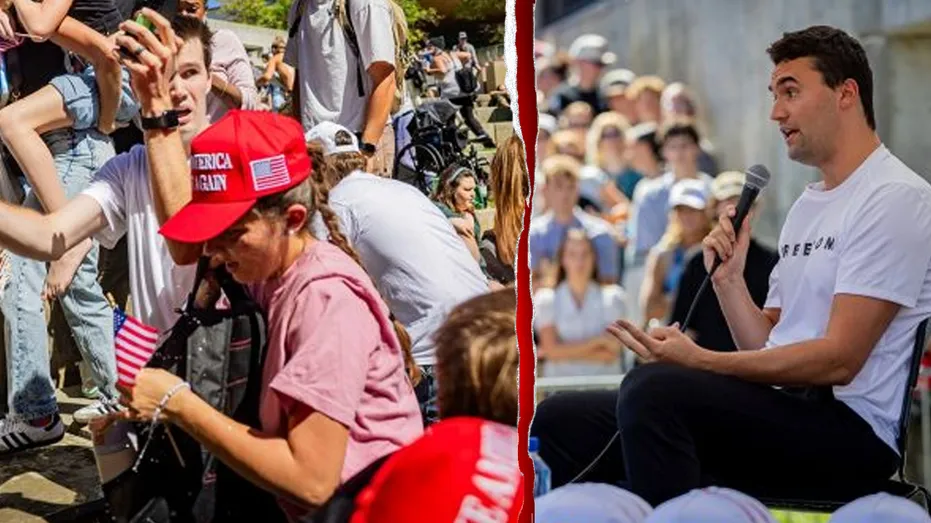
PROVO, Utah — DNA evidence allegedly found on a towel and a screwdriver recovered during the investigation into the assassination of Charlie Kirk has reportedly linked both the suspected killer, Tyler Robinson, and his former partner and roommate, Lance Twiggs, to the crime. Robinson, 23, is accused of using the towel to conceal the firearm used in the fatal shooting of the 31-year-old Kirk during a Turning Point USA event near Utah Valley University on September 10, 2025. The screwdriver’s purpose remains unclear, but law enforcement officials testified that it was discovered near what they believe was a sniper’s vantage point overlooking the event.
Key Evidence and DNA Findings
During Robinson’s preliminary hearing this week, investigators detailed the evidence collected. A Mauser 98 bolt-action rifle, reportedly modified to fire.30-06 rounds consistent with fragments found during Kirk’s autopsy, was found wrapped in a dark towel. This weapon was allegedly discovered in the woods near the university campus. A screwdriver was also recovered from the rooftop of the university’s Losee Center, an area prosecutors contend was used by Robinson as a perch from which to shoot Kirk.
Sgt. Jennifer Faumuina, who led the evidence response team, testified that her team processed the scenes following the shooting. She stated that DNA consistent with two individuals was found on both the towel and the screwdriver. These individuals were identified as Tyler Robinson and Lance Twiggs. Both men had previously provided buccal swabs to law enforcement, which were used to establish their DNA profiles.
FBI forensic analyst Amanda Bakker further elaborated on the findings, testifying that Robinson is likely the primary contributor of the DNA found on both items. Twiggs is believed to be the secondary contributor. This mixed DNA profile on critical pieces of evidence is expected to bolster the prosecution’s case against Robinson.
The Path to Trial
Robinson faces serious charges, including aggravated murder, which carries the potential for the death penalty. The preliminary hearing is a crucial step where prosecutors must demonstrate probable cause to a judge, thereby advancing the case toward a full trial. The hearing, which began Monday, was anticipated to last the entire week.
Prosecutors presented surveillance footage, according to testimony, that allegedly shows Robinson moving around the campus before and after the shooting, as well as arriving and departing in his Dodge Challenger. This visual evidence, combined with the DNA findings, aims to establish Robinson’s presence and involvement at the scene.
Twiggs’ Role and Cooperation
Lance Twiggs, who was living with Robinson at the time of the incident, is cooperating with investigators. Reports indicate that Robinson allegedly confessed to the crime in handwritten notes and text messages directed at Twiggs. While Twiggs’ DNA was found on the evidence, he has not been charged with any crime. His cooperation and the presence of his DNA are seen as potentially strengthening the case against Robinson, possibly by corroborating confessions or providing further context to the events.
Courtroom Dynamics
The preliminary hearing saw intense questioning, particularly from Robinson’s defense attorney, Michael Burt, who cross-examined the FBI analyst. Prosecutor Ryan McBride objected several times, arguing that the defense’s line of questioning exceeded the scope necessary for determining probable cause. At one point, Judge Tony Graf Jr. intervened, asking the defense attorney about his intentions. When Burt indicated he had only one more question, McBride humorously remarked, “I’ll hold them to that,” drawing laughter from those present in the courtroom.
The proceedings were closely watched by Charlie Kirk’s family, including his mother, Erika Kirk, who was observed reacting to the testimony. Observers noted the family’s intense focus as DNA markers were explained. Robinson himself appeared to be listening, though he was observed fidgeting, while a member of his family was seen yawning. Kirk’s father was seen taking notes during the proceedings.
Robinson has not yet entered a plea in the case. Should the prosecution successfully establish probable cause, he will be formally asked to enter a plea, setting the stage for a trial.
Legal Perspectives
Legal experts suggest that establishing probable cause in such cases is typically a procedural hurdle that prosecutors are expected to clear. The prosecution’s ability to present compelling evidence, including the alleged DNA links and surveillance footage, is key to moving the case forward toward a potential trial and sentencing.


