




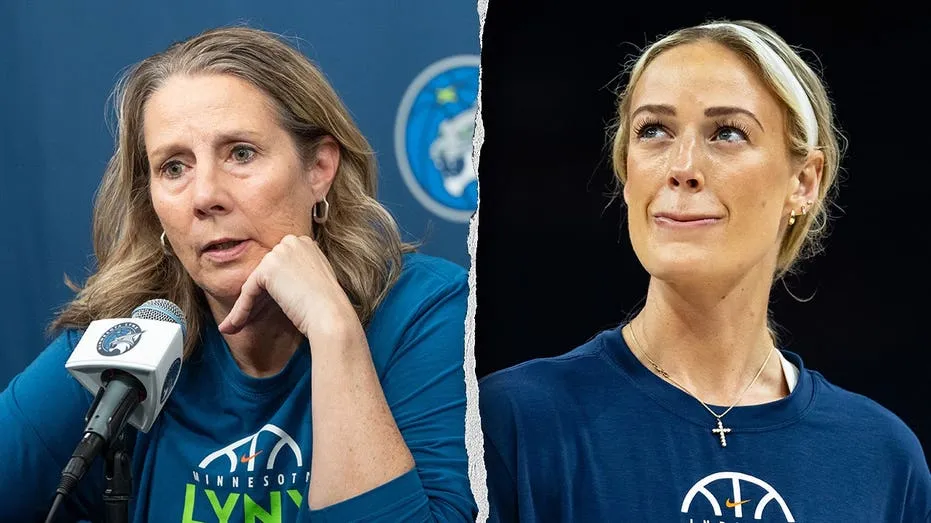
Minnesota Lynx head coach Cheryl Reeve made a public statement of support for transgender children by wearing a “Trans Kids Belong” shirt during her team’s game against the Indiana Fever on Sunday. The shirt, worn beneath her coaching blazer, was visible as she directed her team at the Target Center. This action occurred amidst a backdrop of ongoing public discussion surrounding transgender athletes, particularly involving Fever player Sophie Cunningham.
Reeve’s Stance on Inclusion
Prior to the game, Reeve had articulated her perspective on the matter, emphasizing her commitment to inclusivity. “I come from a space of inclusion,” Reeve stated, adding, “We need to protect trans kids, and every kid has a right to sports.” Her remarks preceded a rally held outside the arena in support of Cunningham’s views, highlighting the charged atmosphere surrounding the debate.
The controversy surrounding Sophie Cunningham intensified over the preceding weeks due to her public comments regarding the participation of transgender athletes in women’s sports. Cunningham had expressed that biological males should not compete against biological females or share locker rooms with them. While this stance drew significant criticism, Cunningham maintained that her position was not one of hatred towards transgender individuals, but rather a specific concern for the safety and fairness within women’s athletic competitions and facilities.
Interpreting Reeve’s Statement
Reeve’s choice to wear the “Trans Kids Belong” shirt while coaching against Cunningham’s team was widely interpreted as a direct response to Cunningham’s controversial statements. Critics argued that Reeve’s slogan oversimplified the nuances of the debate, potentially misrepresenting Cunningham’s position as a blanket rejection of transgender children’s place in society or sports. Cunningham, for her part, had clarified that her focus was on the specific context of female sports and locker rooms, not on excluding transgender youth entirely.
The coach’s public stance, while a personal expression of belief, brought the social debate directly onto the basketball court. Reeve herself acknowledged the complexities of the issue, particularly concerning post-puberty athletes and the implications for opportunities like scholarships or Olympic spots. She advocated for finding common ground rather than resorting to exclusion as a solution, a point that offered a more detailed perspective than the concise message on her shirt.
Media Access and Questions
Following the game, attempts were made by some media outlets to seek clarification from Reeve regarding her statement. Reports indicated that credential requests from certain publications, including Fox News Digital and OutKick, were denied for the Aug. 2 game, despite applications being submitted in advance of the stated deadline. This denial sparked discussion among journalists and fans about media access policies in the WNBA.
The rationale behind credential denials and the prioritization of media access became a point of contention. Some argued that local beat reporters covering teams daily should receive preference. Others suggested that access should be contingent on consistent coverage of the league. However, the argument that media should solely focus on basketball was challenged, given that a coach had used a game’s platform for a prominent social statement.
The situation raised questions about the WNBA’s approach to balancing sports coverage with social commentary. While Reeve’s right to express her views was acknowledged, the denial of media access to ask follow-up questions about her statement drew criticism. Critics suggested a perceived double standard, where the league and its teams often champion open dialogue and the use of platforms for social messages, but may be less receptive when those messages or subsequent questions challenge a particular viewpoint.
Broader Implications
The incident underscored the increasing intersection of sports and social activism. Coach Reeve’s visible statement, coupled with the subsequent media access issues, highlighted the delicate balance leagues and teams navigate when public figures engage in contentious social debates. The events surrounding the Fever-Lynx game brought to the forefront discussions about free expression, media access, and the role of sports figures in addressing societal issues.
Ultimately, while Reeve was free to wear the shirt and the Lynx organization was within its rights to manage media credentials, the combined effect fueled debate about which messages are welcomed on the sidelines and which questions are permitted in the post-game press environment. The situation left many observers questioning the consistency of principles regarding open dialogue and the use of sports platforms for social commentary.


