




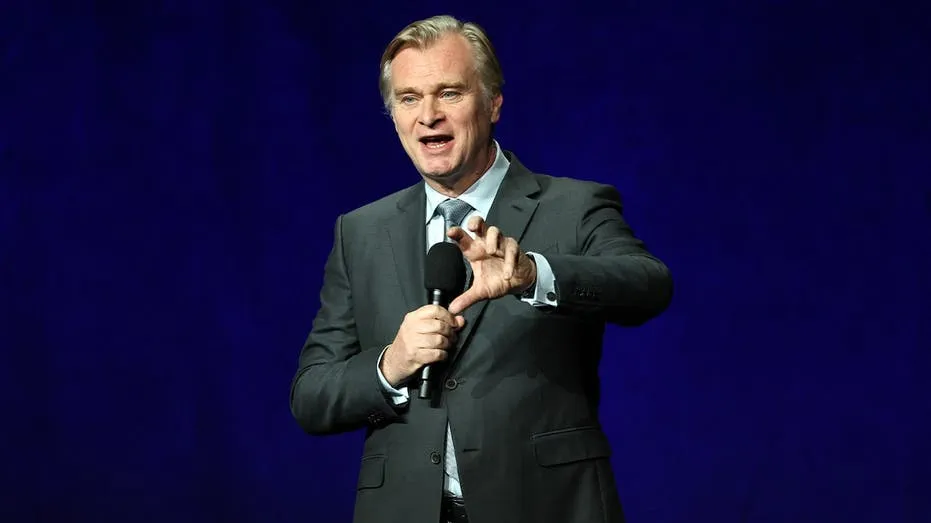
Director Christopher Nolan has characterized the widespread criticism surrounding casting decisions for his upcoming film adaptation of Homer’s ‘The Odyssey’ as “irrelevant.” The highly anticipated movie, set for release next week, has faced significant public debate regarding its creative choices, particularly concerning race and gender representation.
Controversial Casting Sparks Debate
The film’s pre-release buzz has been dominated by discussions about several key casting choices. Lupita Nyong’o has been cast as Helen of Troy, a decision that has drawn criticism for race-swapping a character traditionally depicted as white. Additionally, Elliot Page, a transgender actor, has been cast as the Greek warrior Sinon, leading to objections based on gender identity and the portrayal of a warrior character.
Further points of contention include the use of modernized dialogue and the film’s apparent reliance on Emily Wilson’s contemporary translation of the ancient Greek epic. These elements have led some viewers and critics to question the faithfulness of Nolan’s adaptation to the source material and its perceived political leanings.
Nolan’s Stance on Criticism
In an interview with The Telegraph, Nolan addressed the pre-release controversy, stating that such debates are “irrelevant” because they occur before audiences have had a chance to see the final product. “These conversations that happen before people see the film – they’re always irrelevant, because no one having them knows what the film actually is yet,” he explained.
Nolan suggested that criticism prior to a film’s release is premature, as the full context and artistic intent are not yet understood. He drew a parallel to his experience with ‘The Dark Knight’ trilogy, where he learned the importance of focusing on interpreting the original text in the strongest way possible, rather than being swayed by external commentary.
“What I learnt over my time on [the Batman] trilogy is you can’t worry about any of that [criticism] at all,” Nolan told The Telegraph. “What you have to do is honor the original text by interpreting it in the strongest way you personally can.”
Audience Concerns and Artistic Interpretation
The backlash highlights a broader cultural conversation about representation in media and the interpretation of classic works. Critics of the casting choices argue that altering fundamental characteristics of iconic figures like Helen of Troy, a figure central to Greek mythology, constitutes a political statement rather than a neutral artistic choice. The inclusion of Elliot Page in a warrior role has also been framed by some as a political statement tied to diversity, equity, and inclusion (DEI) initiatives.
Comparisons have been drawn to other recent adaptations where race-swapping has occurred, such as the casting of a Black actress as Ariel in Disney’s live-action ‘The Little Mermaid’ or the diverse casting in Amazon’s ‘The Rings of Power.’ While some such changes have been met with minimal backlash, others have ignited significant debate. The argument from critics is that certain roles, particularly those deeply rooted in specific cultural or historical contexts like Helen of Troy or Greek deities, are more sensitive to such alterations.
The inspiration drawn from Emily Wilson’s translation also remains a point of discussion. Wilson’s translation is noted for its more modern language and interpretive approach, which some believe influences Nolan’s creative direction, potentially leading to dialogue and thematic choices that depart significantly from the original epic. Concerns have been raised about the use of modern vernacular, such as the term “dad,” in dialogue, which scholars note is anachronistic to the period in which ‘The Odyssey’ is set.
The Director’s Perspective on Adaptation
Nolan’s defense of his casting decisions centers on his belief that honoring the original text involves a strong personal interpretation. However, critics contend that faithful adaptation should prioritize maintaining the core attributes of the source material, especially when dealing with figures from ancient mythology. They argue that decisions perceived as politically motivated, whether intentional or not, can alienate audiences and detract from the perceived authenticity of the work.
The director’s comments about the film being made for “modern audiences” and his dismissal of dialogue criticism as rooted in “cultural prejudice” have further fueled the debate. Critics argue that such language can be seen as dismissive of legitimate concerns about artistic integrity and historical context. The tension lies between a director’s vision for a contemporary interpretation and an audience’s expectation of fidelity to a foundational piece of literature.
Looking Ahead to Release
As ‘The Odyssey’ prepares for its theatrical debut, the discourse surrounding its casting and creative direction is likely to continue. Nolan’s assertion that pre-release criticism is “irrelevant” stands in contrast to the strong opinions held by many who believe these issues are central to the film’s reception and artistic merit. Whether the film itself will address these controversies or stand on its own artistic merits remains to be seen, but the conversation has undoubtedly set a significant stage for its arrival.
The debate underscores the challenges filmmakers face when adapting beloved classics for contemporary audiences, balancing the need for artistic innovation with respect for the source material and audience expectations.


