




Nolan’s ‘The Odyssey’ Sparks Debate With Bold Adaptation Choices
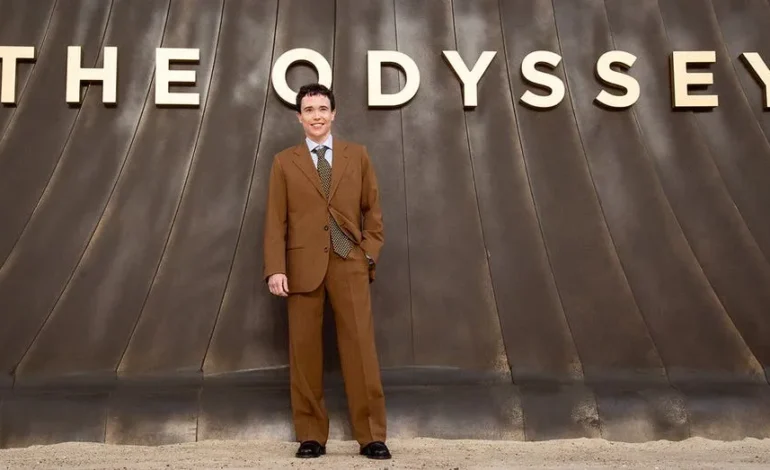

Christopher Nolan’s latest cinematic endeavor, a reimagining of Homer’s epic poem ‘The Odyssey,’ has landed in theaters, igniting a firestorm of discussion. From casting decisions to narrative liberties, the film is proving to be one of Hollywood’s most talked-about and, for some, most subversive adaptations.
A Director’s Vision Meets Ancient Lore
Christopher Nolan, a filmmaker renowned for his intricate narratives and visually stunning blockbusters, has turned his attention to the foundational tale of Odysseus’s arduous journey home. The project has been a subject of intense speculation, particularly concerning its faithfulness to the source material and the director’s interpretation of its characters and themes. Early buzz centered on the use of Emily Wilson’s translation, with debates swirling about whether it served as mere inspiration or a direct blueprint for the film. Nolan himself had previously dismissed pre-release criticisms as premature, but with the film now accessible to the public, a comprehensive assessment is possible.
This review delves into the film’s merits and demerits, acknowledging the director’s established reputation while examining the choices made in bringing this ancient epic to the modern screen. While a deep admiration for Nolan’s previous works like ‘The Prestige’ and ‘Inception’ might predispose some viewers to embrace his vision, the film’s bold departures from tradition demand careful consideration.
Subversive Strokes and Character Reinterpretations
One of the most immediate and striking aspects of Nolan’s ‘The Odyssey’ is its willingness to deviate significantly from the established narrative. The film opens with a performance by rapper Travis Scott as the bard, a choice that immediately signals a departure from traditional portrayals. While Scott’s musical talent is evident, his rendition of the ancient poet felt jarring to some, appearing more like a contemporary artist performing within an ancient setting than an authentic character.
Further challenging audience expectations is the casting of Elliot Page as Sinon. This character, notably absent from Homer’s original epics, is introduced in a scene set during the Trojan War. Page’s portrayal of Sinon, a figure tasked with convincing the Trojans to accept the now-infamous wooden horse, has been a focal point of discussion. Critics argue that such casting and character additions, particularly when they seem to serve a contemporary messaging agenda, detract from the historical and mythological integrity of the story.
Deconstructing the Hero: Odysseus and His World
The film’s most significant departures arguably lie in its reinterpretation of core characters. Matt Damon’s Odysseus is presented not as the consistently cunning and level-headed hero of legend, but as a leader prone to impulsive and questionable decisions. This portrayal, particularly a scene involving the Cyclops where Odysseus reportedly acts out of spite rather than strategic necessity, has drawn criticism for undermining the protagonist’s legendary status. The narrative suggests that this Odysseus struggles to command the respect of his men, a stark contrast to the revered commander depicted in Homer’s work.
Other figures from Greek mythology also undergo significant transformations. Agamemnon is depicted less as a triumphant general and more as a morally compromised figure, drawing inspiration from later Greek tragedies rather than Homer’s direct accounts. Clytemnestra, traditionally portrayed as a villainous figure, is reframed as a victim seeking retribution for her daughter’s death. This shift alters the dynamic between her and Penelope, Odysseus’s steadfast wife, diminishing the thematic contrast present in the original epic.
Even the divine intervention expected from characters like Athena, portrayed by Zendaya, feels muted. Instead of a consistent guiding force, Athena’s presence is sporadic, offering limited support and wisdom when Odysseus most needs it. This subdued role, critics contend, removes a crucial element of divine guidance that is central to the epic’s fabric.
Authenticity and Pacing Under Scrutiny
Beyond character deconstruction, the film’s commitment to authenticity is also questioned. The inclusion of a racially diverse cast, while potentially reflecting modern sensibilities, is seen by some as a distraction from the historical setting. Characters like Eurylochus (Himesh Patel) and various soldiers and suitors are portrayed by actors of different ethnicities, leading to a feeling that the film is merely set in ancient Greece rather than fully immersing the audience in that world. The dialogue, often featuring modern vernacular and American accents, further contributes to this sense of detachment, making the epic feel more like fan fiction than a faithful period piece.
The film’s pacing has also been a point of contention. The initial hours are described as relentless, characterized by a rapid succession of perilous situations and fragmented flashbacks. This breakneck speed, critics argue, leaves little room for character development or for the audience to fully absorb the unfolding events, creating a disjointed viewing experience.
Notable Departures and Visual Spectacle
The portrayal of Helen of Troy, played by Lupita Nyong’o, has been another significant point of debate. As an African actress, her casting as the famously beautiful Greek figure has been labeled by some as a politically motivated choice that disregards the traditional depiction of the character. The film’s visual representation of Helen, shown with disfigurements from the Trojan War, further complicates the reception of this iconic figure.
The character of Sinon, introduced as a pivotal figure in the Trojan Horse deception, takes on a role far exceeding his original minor presence. Adapted as the brother of a prominent suitor, Sinon’s coerced sacrifice and his substitution for Achilles in the Underworld sequence represent a substantial alteration. This change reframes Odysseus’s actions, portraying him as someone willing to sacrifice individuals for strategic gain, a departure from the heroic archetype.
Moments of Brilliance Amidst the Controversy
Despite the numerous criticisms, Nolan’s ‘The Odyssey’ is not without its merits. The film’s technical achievements are frequently lauded. The practical effects used to create the Cyclops are described as both terrifying and otherworldly. The depiction of the Underworld is particularly praised for its unsettling atmosphere and dark magic, effectively conveying a sense of dread and urgency.
Scenes involving Circe transforming Odysseus’s crew into pigs are noted for their visceral and disturbing impact. The sound design, especially during the Sirens sequence where the crew uses wax earplugs, is highlighted as a clever and effective touch.
A Mixed Reception: A Flawed Epic?
Ultimately, Christopher Nolan’s ‘The Odyssey’ is a film that divides opinion sharply. While acknowledging the director’s talent for visual spectacle and technical execution, many find the adaptation’s departures from the source material to be too significant. The film is criticized for sacrificing mythological depth and religious elements in favor of a more grounded, albeit arguably less magical, interpretation. The action sequences are deemed uninspired by some, and Matt Damon’s performance as a bowman has been questioned.
The score, in particular, has faced criticism for being less impactful than those in Nolan’s previous acclaimed films, at times overpowering the dialogue. While creative liberties are expected in adaptations, the film’s deviation from its ancient Greek setting, particularly in its dialogue and casting, leaves many feeling that it fails to capture the essence of the original epic. For many, the film represents a missed opportunity, a visually impressive but narratively disjointed effort that struggles to balance its modern sensibilities with the weight of its ancient source material.
Rating: 6/10