




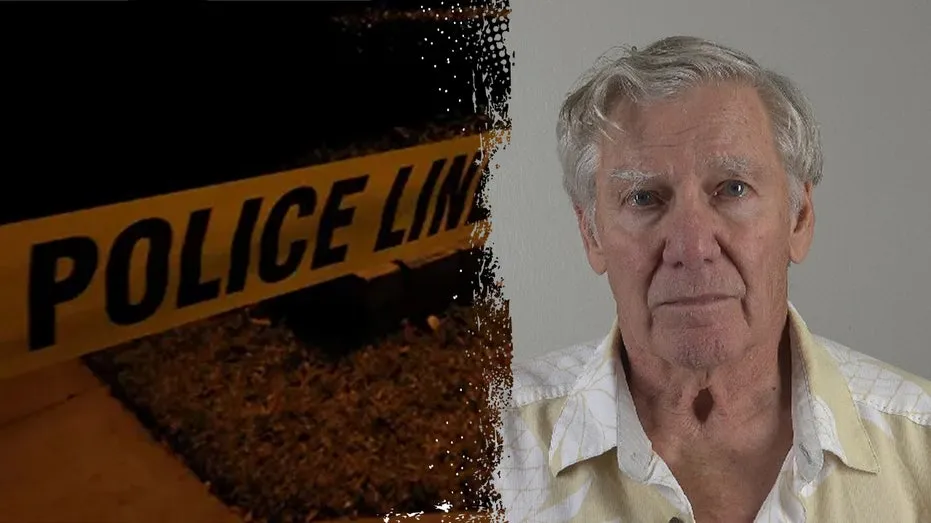
A cold case that has lingered for over four decades has been dramatically revived, leading to the indictment of a 79-year-old Colorado man in the 1981 strangulation death of a Texas flight attendant. Larry Dean Brown was arrested on June 8 in Colorado and subsequently indicted by a Tarrant County grand jury on June 29. He has since been extradited to North Texas and booked into the Tarrant County Jail to face the murder charge.
Unraveling a Decades-Old Mystery
The victim, 35-year-old Beverly “Casey” Bruneau, a flight attendant for Braniff Airlines, was discovered dead in her Grapevine apartment on February 13, 1981. Her boyfriend found her on the living room floor around 3 p.m. after she didn’t answer his phone calls. An electrical cord was found wrapped around her neck, and blood was visible on her face and nightgown. Evidence at the scene suggested Bruneau had struggled with her assailant. The Tarrant County medical examiner later determined she had been strangled sometime mid-morning.
The investigation into Bruneau’s death has been a long and arduous journey, spanning 44 years. The breakthrough in the case reportedly came through the meticulous comparison of DNA evidence recovered from the victim’s clothing with a sample obtained covertly from Brown’s trash.
Initial Investigation and Lingering Suspicions
Early in the investigation, detectives turned their attention to Larry Dean Brown. On the day of the murder, they sought to speak with his wife, who was not only Bruneau’s best friend but also her former roommate. Both women had worked as flight attendants for Braniff and had even jointly owned a house in Dallas. However, Brown’s wife was on an international flight at the time, so investigators spoke with Larry Dean Brown instead.
According to an arrest warrant affidavit, one detective described Brown as evasive during this initial interview, noting that his responses were consistently similar. Investigators also observed a fresh injury under Brown’s right thumbnail, where the skin appeared to have been torn. Brown attributed the injury to a work-related accident, but the detective found his explanation inconsistent with the wound’s appearance.
Financial Motive and Arson Allegations
Further complicating matters were financial disputes related to the Dallas house co-owned by Bruneau and Brown’s wife. The property had been significantly damaged by fires in November 1980, with investigators suspecting arson in at least one instance. At the time, Brown, who had been laid off as a Braniff pilot and flight engineer, held a partial interest in a construction company. Authorities alleged that he had obtained repair estimates through this company that far exceeded the insurance carrier’s appraisals. It was further alleged that Brown attempted to pressure Bruneau into signing fraudulent insurance documents that reflected these inflated repair costs.
DNA Evidence Revives the Case
Despite these early suspicions, the case remained unresolved for decades. A significant development occurred in 2010 when investigators submitted Bruneau’s bloodstained nightgown and other preserved evidence to a University of North Texas laboratory for advanced testing. This analysis yielded the DNA profile of an unidentified man, which was subsequently entered into the national Combined DNA Index System (CODIS). However, no match was found at that time.
The case received renewed attention in 2025 when a Grapevine detective began a fresh review of the investigation. The following year, in 2026, Grapevine police collaborated with the Larimer County Sheriff’s Office in Colorado to obtain what the affidavit described as a “covert DNA sample” from Brown. Investigators collected two discarded soda bottles from trash outside Brown’s residence. Swabs from these bottles were sent back to the University of North Texas laboratory for analysis.
The Crucial Match
On May 28, the results came back, indicating a critical link. The DNA profile recovered from one of the soda bottles could not exclude Larry Dean Brown as the source of the male blood found on Beverly Bruneau’s nightgown. This pivotal finding provided investigators with the evidence needed to move forward.
Grapevine police have stated that additional forensic testing, including confirmatory DNA analysis, is still pending. However, the indictment marks a significant step forward in seeking justice for Beverly “Casey” Bruneau, whose life was tragically cut short 44 years ago.


