




Dabo Swinney’s Clemson Tenure: How Much Longer in Death Valley?
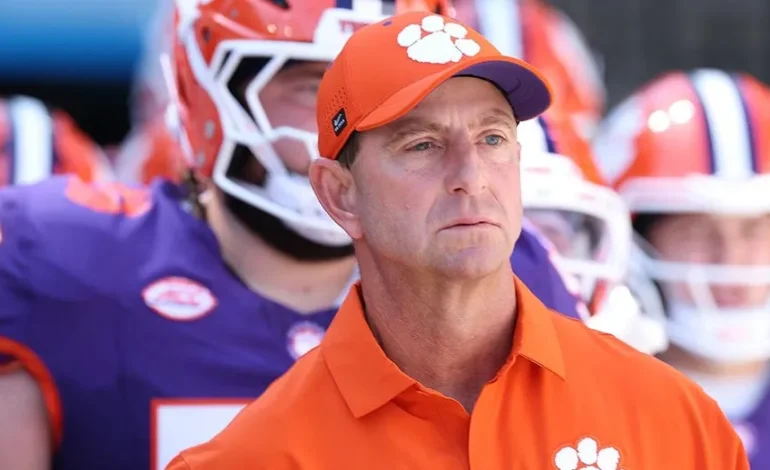

The tenure of Clemson head coach Dabo Swinney is a subject of much discussion, with opinions often divided based on how long one has followed college football. For newer fans, recent struggles might lead to terms like “washed” or “cooked.” However, long-time followers, aware of the program’s history and Swinney’s achievements, often use words such as “legend” or “champion.” Those who remember Clemson before Swinney’s arrival might even describe him as “untouchable,” given the stark contrast in the program’s fortunes.
Clemson’s Pre-Swinney Era
Before Dabo Swinney took the helm, Clemson football, despite a national championship in the early 1980s, was not considered a perennial powerhouse. In the three decades leading up to 2009, the Tigers rarely cracked the top 10 of the Associated Press rankings, managing it only once between 1990 and 2008. Coaches like Tommy West and Tommy Bowden presided over periods of mediocrity, failing to consistently elevate the program to elite status.
Swinney’s Transformative Impact
Dabo Swinney’s appointment as full-time head coach in 2009 marked a significant turning point. Under his leadership, the Tigers have amassed an impressive 180-47 record. The program has achieved seven top-10 finishes in the AP rankings, secured nine ACC championships, and claimed two national titles. Swinney has undeniably become synonymous with Clemson football’s modern success, elevating the program to a level of sustained excellence rarely seen.
Navigating Modern College Football Challenges
Despite Swinney’s remarkable track record, questions have arisen about his adaptability in the rapidly evolving landscape of college football. His perceived resistance to embracing Name, Image, and Likeness (NIL) deals and the transfer portal, elements now considered crucial for competing at the highest level, have drawn scrutiny. Some argue that this reluctance has placed Clemson a step behind other elite programs.
However, it’s important to note that just two years prior to the 2025 season, the Tigers were College Football Playoff contenders, and they still managed to win the ACC Championship in 2025. This raises the central question: Is reaching the pinnacle of the conference and making occasional playoff appearances enough, given the heightened expectations Swinney himself has cultivated? While some fans express restlessness, there is little indication that Clemson’s leadership is considering a change.
Looking Ahead to the 2026 Season
The upcoming 2026 season is pivotal. Contrary to the disappointing performance in 2025, where the Tigers fell from preseason top-five favorites to Pinstripe Bowl participants, expectations are for a significant rebound. The team’s success hinges significantly on resolving the quarterback situation, a critical factor for any dynamic offense. The return of Chad Morris as offensive coordinator, who previously served in the same role from 2011-2014 during a period of significant program ascent, could provide a familiar spark.
Clemson possesses considerable talent across its roster, a consistent strength under Swinney. This year, the team is expected to operate under the radar, a stark contrast to the immense pressure of 2025. This lower profile could prove beneficial, allowing the team to focus without the weight of national championship expectations. The schedule presents challenges, notably season-opening matchups against LSU and a home game against Miami. Beyond these marquee contests, however, the 2026 slate appears more manageable.
Projected Performance and Swinney’s Security
With a talented roster and a potentially favorable schedule outside of key matchups, achieving a 9-3 or 10-2 record seems attainable. Such a performance would likely solidify Swinney’s position and buy him considerable time. However, the prevailing sentiment is that Swinney’s job security extends far beyond the outcome of a single season.
The “Lifetime Contract” Perception
Many observers believe Dabo Swinney holds a de facto “lifetime contract” at Clemson, a rare status in modern sports. Having transformed the Tigers into a consistent national power, it’s widely anticipated that when Swinney decides to step down, it will be on his own terms. While replicating the sheer dominance of the mid-2010s might be challenging, a consistent output of eight to ten wins annually, coupled with occasional College Football Playoff appearances, could be the new benchmark.
Alternatively, shifts in the NIL and transfer portal landscape could potentially benefit Swinney’s approach, making his long-term strategy appear prescient. Regardless of the specific trajectory, the consensus is that Dabo Swinney is not facing imminent departure. Clemson fans are encouraged to appreciate the coach’s profound impact on the program, recognizing that finding another figure of his caliber will likely take a considerable amount of time.