




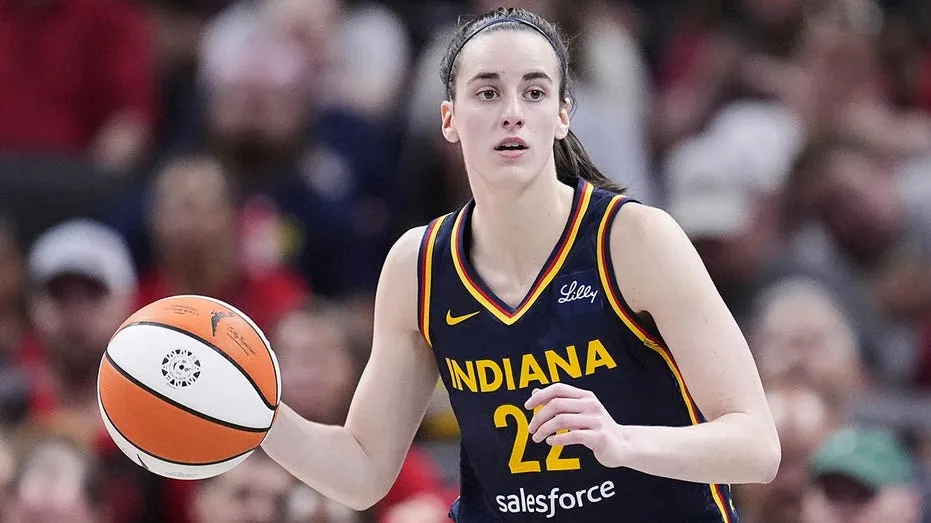
An ESPN commentator is standing by his assertion that Caitlin Clark is not among the top four guards in the WNBA, even as the rookie sensation continues to shatter records and lead her team to victory. David Dennis Jr. initially sparked controversy earlier this summer with his assessment, which also touched upon the physicality directed at Clark by some opponents.
Challenging the Narrative on Clark’s Standing
Dennis’s comments, made in July, suggested that framing the debate around Clark solely as a matter of “petty jealousy or insecurity” among WNBA players was misguided. He explicitly stated, “I don’t think you can make a compelling argument that Caitlin Clark is a top four guard in the WNBA.” This viewpoint was publicly challenged by former WNBA player and NFL analyst Stacey Dales, who questioned the validity of his assessment on air.
Following this exchange, Clark has experienced a remarkable surge in performance. In the seven games played from July 17 to August 2, she averaged an impressive 26.1 points and 8.6 assists per game. Her stellar play earned her the WNBA Player of the Month award for July. During this period, she also recorded a career-high 45 points in a single game and guided the Indiana Fever to a 6-1 record, seemingly refuting any notion that her style of play doesn’t translate to team success.
Clark’s statistical achievements have been historic. She now boasts seven career games with at least 25 points, 10 assists, and five made three-pointers. For context, the rest of the WNBA’s history combined features only four such games.
Dennis Reaffirms Stance with Nuance
Recently, Dennis addressed the ongoing discussion, reaffirming his initial position while acknowledging Clark’s recent hot streak. “I stand by all the points I made three weeks ago because three weeks ago CC was not a top 4 guard this season,” Dennis wrote on social media. “Since then she’s put up some of her best games of her career and is on a heater. Some of the other players I had ahead have slumped a bit too.”
He elaborated on his current rankings, stating, “I think I’d put CC #4 right now. Paige, Olivia and Kelsey are all still above her and there’s not really any way I’m coming off that right now. CC is still in the tier right below.” Dennis also pointed to a recent game where he felt Clark’s performance was less dominant compared to others on the court, suggesting that her detractors were silent after such an outing.
Contextualizing the Debate
The discussion surrounding player rankings in professional sports is often subjective and fuels passionate debate. While Dennis’s initial assertion that a “compelling argument” couldn’t be made for Clark being a top-four guard drew significant attention, his subsequent acknowledgment of her improved performance and slight adjustment in ranking highlights the dynamic nature of these evaluations.
Player rankings are inherently fluid, influenced by recent performance, team success, and evolving player development. Critics of Dennis’s initial take often point to Clark’s statistical output and impact on the Fever’s recent success as evidence of her elite status. Conversely, proponents of his view emphasize the sustained excellence of other established guards in the league.
Regardless of where one places Clark in the current guard hierarchy, her impact on the WNBA is undeniable. Her record-breaking performances and the attention she has brought to the league are reshaping conversations around the sport. The ongoing debate over her ranking, while intense, underscores the growing interest and engagement with WNBA talent.
Player Rankings: A Subjective Landscape
The evaluation of athletes, particularly in team sports, rarely relies on a single metric. Factors such as scoring, playmaking, defensive impact, leadership, and clutch performance all contribute to a player’s overall assessment. For guards, the ability to control the tempo of the game, create scoring opportunities for themselves and teammates, and effectively run an offense are paramount.
Clark’s unique skill set, characterized by her exceptional shooting range, court vision, and passing ability, has quickly made her a standout player. Her capacity to score prolifically while also facilitating for others presents a compelling case for her inclusion among the league’s elite. However, established players like Paige Bueckers, Olivia Miles, and Kelsey Plum have demonstrated consistent high-level performance over multiple seasons, building strong resumes that warrant their own high rankings.
Ultimately, the debate over who constitutes the “top four” guards is a testament to the increasing depth of talent in the WNBA. It reflects a league where emerging stars are challenging the established order, leading to robust discussions about player value and impact. As the season progresses, Clark’s continued performance will undoubtedly fuel further analysis and debate regarding her place among the league’s best.


